Home

Navigation Menu

  • Back
  • About
    • Back
    • About

      Contact Us

      Business Address
      5241 Broad Branch Rd. NW

      Washington , DC 20015
      United States place Map
      Call Us (202) 387-640
    • Who We Are
      • Back
      • Leadership
      • Our Blueprint For Discovery
      • Board & Advisory Committee
      • Financial Stewardship
      • Awards & Accolades
      • History
    • Connect with Us
      • Back
      • Outreach & Education
      • Newsletter
      • Yearbook
    • Working at Carnegie
      • Back
      • Applications Open: Postdoctoral Fellowships

    Contact Us

    Business Address
    5241 Broad Branch Rd. NW

    Washington , DC 20015
    United States place Map
    Call Us (202) 387-6400
  • Research
    • Back
    • Research Areas & Topics
    • Research Areas & Topics
      • Back
      • Research Areas
      • From genomes to ecosystems and from planets to the cosmos, Carnegie Science is an incubator for cutting-edge, interdisciplinary research.
      • Astronomy & Astrophysics
        • Back
        • Astronomy & Astrophysics
        • Astrophysical Theory
        • Cosmology
        • Distant Galaxies
        • Milky Way & Stellar Evolution
        • Planet Formation & Evolution
        • Solar System & Exoplanets
        • Telescope Instrumentation
        • Transient & Compact Objects
      • Earth Science
        • Back
        • Earth Science
        • Experimental Petrology
        • Geochemistry
        • Geophysics & Geodynamics
        • Mineralogy & Mineral Physics
      • Ecology
        • Back
        • Ecology
        • Atmospheric Science & Energy
        • Adaptation to Climate Change
        • Water Quality & Scarcity
      • Genetics & Developmental Biology
        • Back
        • Genetics & Developmental Biology
        • Adaptation to Climate Change
        • Developmental Biology & Human Health
        • Genomics
        • Model Organism Development
        • Nested Ecosystems
        • Symbiosis
      • Matter at Extreme States
        • Back
        • Matter at Extreme States
        • Extreme Environments
        • Extreme Materials
        • Mineralogy & Mineral Physics
      • Planetary Science
        • Back
        • Planetary Science
        • Astrobiology
        • Cosmochemistry
        • Mineralogy & Mineral Physics
        • Planet Formation & Evolution
        • Solar System & Exoplanets
      • Plant Science
        • Back
        • Plant Science
        • Adaptation to Climate Change
        • Nested Ecosystems
        • Photosynthesis
        • Symbiosis
    • Divisions
      • Back
      • Divisions
      • Biosphere Sciences & Engineering
        • Back
        • Biosphere Sciences & Engineering
        • About

          Contact Us

          Business Address
          5241 Broad Branch Rd. NW

          Washington , DC 20015
          United States place Map
          Call Us (202) 387-640
        • Research
        • Culture
      • Earth & Planets Laboratory
        • Back
        • Earth & Planets Laboratory
        • About

          Contact Us

          Business Address
          5241 Broad Branch Rd. NW

          Washington , DC 20015
          United States place Map
          Call Us (202) 387-640
        • Research
        • Culture
        • Campus
      • Observatories
        • Back
        • Observatories
        • About

          Contact Us

          Business Address
          5241 Broad Branch Rd. NW

          Washington , DC 20015
          United States place Map
          Call Us (202) 387-640
        • Research
        • Culture
        • Campus
    • Instrumentation
      • Back
      • Instrumentation
      • Our Telescopes
        • Back
        • Our Telescopes
        • Magellan Telescopes
        • Swope Telescope
        • du Pont Telescope
      • Observatories Machine Shop
      • EPL Research Facilities
      • EPL Machine Shop
      • Mass Spectrometry Facility
      • Advanced Imaging Facility
  • People
    • Back
    • People
      Observatory Staff

      Featured Staff Member

      Staff Member

      Staff Member

      Professional Title

      Learn More
      Observatory Staff

      Search For

    • Search All People
      • Back
      • Staff Scientists
      • Leadership
      • Biosphere Science & Engineering People
      • Earth & Planets Laboratory People
      • Observatories People
    Observatory Staff
    Dr. Jeffrey Dukes
    Senior Staff Scientist

    Featured Staff Member

    Jeff Dukes

    Dr. Jeffrey Dukes

    Senior Staff Scientist

    Learn More
    Observatory Staff
    Dr. Jeffrey Dukes
    Senior Staff Scientist

    Jeff Dukes’ research examines how plants and ecosystems respond to a changing environment, focusing on topics from invasive species to climate change.

    Search For

    Search All Staff
  • Events
    • Back
    • Events
    • Search All Events
      • Back
      • Public Events
      • Biosphere Science & Engineering Events
      • Earth & Planets Laboratory Events
      • Observatories Events

    Upcoming Events

    Events

    Events

    Lava exoplanet
    Seminar

    Kaustav Das (Caltech)

    TBD

    February 13

    12:15pm PST

    quasars
    Colloquium

    Dr. Kirsten Hall (Center for Astrophysics, Harvard University)

    The hottest phase of quasar winds revealed: excess intergalactic heating detected via the thermal Sunyaev-Zel'dovich effect

    February 17

    11:00am PST

    Photo by Karin Kim on Unsplash
    Seminar

    Tracing and Predicting the Pulse of the Terrestrial Biosphere: Plant Physiology, Earth System Models, and AI

    Ying Sun

    February 17

    1:30pm PST

  • News
    • Back
    • News
    • Search All News
      • Back
      • Biosphere Science & Engineering News
      • Earth & Planets Laboratory News
      • Observatories News
      • Carnegie Science News
    News

    Recent News

    News

    Latest

    • - Any -
    • Biosphere Sciences & Engineering
    • Carnegie Administration
    • Earth & Planets Laboratory
    • Observatories
    expand_more
    Read all News
    An illustration of cataloging exoplanet diversity courtesy of NASA
    Breaking News
    January 28, 2026

    A cornucopia of distant worlds

    This image is an artist’s concept of a supermassive black hole, which is part of a quasar from just 690 million years after the Big Bang. The quasar (orange disk) is surrounded by neutral hydrogen, indicating that it is from the period called the epoch of reionization, when the universe’s first light sources turned on. The object was detected by Carnegie’s Magellan telescope at the Las Campanas Observatory, shown in the bottom left corner. Courtesy Robin Dienel/Carnegie Science
    Breaking News
    January 22, 2026

    From “Star Stuff” to Planets - New Frontiers in Astronomy

    Artist's renditions of the space weather around M dwarf TIC 141146667.  The torus of ionized gas is sculpted by the star's magnetic field and rotation, with two pinched, dense clumps present on opposing sides of the star. Illustrations by Navid Marvi, courtesy Carnegie Science.
    Breaking News
    January 07, 2026

    Naturally occurring “space weather station” elucidates new way to study habitability of planets orbiting M dwarf stars

  • Resources
    • Back
    • Resources
    • Search All
      • Back
      • Employee Resources
      • Scientific Resources
      • Postdoc Resources
      • Media Resources
      • Archival Resources
    • Quick Links
      • Back
      • Employee Intranet
      • Dayforce
      • Careers
      • Observing at LCO
      • Locations and Addresses
  • Donate
    • Back
    • Donate
      - ,

    • Make a Donation
      • Back
      • Support Scientific Research
      • The Impact of Your Gift
      • Carnegie Champions
      • Planned Giving
    Jo Ann Eder

    I feel passionately about the power of nonprofits to bolster healthy communities.

    - Jo Ann Eder , Astronomer and Alumna

    Header Text

    Postdoctoral alumna Jo Ann Eder is committed to making the world a better place by supporting organizations, like Carnegie, that create and foster STEM learning opportunities for all. 

    Learn more arrow_forward
  • Home
  • Earth and Planets Laboratory
  • Rock

Rock

Rock
This 500-million-year-old trilobite from Utah has an organic-rich carapace that preserves a record of the original biomolecules. Credit: Robert Hazen.
November 17, 2025
Science News

Chemical evidence of ancient life detected in 3.3-billion-year-old rocks

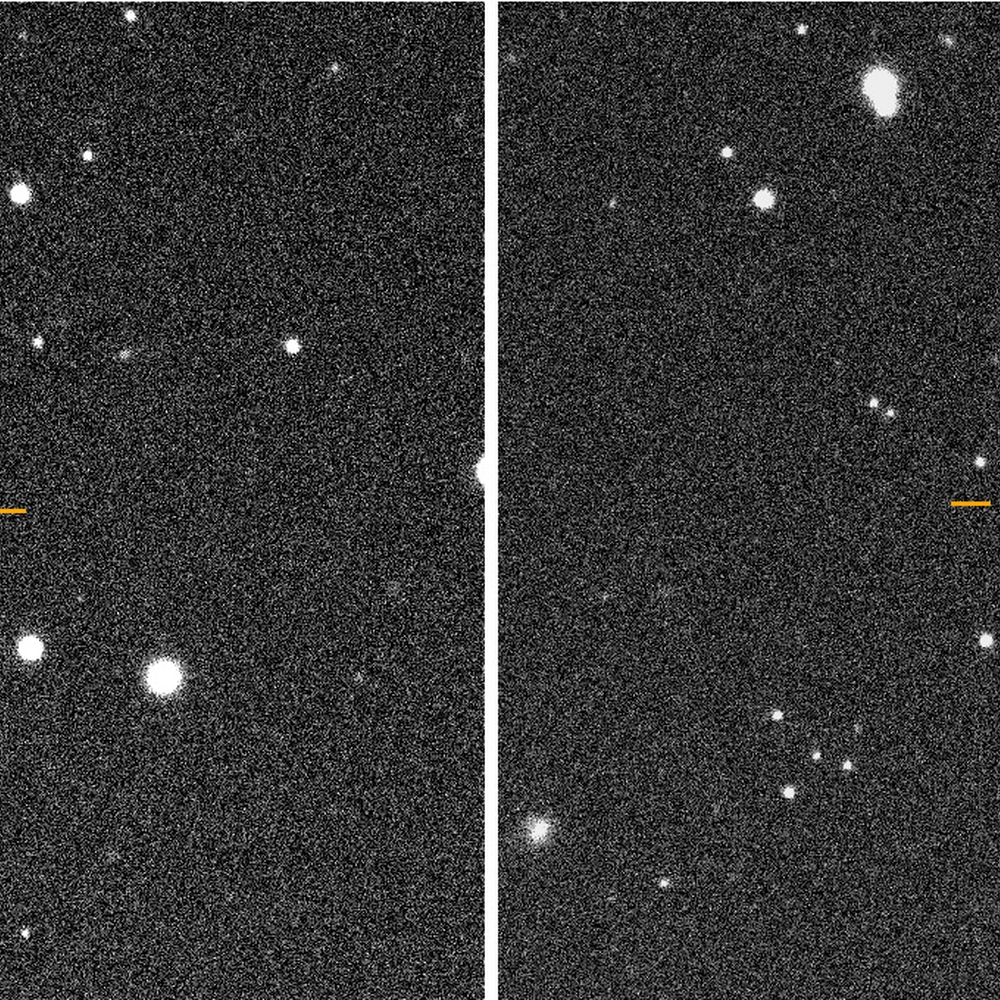
Images from the night of 2025 SC79’s discovery showing its motion relative to background stars. Photographs courtesy of Scott S. Sheppard.
October 16, 2025

Fast-moving asteroid found in Sun’s glare

This pile of lava flows is part of the Grande Ronde Basalt, the most voluminous formation of the Columbia River Basalt Group (Photo credit: Jennifer Kasbohm).
September 20, 2024
Feature Story

Probing the role of volcanism in ancient climate warming

NASA’s Perseverance rover discovered “leopard spots” on a reddish rock nicknamed “Cheyava Falls” in Mars’ Jezero Crater in July 2024. Scientists think the spots may indicate that, billions of years ago, the chemical reactions in this rock could have supported microbial life; other explanations are being considered. NASA/JPL-Caltech
August 09, 2024
Q&A

Q&A: "Intriguing" Martian rock discovered by rover

Jennifer Kasbohm Scientist Portrait

Jennifer Kasbohm

Staff Scientist

Jennifer Kasbohm headshot
May 27, 2024
Organizational News

Geochronologist Jennifer Kasbohm joins Carnegie Science as new Staff Scientist

Oded Elazar working in the lab
March 29, 2024
Spotlight

Postdoc Spotlight: Oded Elazar

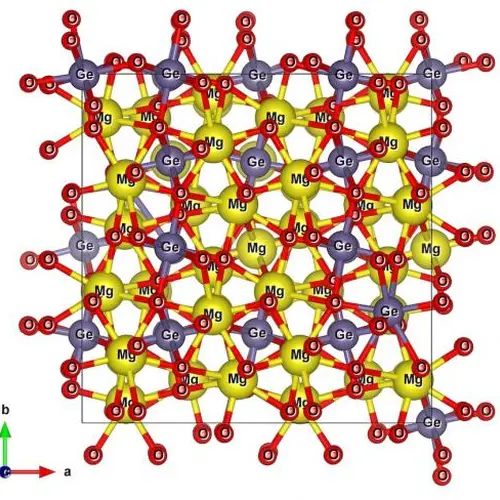
 Illustration of new eight-coordinated, intrinsically discorded mineral courtesy of Rajkrishna Dutta.

Working with magnesium germanate, Mg2GeO4, analogous to one of the mantle’s most abundant silicate minerals, the team was able to glean information about the potential mineralogy of super-Earths and other large, rocky exoplanets. Under about 2 million times normal atmospheric pressure a new phase emerged with a distinct crystalline structure that involves one germanium bonded with eight oxygens. The new eight-coordinated, intrinsically discorded mineral is expected to strongly affect the internal temperature and dynamics of these planets. Illustration is courtesy of Rajkrishna Dutta.

March 01, 2022

What’s Happening In The Depths Of Distant Worlds?

A view of the outside of the OSIRIS-REx sample collector. Sample material from asteroid Bennu can be seen on the middle right. Scientists have found evidence of both carbon and water in initial analysis of this material. The bulk of the sample is located inside. Photo: NASA/Erika Blumenfeld & Joseph Aebersold
November 30, 2023
Feature Story

VIDEO: Analyzing an asteroid in the new golden age of sample return

Pyrite Credit: ARKENSTONE/Rob Lavinsky
October 16, 2023

Scientists and philosophers join forces to study concept of evolution beyond biological context

Pagination

  • Page 1
  • Next page ››
Subscribe to Rock

Get the latest

Subscribe to our newsletters.

Privacy Policy
Home
  • Instagram instagram
  • Twitter twitter
  • Youtube youtube
  • Facebook facebook

Science

  • Biosphere Sciences & Engineering
  • Earth & Planets Laboratory
  • Observatories
  • Our Research Areas
  • Our Blueprint For Discovery

Legal

  • Financial Statements
  • Conflict of Interest Policy
  • Privacy Policy

Careers

  • Working at Carnegie
  • Scientific and Technical Jobs
  • Administrative & Support Jobs
  • Postdoctoral Program
  • Carnegie Connect (For Employees)

Contact Us

  • Contact Administration
  • Media Contacts

Business Address

5241 Broad Branch Rd. NW

Washington, DC 20015

place Map

© Copyright Carnegie Science 2026