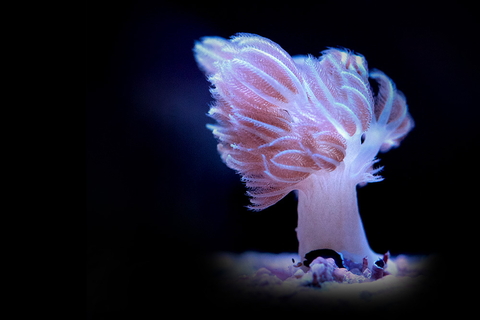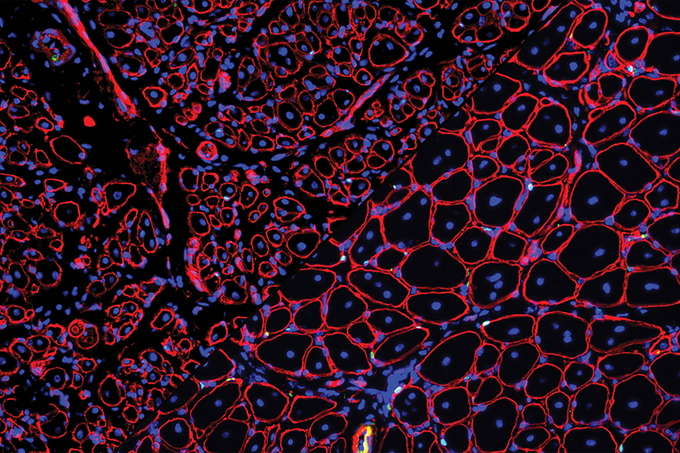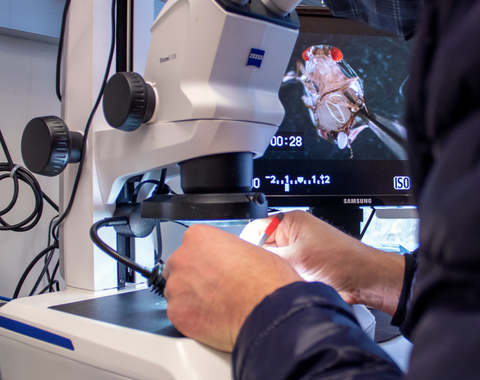
Carnegie’s Department of Embryology welcomes two new Staff Scientists, both of whom specialize in researching the symbiotic relationships between species. Brittany Belin joined Carnegie this month from Caltech and Phillip Cleves will arrive in September from Stanford University. Although their work approaches the issue using different organisms, their investigations are important to understanding survival mechanisms in the increasingly stressful conditions caused by climate change.
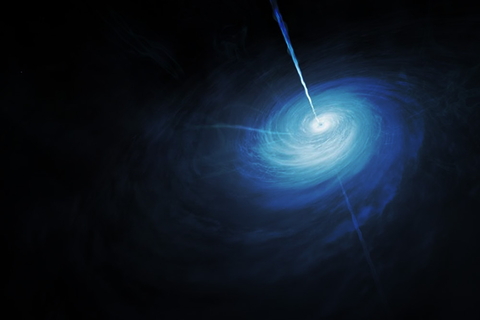
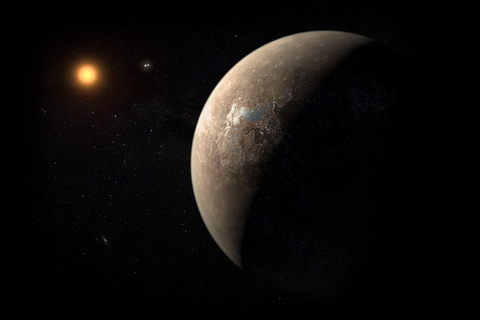
In September, astronomer Johanna Teske will join Carnegie’s Earth and Planets Laboratory as a Staff Scientist. Teske has been with Carnegie since 2014, first as the inaugural Carnegie Origins Postdoctoral Fellow and currently as a NASA Hubble Fellow.
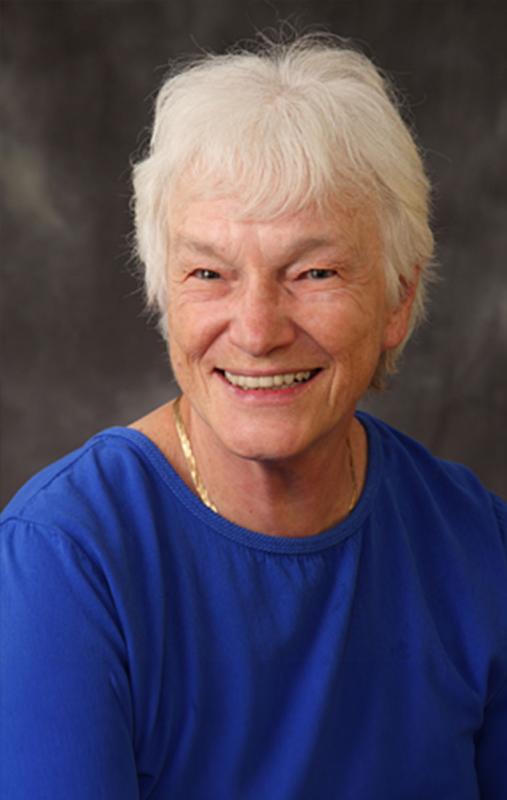
Anna Michalak has been named the Director of Carnegie’s Department of Global Ecology. As a world-renowned researcher, her leadership will be invaluable as Carnegie works to rebuild the department and to establish its new home in Pasadena.
New work led by Carnegie’s Meredith Wilson and Steve Farber identifies a potential therapeutic target for clogged arteries and other health risks that stem from an excess of harmful fats in the bloodstream. The study opens the door for the design of more specific MTP inhibitors that could reduce circulating triglyceride levels without the risk of unpleasant and serious side effects in the intestine and liver.
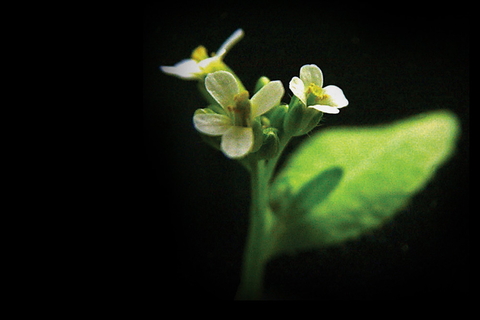
Carnegie’s Sue Rhee and Moises Exposito-Alonso are leading members of an initiative to identify genes related to stress tolerance in the mustard plant field pennycress. Theirs was one of seven biofuel research projects awarded a total of $68 million over five years by the Department of Energy.
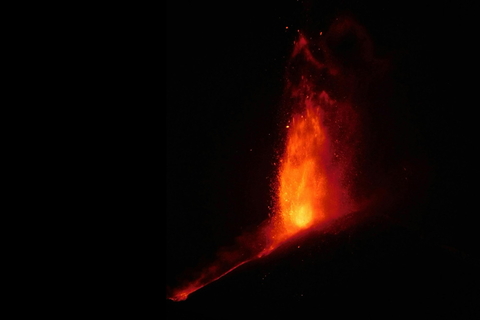
Work led by Carnegie’s Peng Ni and Anat Shahar uncovers new details about our Solar System’s oldest planetary objects, which broke apart in long-ago collisions to form iron-rich meteorites. Their findings reveal that the distinct chemical signatures of these meteorites can be explained by the process of core crystallization in their parent bodies, deepening our understanding of the geochemistry occurring in the Solar System’s youth. They are published by Nature Geoscience.
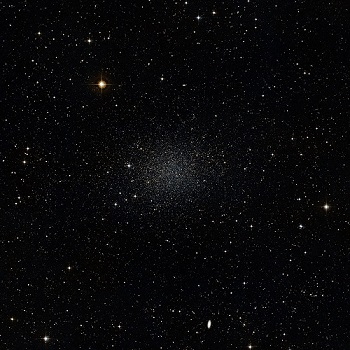
A team of astronomers including Carnegie’s Ting Li and Alexander Ji discovered a stellar stream composed of the remnants of an ancient globular cluster that was torn apart by the Milky Way’s gravity 2 billion years ago, when Earth’s most-complex lifeforms were single-celled organisms. This surprising finding, published in Nature, upends conventional wisdom about how these celestial objects form.
Filling in the most-significant gaps in our understanding of the universe’s history, the Sloan Digital Sky Survey (SDSS) released Sunday a comprehensive analysis of the largest three-dimensional map of the cosmos ever created. “SDSS has transformed the way we do astronomy, with each phase pushing the boundary of what is considered possible,” said Carnegie astronomer and SDSS-V Director Kollmeier. “The eBOSS cosmology results are no exception, filling in an important gap in our measurements of cosmic evolution and demonstrating the collaborative power of the SDSS consortium.”
Former Chairman and CEO of Pioneer Hi-Bred International, Inc., and former Chair of the Carnegie Board of Trustees, Thomas Urban, died of mesothelioma at the age of 86 on July 10, 2020, in Des Moines, Iowa.
American Society for Cell Biology recognized Carnegie’s Steven Farber and the University of Pennsylvania’s Jamie Shuda with its Bruce Alberts Award for Excellence in Science Education, which honors “innovative and sustained contributions” to the field. In informing Farber and Shuda of the honor, the ASCB selection committee said they were “particularly impressed by your longstanding partnership and the influence that two individuals working together can have”. They also praised the pair for pursuing international partnerships and for publishing about the students' experiences, actions that the committee called “indicators of sustained and excellent contributions to science education."
Carnegie's Moises Exposito-Alonso was awarded a Max Planck Society’s Otto Hahn Medal for early career excellence. “Congratulations to Moi on another recognition of his visionary approach,” said Zhiyong Wang, Acting Director of Carnegie’s Department of Plant Biology. “We choose staff associates for their creativity and readiness to tackle major research projects, both of which describe Moi perfectly. We are eager to see how his work keeps influencing the field of ecological and evolutionary genetics.
Life as we know it could not exist without Earth’s magnetic field and its ability to deflect dangerous ionizing particles from the solar wind and more far-flung cosmic rays. It is continuously generated by the motion of liquid iron in Earth’s outer core, a phenomenon called the geodynamo. Despite its fundamental importance, many questions remain unanswered about the geodynamo’s origin and the energy sources that have sustained it over the millennia.
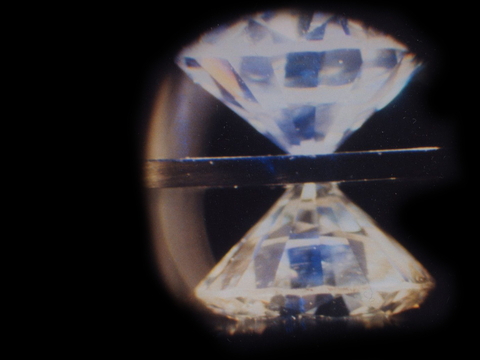
New research by Carnegie’s Olivier Gagné and collaborator Frank Hawthorne of the University of Manitoba categorizes the causes of structural asymmetry, some surprising, which underpin useful properties of crystals, including ferroelectricity, photoluminescence, and photovoltaic ability. Their findings are published this week as a lead article in the International Union of Crystallography Journal.
Baltimore, MD— New work from a team of Carnegie cell, genomic, and developmental biologists solves a longstanding marine sci
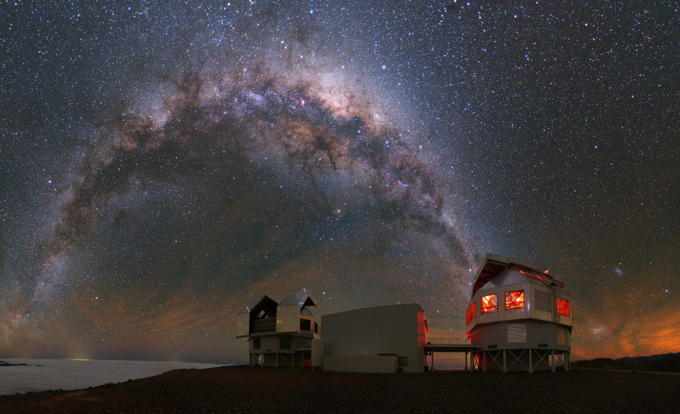
The universe is full of billions of galaxies—but their distribution across space is far from uniform. Why do we see so much structure in the universe today and how did it all form and grow? A 10-year survey of tens of thousands of galaxies made using the Magellan Baade Telescope at Carnegie’s Las Campanas Observatory in Chile provided a new approach to answering this fundamental mystery.
Carnegie mineralogist Robert Hazen was inducted last month as a foreign member of the Russian Academy of Sciences—the nation’s highest-level scientific society, originally founded by Peter the Great. This is a rare honor for an American researcher. The ceremony, originally scheduled for the end of March, was postponed by the COVID-19 pandemic.
We do not have any event for now.