MESSENGER at 20

Near the searing center of our Solar System orbits Mercury, a celestial oddity that has long intrigued scientists. Twenty years ago, humanity embarked on a remarkable journey of exploration with NASA's MESSENGER—or MErcury Surface, Space ENvironment, GEochemistry, and Ranging—mission to unlock the secrets of this strange little planet.
Carnegie Science became deeply involved in the MESSENGER mission in 1999 when Sean C. Solomon, who served as the Director at Carnegie Science's former-Department of Terrestrial Magnetism—now part of the Earth and Planets Laboratory—was selected as its Principal Investigator. From his office at Carnegie Science’s Broad Branch Road campus, Solomon managed a complex mission that would redefine our understanding of the Solar System's innermost planet.
"That I could serve as a NASA mission P.I. while a department director at Carnegie was the result of several factors, including the flexibility of an institutional calendar without academic demands," Solomon reflected.
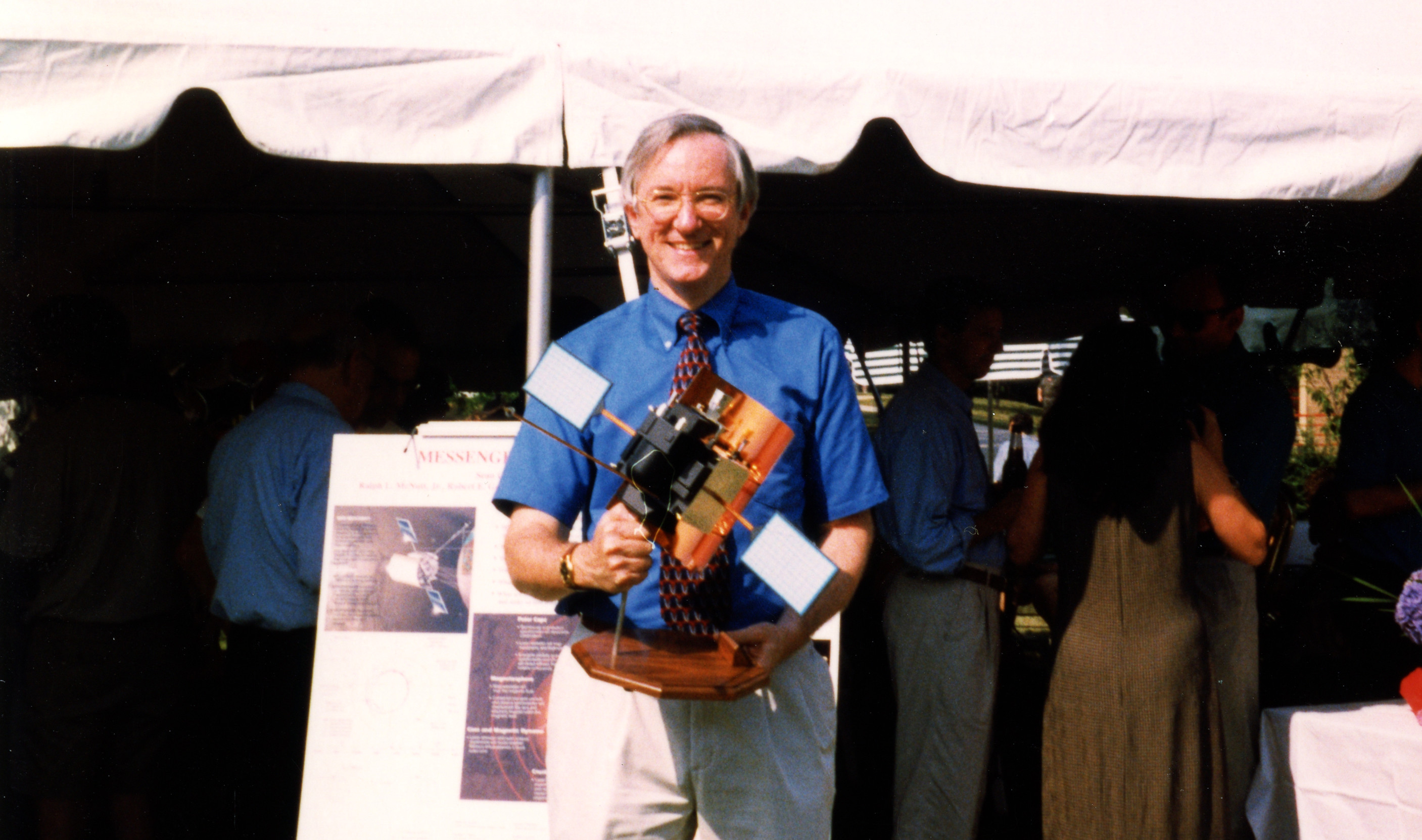
Solomon was responsible not only for accomplishing the scientific objectives of the mission, but also for ensuring that all schedule, financial, and data delivery milestones for the mission were met. He successfully led a team of researchers and engineers across the country whose work ranged from NASA mission operations to spacecraft construction.
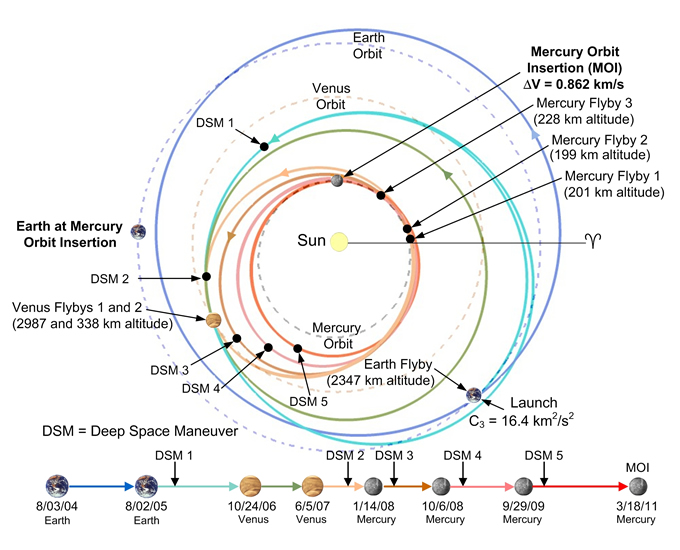
The mission was no small feat. Launched on August 3, 2004, MESSENGER entered Mercury’s orbit on March 17, 2011, after a six-year journey involving intricate flybys and gravitational assists from Earth, Venus, and Mercury itself.
“The most challenging events in any planetary mission are launch and orbit insertion,” stated Solomon. “The successful completion of those two milestones for MESSENGER—in 2004 and 2011, respectively—were sources of great pride for me in the technical expertise of all of the engineers, mission design experts, and project managers who contributed to the mission.”
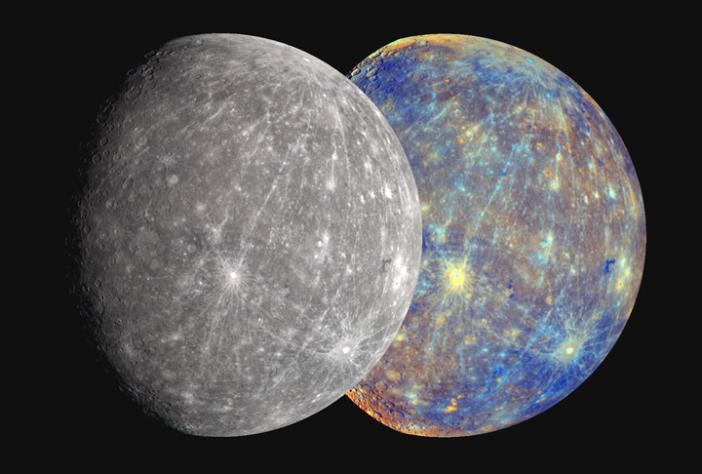
Over its four-year orbital mission, MESSENGER made discoveries that reshaped scientific understanding of this mysterious planet and our Solar System. The spacecraft found unexpected evidence of water ice in craters at Mercury’s poles, uncovered the planet’s complex geological history, and revealed Mercury as the only other tectonically active planet in the Solar System aside from Earth.
The mission discovered Mercury's odd composition, which includes a much higher concentration of volatile elements than expected, providing evidence of the planet’s formation and influencing new theories of Solar System formation. Another surprising finding was that Mercury has a magnetic field similar to Earth’s, but is offset from the planet’s radius.
And there’s a lot more, from the massive core, to the unusual “hollows” found on the surface, to electrons glowing in the magnetosphere, Mercury turned out to be much stranger than expected. Twenty years later, scientists are still working to build a model that successfully accounts for all of the unique factors revealed by MESSENGER and what it all means for the history of our Solar System.
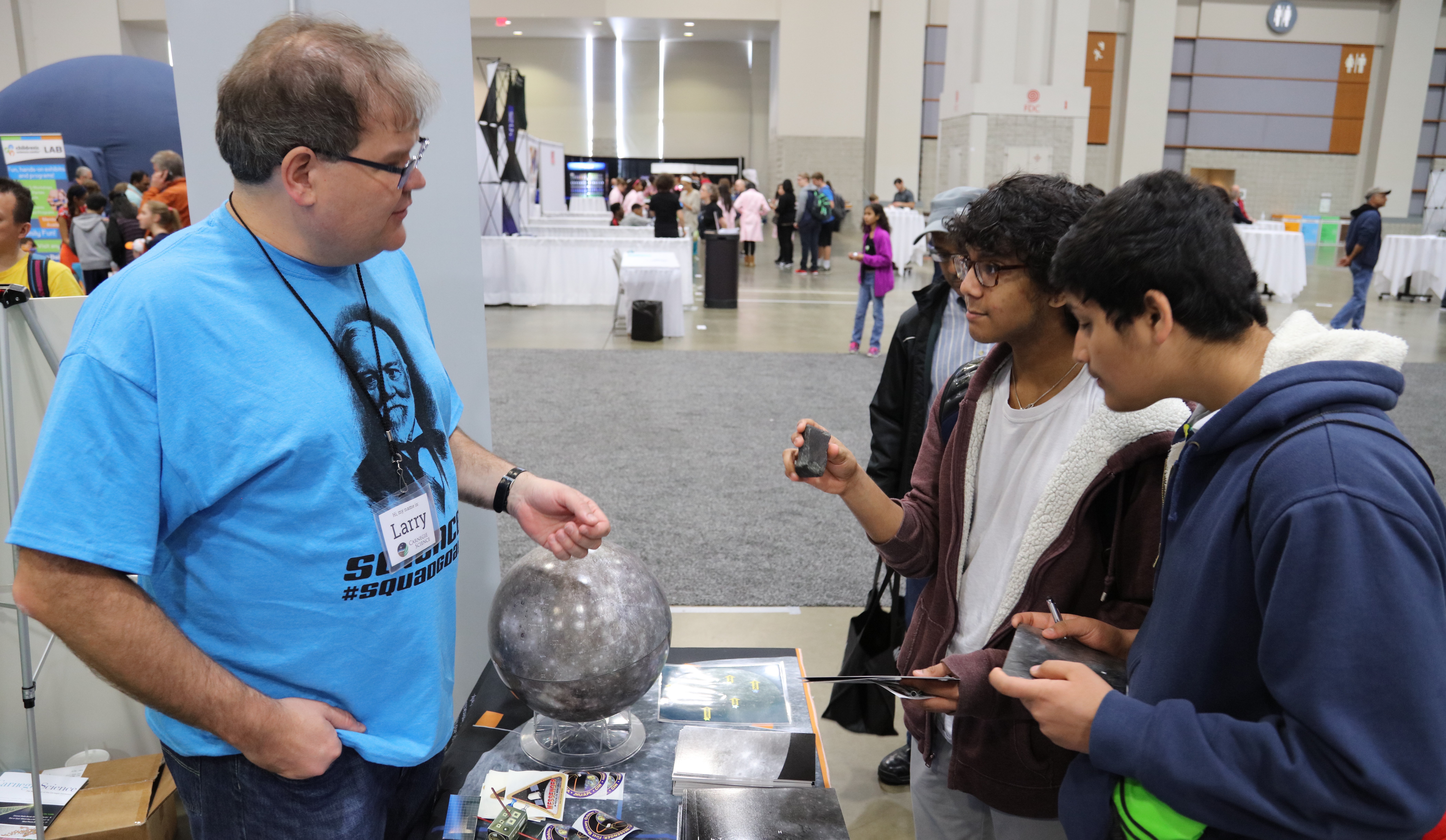
“MESSENGER completely rewrote the book on our understanding of Mercury,” summarized Larry Nittler, a former Carnegie scientist who served as the MESSENGER mission’s Deputy Principal Investigator between 2011 and 2015.
In addition to Solomon and Nittler, MESSENGER’s scientific team included two Carnegie Science postdoctoral alumni in important roles and several individuals who were Carnegie postdocs during the mission also contributed to various aspects of the project.
And Carnegie Science's involvement extended beyond pure scientific research. Led by Carnegie Academy for Science Education (CASE), the MESSENGER mission's Education and Public Outreach Team developed teacher training and curriculum resources and launched an international crater-naming contest that drew 3,600 entries, ultimately selecting five winners: Carolan, Enheduanna, Karsh, Kulthum, and Rivera.
Solomon articulated the importance of such public engagement: “The public deserves to be told why each such mission is worthwhile and what it has revealed about our neighboring planets as well as our own world… a technically literate public is of vital national interest, as an increasing number of topics critical to society’s future are grounded in an understanding fed by continuing scientific discovery.”
The mission's legacy continues to inspire. MESSENGER’s success galvanized subsequent explorations, notably the ongoing BepiColombo mission, which blasted off on its own journey to Mercury in November 2018. Set to arrive in late 2026, the joint mission between the European Space Agency (ESA) and the Japanese Aerospace Exploration Agency will build on MESSENGER’s discoveries.
Today, Carnegie Science carry’s MESSENGER's legacy of interdisciplinary and multi-institution science forward through projects like AEThER—or Atmospheric, Empirical, Theoretical, and Experimental Research project—and analysis of asteroid samples returned from the Hayabusa 2 and Osiris REx missions, leading bold investigations that tackle the complex scientific challenges of our times. The MESSENGER mission continues to stand as a testament to humanity’s insatiable curiosity and relentless pursuit of discovery.