From Science, With Love

Will you be our Valentine?
The tradition continues! We've created a set of fun Valentine's cards based on our research, the perfect way to share your love of science with your statistically significant other.

Tiny photosynthetic algae live inside coral, providing energy and vibrant color. When ocean temperatures rise, corals expel these symbiotic algae, leading to bleaching and ecosystem collapse. Carnegie scientists study how climate change affects coral reefs and are developing a new coral model to better understand resilience in a warming world.

Our volcanologists study magma and planetary interiors, investigating how volcanic activity shapes our planet.

Carnegie Science astronomer Vera Rubin provided the first evidence for dark matter’s existence by studying galaxy rotation. Today, our scientists continue this legacy, exploring the hidden forces shaping the universe.

When a planet passes in front of its star, the star’s brightness dips slightly—a measurable signal that something is there. Our astronomers use this technique to detect and study exoplanets, searching for habitable worlds beyond our Solar System.

Our scientists use world-class telescopes to study planetary motion and how gravitational forces shape planetary systems, deepening our understanding of the universe’s structure.
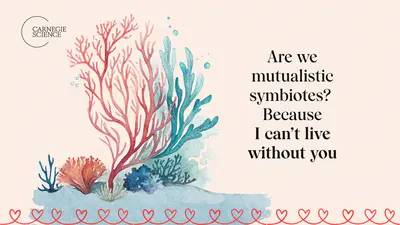
Better together.
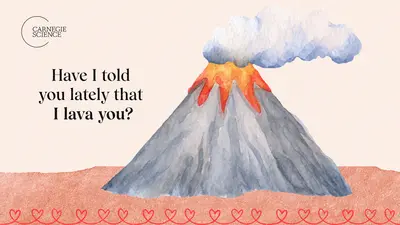
Not just surface-level.
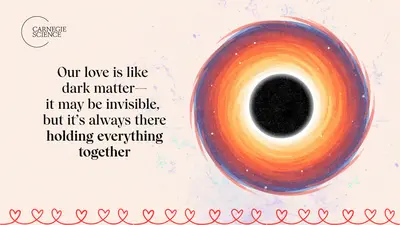
It takes someone special.
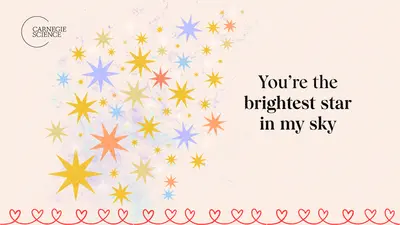
Hard to miss.
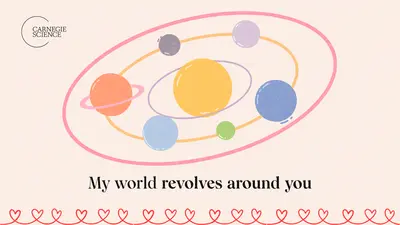
Held in orbit.
Related Content