BSE Postdoctoral Fellowships
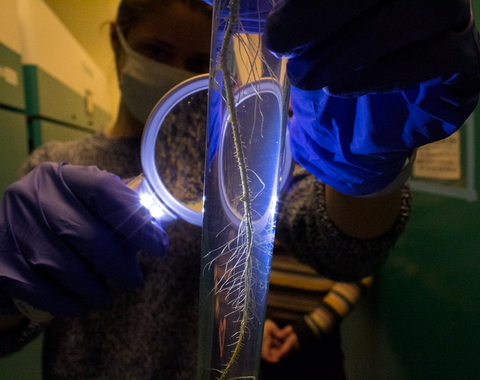
From symbiosis to global ecology, join a community of researchers breaking down the traditional silos in life sciences research. If you are interested in postdoctoral opportunities, please reach out directly to the Staff Scientist whose work aligns with your interests.
Find a P.I.
Dr. Brittany Belin
The Belin Lab is a team of microbiologists who study rhizobia, a collection of soil bacteria that can convert atmospheric nitrogen gas into ammonia. Many rhizobia form beneficial symbioses with legumes such as soybeans, peanuts, and clover, where they serve as sustainable alternatives to synthetic ammonia fertilizers. We use genetics and quantitative cell biology to understand the genes in rhizobia that make these symbioses more productive.
Our Research
Bacteria are the most abundant organisms in soil, and they can have major impacts on plant health. Pathogenic bacteria can devastate the productivity and quality of crops, whereas other bacterial species directly promote plant development. These "beneficial bacteria" can act in diverse ways, including making soil nutrients more accessible to plants, limiting the spread of pathogens, and helping plants survive extreme weather. Harnessing the functions of these beneficial bacteria has the potential to transform agriculture, and a major challenge of the next century will be to determine how they can be used to help feed the planet.
We study beneficial bacteria known as rhizobia that can promote the growth of legumes like peanuts and soybeans. These legume-rhizobia symbioses are keystone examples of inter-species cooperation, and they involve complex developmental processes. To initiate the symbiosis, legume roots release chemical compounds that attract soil rhizobia, which then colonize and invade the root surface. This triggers developmental pathways in the plants that lead to the formation of a new, symbiosis-specific plant organ known as a root nodule.
During root nodule formation, legume root cells differentiate into nodule-specific cell types that then proliferate to form the new organ. Rhizobia penetrate the root tissue until they reach these new nodule cells, where they are engulfed as intracellular (endo-) symbionts. Both partners then shift their metabolic output for mutual benefit: rhizobia shut down basal metabolic activities to become powerhouses for ammonia production, while legumes allocate sugars derived from photosynthesis to “feed” their rhizobial endosymbionts.
In the Belin lab, we try to understand the basic cell biology of rhizobia known as Bradyrhizobia, a genus of bacteria found in soils worldwide. Bradyrhizobia can form a symbiosis with many economically important legumes, including soybeans, peanuts, and acacia trees, and are the most globally dominant rhizobia, yet they are relatively poorly studied. We hope to better understand these beneficial bacteria and how they can be used to improve sustainability in agriculture.
Current Themes
Lipid membranes are defining features of cells. They are dynamic structures and undergo rapid remodeling in different environments, including during the transition from free-living to endosymbiotic lifestyles. Common lipids in nitrogen-fixing plant symbionts include the hopanoids, which are the cholesterol analogs of the bacterial domain. Hopanoid lipids are required for efficient Bradyrhizobium-legume symbiosis, and they appear to facilitate bacterial survival of root nodule-related stresses. They are also important regulators of the biophysical properties of the bacterial membrane. We are using a combination of biochemical, computational, and microscopy-based approaches to understand how hopanoids and other rhizobial lipids affect the organization and function of the endosymbiotic membrane.
The rhizosphere contains a complex community of bacterial species. To identify compatible symbionts in this microbial milieu, legumes and rhizobia express specialized receptors that bind signals from their preferred partners. This chemical dialogue is the basis of symbiotic specificity, and while many essential signals have been identified, these are a few of the thousands of molecules present in the rhizosphere. Where and when specificity-related signals are produced, and how they are delivered to a compatible partner, is not clear. We use bacterial genetics and a variety of -omics approaches to understand rhizobial signal secretion and response in the competitive legume rhizosphere.
Timeline
Recent Publications
Email: belin@carnegiescience.edu
Dr. Joe Berry - Emeritus
Joe Berry’s work is focused on photosynthesis and associated processes (exchange of gases, fluorescence, remote sensing, ecophysiology) at a hierarchy of scales from the chloroplasts to the planet.
Overview
Joe Berry’s work is focused on photosynthesis and associated processes (exchange of gases, fluorescence, remote sensing, ecophysiology) at a hierarchy of scales from the chloroplasts to the planet. His goal is to distill this information into equations that can be used in models to represent these processes in the complex webs of interacting processes that comprise the Biosphere of planet Earth. The focus is on understanding and representing the fundamental mechanisms so that our models give the right behavior and also help us understand why. Dr. Berry had been a faculty member at the Carnegie Institution since 1972 and is a member by Courtesy of the Department of Biological Sciences at Stanford. He obtained his Ph.D. in 1970 at the University of British Columbia in Botany. He obtained a B.Sc. in Chemistry and a M.Sc. in Soil Science from the University of California at Davis. He is a Fellow of the American Geophysical Union and a member of the National Academy of Sciences.
Timeline
Recent Publications
Email: jberry@carnegiescience.edu
Dr. Devaki Bhaya
Research in the Bhaya lab is driven by an interest in understanding how photosynthetic microorganisms perceive and evolve in response to environmental stressors, such as light, nutrients and viral attack. The team focuses on cyanobacteria which are abundant, globally relevant, and have been used to probe environmentally important processes ranging from photosynthesis to symbioses to circadian rhythms. They work both with model organisms and with cyanobacteria in naturally occurring communities. Recently, they have started to develop synthetic biology-inspired approaches to use in cyanobacteria.
Research Interests
Research in our lab is driven by an interest in understanding how photosynthetic microorganisms perceive and evolve in response to environmental fluctuations of light, nutrients and phage attack. We focus on an ancient and diverse group of microbes called cyanobacteria. They are
abundant, globally relevant and have been used to probe important processes such as photosynthesis, symbioses and circadian rhythms. Recently their environmental impact through toxic blooms and possible use as green chassis for high value products have gained attention.
I believe that collaboration rather than competition is a healthy research environment to strive for. Consequently, we work with several groups at Stanford and elsewhere. We use a toolbox that includes biochemistry, microscopy, genetics, bioinformatic pipelines, synthetic biology, statistical
methods. Several of us enjoy teaching, communicating science to a broad audience and feel this is an important activity.
We work both with both model cyanobacteria and with novel cyanobacterial isolates from naturally occurring communities. The lab has a current focus on querying a comprehensive 'omics dataset' acquired from the microbial mats in Yellowstone National Park, to understand resource-sharing
fluctuations and phages in extreme environments. Projects in the lab include understanding phototaxis; the behavior of co-cultured organisms, developing genetic tools for undomesticated microbes and a long-term goal to build synthetic microbial communities.
If this sounds interesting, feel free to contact me, visit our campus, do a lab rotation or a research project.
Collaborators
- Andrew Fire (Sukrit Silas), Dept. of Pathology &Genetics, School of Medicine, Stanford University.
- Arthur Grossman, Carnegie Institution for Science (funded by NSF grants)
- Brian Yu, CZ Biohub, Stanford University (JGI- Large scale CSP grant)
- Daniel Fisher (Mike Rosen, Gabriel Birzu), Dept. of Applied Physics, Stanford University
- Dave Ward, Fred Cohan, John Heidelberg (funded via Emerging Frontiers Grant)
- John Golbeck, Chris Voigt, Susan Rosser, Bill Rutherford
- KC Huang (Rose Chau, Tristan Ursell), Dept. of Bioengineering, Stanford University (funded by Stanford BioX grant)
- Mihai Pop, Jackie Meisel, Dept. Computer Sciences, University of Maryland
- Seppe Kuehn, Alison Smith, Chris Howe (funded by NSF-BBSRC grant)
- Todd Treangen, Santiago Segarra, and Luay Nakhleh, Dept. of Computer Sciences, Rice University (funded by NSF grant)
Press Releases
Recent Publications
Email: dbhaya@carnegiescience.edu
Dr. Alex Bortvin
The Bortvin Lab studies how transposable elements impact germ cell development and differentiation. Of particular interest is retrotransposon LINE-1. The lab uses genetic, molecular, and cell biological approaches to better understand how LINE-1 influences germ cell development and how germ cells fight back to protect their genomes.
Integrity of hereditary material — the genome — is critical for species survival. Genomes need protection from agents that can cause mutations affecting DNA coding, regulatory functions, and duplication during cell division. DNA sequences called transposons, or jumping genes (discovered by Carnegie’s Barbara McClintock), can multiply and randomly jump around the genome and cause mutations.
Research
The primary goal of our research is to understand the development and differentiation of mammalian germ cells. We approach this problem by focusing on the complex interactions of germ cells with transposable elements (transposons, TEs) populating their genomes.
Transposons are discrete DNA sequences that can multiply and spread around the genome. They were first discovered in the 1940s by a Nobel Prize Laureate Barbara McClintock who was a scientist at the Carnegie Department of Genetics. You might enjoy watching her 1983 Nobel Lecture. It is not like any of your TED talks of today, but it gives a terrific insight into the mind of an incredible scientist.
TEs come in two flavors – DNA transposons and retrotransposons. TEs influence their host genomes in many different ways such as by perturbing genomic integrity and gene expression. And yet, numerous studies of plant, fungal and animal species uncovered overwhelming evidence of TE contribution to the evolution and divergence of genomes. A generally accepted view in the field is that TEs and their hosts are constantly involved in an arms race where each party tries to outwit and conquer the other. Given the critical role of germ cells for reproduction and propagation of species, their genomes represent the most attractive playground for TE activity. We posit that closer examination of the billion years-long battle between germ cells and TEs might provide new insights into the biology of both germ cells and TEs that could not be readily identified otherwise.
In our work, we focus on retrotransposon LINE-1 as it is the only autonomous element that still remains active in human cells. LINE-1 is a retrotransposon, which means that it moves from one location to another via an RNA intermediate. TE expression and activity are prevented by the combination of epigenetic and posttranscriptional mechanisms. These include repressive histone modifications, KRAB-zinc finger proteins, and small RNAs.
An important role in TE control in animal germ cells belongs to Piwi-interacting RNAs (piRNAs). Genetic studies in flies, worms, and mice showed that this class of small RNAs is an ancient adaptive mechanism of TE regulation. Since their discovery in 2006, much has been learned about piRNA production and functions. Our laboratory has also contributed to this field by studying a conserved gene Maelstrom (Mael) that is required for piRNA function in flies and mice. In addition, we have carefully analyzed phenotypes of Mael mutant mice to understand how LINE-1 activity impacts germ cells of both sexes. We frequently use an excellent antibody developed by Sandy Martin against LINE-1-encoded protein ORF1p to identify temporal windows of LINE-1 expression during germ cell development in wild-type and mutant animals. This reagent also allowed us to describe cytoplasmic nuage particles of mouse germ cells and to perform quantification of LINE-1 expression in individual germ cell nuclei.
The combination of the above approaches allowed us to uncover:
- An essential role of nuage germinal cytoplasmic structures in TE control.
- The appearance of DNA damage in male germ cells upon TE derepression.
- The presence of DNA damage in wild-type fetal oocytes.
- A critical role of differential LINE-1 expression in the selective elimination of wild-type fetal oocytes.
- Potential cytotoxicity of the intermediates of LINE-1 retrotransposition.
- Detrimental effects of LINE-1 overexpression on meiotic chromosome synapsis.
- A role for MAEL protein in primary piRNA biogenesis in male germ cells.
- Unique RNA-binding properties of an HMG-box domain of MAEL protein.
- Transient relaxation of DNA methylation at the onset of meiosis.
Current Topics
We approach this problem through the analysis of the function of Maelstrom, a conserved protein implicated in transposon silencing in flies and mice by means of specialized small RNAs known as Piwi-interacting RNAs (or piRNAs).
We posit that the never-ending battle between the genome and selfish elements has profoundly influenced germ cell biology in the course of evolution. We are trying to understand how LINE-1 elements impact germ cells in the course of their normal development and differentiation, particularly during meiosis.
Timeline
Recent Publications
Email: bortvin@carnegiescience.edu
Dr. Ken Caldeira - Emeritus
Ken Caldeira is a Senior Scientist (emeritus) in Carnegie Science's Department of Global Ecology. He is also a Senior Scientist at Breakthrough Energy, a non-profit organization aimed at "helping the world get to net-zero greenhouse gas emissions while making sure everyone has access to the clean, affordable, and reliable energy they need to thrive."
Overview
Ken Caldeira is a Senior Scientist (emeritus) in Carnegie Science's Department of Global Ecology. He is also a Senior Scientist at Breakthrough Energy, a non-profit organization aimed at "helping the world get to net-zero greenhouse gas emissions while making sure everyone has access to the clean, affordable, and reliable energy they need to thrive." Caldeira is also a Professor (by courtesy) in Stanford University’s Department of Earth System Science, and participates in teaching and advising of Stanford students in that capacity. Professor Caldeira has a wide-spectrum approach to analyzing the world’s climate systems. He studies the global carbon cycle; marine biogeochemistry and chemical oceanography, including ocean acidification and the atmosphere/ocean carbon cycle; land-cover and climate change; the long-term evolution of climate and geochemical cycles; climate intervention proposals; and energy technology.
Caldeira is a member of the committee producing the 2015 U.S. National Academy of Sciences report "Geoengineering Climate: Technical Evaluation and Discussion of Impacts". He is also a contributing author to the Intergovernmental Panel on Climate Change (IPCC) AR5 report Climate Change 2013: The Physical Science Basis. In 2010, Caldeira was elected Fellow of the American Geophysical Union. He was a co-author of the 2010 US National Academy America's Climate Choices report. He participated in the UK Royal Society geoengineering panel in 2009 and ocean acidification panel in 2005. Caldeira was coordinating lead author of the oceans chapter for the 2005 IPCC report on Carbon Capture and Storage.
From the early 1990s to 2005, he was with the Energy and Environment Directorate at the Lawrence Livermore National Laboratory where he was awarded the Edward Teller Fellowship (2004), the highest award given by that laboratory. Caldeira did post-doctoral research in the Department of Geosciences at Penn State University and in the Energy and Environment Directorate of Lawrence Livermore National Laboratory. Caldeira received his B.A. from Rutgers College and both his M.S. (1988) and Ph.D. (1991) in atmospheric sciences from New York University. In the 1980’s, Caldeira held a number of positions developing computer software for various clients in New York’s financial district.
Among Caldeira’s many key contributions to science are his relatively early recognition of the threats posed by ocean acidification, his pioneering investigations into the environmental consequences of intentional intervention in the climate system (“geoengineering”), and central role in helping to elucidate what our understanding of long-term geochemical cycles implies for the fate of today’s carbon dioxide emissions.
Research
- Work on whatever problems seems most likely to provide the highest return on invested time and resources, where that return is measured in terms of social utility and intellectual interest.
- Suggest important and tractable problems to postdocs and students through conversations and questions.
- Attempt to facilitate their success in attacking these problems
- Energy and economic modeling and analysis
- Earth system modeling and analysis
- Coastal oceanographic experimentation and observation
Timeline
CV
- Ph.D.,1991: New York University, Atmospheric Sciences, Department of Applied Science
- M.S.,1988: New York University, Atmospheric Sciences, Department of Applied Science
- B.A.,1978: Rutgers College, Philosophy
Recent Publications
Dr. Phillip Cleves
In recent years, it has become obvious that animal-microbe interactions play important roles in shaping ecosystems and human health. The Cleves Lab is broadly interested in the genetic and cellular mechanisms that underlie such interactions and how these interactions evolve. Specifically, we study the charismatic and ecologically important cnidarian-algal endosymbiosis (which is essential to the lives of reef-building corals) to explore these questions. We investigate this symbiosis with an integrated approach using both corals and a model system for coral biology, the symbiotic anemone Aiptasia.
Research
We study the charismatic and ecologically important symbiosis between coral and their intracellular algal symbionts. We focus on this particular symbiosis for two main reasons. First, it is a dramatic example of a beneficial endosymbiosis in animals. These types of interactions are poorly understood. Second, this symbiosis is critical for the survival of coral reefs, and its breakdown (or “coral bleaching”) due to anthropogenic stressors, including climate change, is leading to the global decline of coral ecosystems. The loss of these biodiversity hotspots is causing extensive economic and human health damage.
Despite the importance of this symbiosis, its molecular underpinnings are not well understood. This has been due primarily to the lack of tractable laboratory model systems and a lack of genetic tools. During the past several years, we have established genetic methods, such as morpholinos and CRISPR-Cas9, in both corals and a model system for coral biology, the symbiotic anemone Aiptasia. Our lab uses these new genetic tools and a combination of cellular, molecular, and developmental biology techniques to study symbiosis in both Aiptasia and reef-building corals.
Contact Phil Cleves
Current Themes
Using a combination of ‘omics approaches, we have identified a set of genes and pathways potentially involved in the early steps of symbiosis formation and the maintenance of symbiosis. We are applying our novel genetic techniques to characterize the gene regulatory networks required for symbiosis.
Corals and anemones vary naturally in their tolerance to the stresses that cause bleaching. Major genetic contributors to this variation are both the cnidarians’ own genotypes and those of their algal symbionts. We are using model systems to discover how algal symbionts impact the ability of the host to tolerate stress.
Despite hundreds of studies, we still do not understand the mechanisms that trigger and/or protect against bleaching. Several models have been proposed, but most have not been tested adequately. We are using a combination of genetic and cellular studies in Aiptasia and coral to investigate these mechanisms.
We are continuing to expand the number of state-of-the-art molecular techniques available in symbiotic cnidarians. These new tools will continue to facilitate the discovery of basic principles of symbiosis and animal-microbe interactions, broadly.
Timeline
Recent Publications
Email: cleves@carnegiescience.edu
Dr. Jeffrey Dukes
Jeff Dukes has been a senior staff scientist in the Department of Global Ecology since 2022. Previously, he was a professor at Purdue University, where he held the Belcher Chair for Environmental Sustainability in the College of Agriculture and directed the Purdue Climate Change Research Center.
Overview
Jeff Dukes’ research examines how plants and ecosystems respond to a changing environment, focusing on topics from invasive species to climate change. Much of his experimental work seeks to inform and improve climate models. Dukes received a Ph.D from Stanford University and a bachelor’s degree from Brown University, both in Biological Sciences. He has been elected a Fellow and named a Public Engagement Fellow of the American Association for the Advancement of Science, and he is a Fellow of the Ecological Society of America. As the director of the Purdue Climate Change Research Center, Dr. Dukes led the Indiana Climate Change Impacts Assessment.
Contact Jeff Dukes
Recent News
Dr. David Ehrhardt
Plants are not as static as you think. David Ehrhardt combines confocal microscopy with novel visualization methods to see the three-dimensional movement within live plant cells to reveal the other-worldly cell choreography that makes up plant tissues.
Overview
Ehrhardt and his research group to explore cell-signaling and cell-organizational events as they unfold and to tackle how cells generate asymmetries and specific shapes.
Recently, his group provided surprising evidence on how this reorganization process works. The cytoskeleton undergirding in each cell includes an array of tubule-shaped protein fibers called microtubules. The evidence suggests that the direction of a light source influences a plant’s growth pattern.
Imaging data, combined with the results of genetic experiments, revealed a mechanism by which plants orient microtubule arrays. A protein called katanin drives this mechanism, which it achieves by redirecting microtubule growth in response to blue light. It does so by severing the microtubules where they intersect with each other, creating new ends that can regrow and themselves be severed, resulting in a rapid amplification of new microtubules lying in another, more desired, direction.
Ehrhardt received his Sc. B. from Brown University and his Ph.D. from Stanford University, where he was also a postdoctoral fellow before coming to Carnegie as a staff member.
Timeline
Dr. Chen-Ming Fan
The mouse is a traditional model organism for understanding physiological processes in humans. The Fan Lab uses the mouse to study the underlying mechanisms involved in human development and genetic diseases. They concentrate on identifying and understanding the signals that direct the musculoskeletal system to develop in the mammalian embryo.
Research
The Fan Lab studies the molecular mechanisms that govern mammalian development, using the mouse as a model. They use a combination of biochemical, molecular, and genetic approaches to identify and characterize signaling molecules and pathways that control the development and maintenance of the musculoskeletal system.
The musculoskeletal system provides mechanical support for our posture and movement. How it arises during embryogenesis pertains to the basic problem of embryonic induction. How the components of this system are repaired after injury and maintained throughout life is of biological and clinical significance. The Fan Lab studies how this system is generated and maintained.
Current Themes
The musculoskeletal system of the trunk originates from a common embryonic structure called the somite. Somites are segmented mesodermal units flanking both sides of the spinal cord. Their reiterated pattern is the basis for the repeated organization of the trunk. Under the inductive influence of adjacent tissues, cells within the somite give rise to muscles and bones. We have developed a 3-dimensional culture system that allows characterization of crucial long-range and contact-dependent cellular interactions that induce early skeletal and muscle fates. Our efforts toward designing new methods and assays to track somite development have enabled us to make novel observations.
Conversely, the Wnt family of proteins plays a key role in inducing the dermis/muscle dual potential progenitors. Combining our in vitro assay with microarrays analyses, we have uncovered previously unknown effectors and target genes of Wnt. Using an ex vivo whole embryo culture system coupled with somite-specific gene delivery, we discovered an unconventional pathway for Wnt signaling via the adenylyl cyclase/protein kinase A/Creb cascade that selectively activates myogenic transcriptional determinants Myf5 and MyoD.
We have identified the Hedgehog (Hh) proteins responsible for inducing the early skeletal fate. Hh largely utilizes evolutionarily conserved downstream mediators for inductive signaling. In addition, we also found a vertebrate-specific cell surface Hh binding protein Gas1. Gas1 mutants display skeletal defects related to or due to altered Hh signaling. Mechanistically, Gas1 helps transform the Hh diffusion gradient into its observed signaling activity gradient. This unexpected mechanism provides a new vision of Hh signaling pathway initiation and has direct implications for the long-range action of Hh.
Somites not only supply cells for embryonic muscles, but also contain muscle progenitors. The proliferative capacity of these progenitors depends upon the transcription factors Pax3 and Pax7. Both genes are activated by Wnt. Using inducible cell lineage tracing, we have found that early Pax7-expressing somitic cells directly give rise to adult muscle stem cells, i.e. the satellite cells. Lineage tracing of Pax7-expressing adult satellite cells indicates that they are indeed a stem cell source for muscle regeneration. Conditional inactivation of Pax7 at different developmental time points reveals that Pax7 is required for the proliferative properties of muscle progenitors up to 3 weeks after birth when they transition into quiescence. After this transition is made, however, both Pax3 and Pax7 are completely dispensable. Our finding of an age-dependent cell-intrinsic change in the genetic requirement for muscle stem cells cautions against inferring adult stem cell biology from embryonic studies, and has direct implications for the use of stem cells from hosts of different ages in transplantation-based therapies.
Timeline
Email: fan@carnegiescience.edu
Dr. Arthur Grossman
Arthur Grossman has been a Staff Scientist at Carnegie Science's Department of Plant Biology since 1982, and holds a courtesy appointment as Professor in the Department of Biology at Stanford University.
Overview
Grossman has performed research across fields ranging from plant biology, microbiology, marine biology, ecology, genomics, engineering and photosynthesis and initiated large scale algal genomics by leading the Chlamydomonas genome project and serving on the steering committee of the Porphyra umbilicalis genome project.
In 2002 he received the Darbaker Prize (Botanical Society of America) for work on microalgae and in 2009 received the Gilbert Morgan Smith Medal (National Academy of Sciences) for the quality of his publications on marine and freshwater algae. In 2017, he was Chair of the Gordon Research Conference on Photosynthesis and gave the Arnon endowed lecture on photosynthesis in Berkeley in March of 2017. He has given numerous plenary lectures and received a number of fellowships throughout his career, including the Visiting Scientist Fellowship - Department of Life and Environmental Sciences (DiSVA), Università Politecnica delle Marche (UNIVPM) (Italy, 2014), the Lady Davis Fellowship (Israel, 2011) and most recently the Chaire Edmond de Rothschild (to work IBPC in Paris in 2017-2018).
He has been Co-Editor in Chief of Journal of Phycology since 2013 and has served on the editorial boards of many well-respected biological journalism including the Annual Review of Genetics, Plant Physiology, Eukaryotic Cell, Journal of Biological Chemistry, Molecular Plant, and Current Genetics. He has also served on scientific advisory boards for both nonprofit and for profit research institutions and companies including Boyce Thompson Institute, Phoenix Bioinformatics, Exelixis, Martek Biosciences, Solazyme/TerraVia, GEM, Checkerspot and Phycoil.
Research
- Elucidating photosynthesis and nitrogen fixation in the cyanobacteria of the hot springs and how these processes are controlled.
- Understanding the importance of PTOX (plastid terminal oxidase) and the water-to-water cycle in plants, algae and organisms of the oligotrophic oceans (and in other environments).
- Examining the Chlamydomonas genome and using the genomic information to develop insights into gene function (e.g. the GreenCut; informatics analyses that led to identification of various genes/proteins critical for photosynthesis).
- The role of the xanthophyll cycle and LHC family proteins in the dissipation of excess absorbed light energy, a process designated nonphotochemical quenching or NPQ.
- We also identified the first phytochrome-like gene in cyanobacteria that was associated with a function; it is involved in the control of complementary chromatic adaptation (changes in light harvesting pigment composition in response to different light qualities), and characterized the cyanobacterial hli genes, which encode single membrane helix proteins that are likely the progenitors of LHC proteins in plants; the Hli proteins are critical for energy management in cyanobacteria. We (and Don Bryant) were the first to identify phycobiliprotein genes and were among the first to define the ways in which they are regulated. We also identified the regulators of the phosphorus and sulfur deprivation responses in Chlamydomonas… even before they were defined in Arabidopsis (e.g. PSR1, the transcriptional regulator of the phosphorus deprivation responses in Chlamydomonas, which is analogous to PHR1 in Arabidopsis). The more recent directions of the research being done in the laboratory are given below.
The Porphyra genome sequence has been completed and we published a manuscript describing that genome (Brawley et al., 2017). This project incorporated the expertise of many researchers working on marine algae and also led to the publication of two papers on the Porphyra transcriptome (Chan et al., 2012a, 2012b) and another that describes the genetic potential of bacteria that thrive on Porphyra thalli (in this case, three different planctomycetes) (Kim et al., 2016). Again, we expect this information to transform the field and provide novel information about the bacteria that grow on the blades of this macroalga. Many of these bacteria appear to be highly adapted to degrade the complex polysaccharides of the Porphyra cell wall and may be potentially useful in degrading plant cells walls and other polysaccharide-based material. Furthermore, it is also becoming clear that bacteria can impact the development of the macroalgae (e.g. some bacteria produce morphogens).
We were the first to identify regulators of the phosphorus and sulfur deprivation responses in Chlamydomonas (Davies et al., 1996, 1999; Wykoff et al., 1999). We are still studying nutrient deprivation responses (Gonzalez-Ballester et al. 2008; 2010; Aksoy et al., 2013; Grossman and Aksoy, 2015), especially with respect to regulatory elements and photosynthetic function (Saroussi et al., 2016; Saroussi et al., 2019). In recent work we also demonstrated that acidocalcisomes are critical for the acclimation of cells to sulfur deprivation (Aksoy et al., 2014), in either a direct or indirect way. The acidocalcisomes may also be a compartment important for storing metals (Sabeeha Merchant’s group). We have begun to methodically examine the various photosynthetic activities (including quenching, cyclic electron flow, linear electron flow, reaction center activity, ATP synthase activity, chlororespiration and the flow of plastid electrons to mitochondrial respiration) under various environmental conditions and in various mutant strains (Saroussi et al., 2016 and 2017), which is expanding our physiological/biochemical understanding of acclimation processes. Recently we made significant inroads into understanding how polyphosphate is a critical component in energy management in Chlamydomonas cells (Sanz-Luque et al., 2020a,b).
Analysis of metabolite trafficking between different subcellular compartments: We have been examining the trafficking of metabolites between different subcellular compartments and especially between the organelles. Mutants have been generated in many chloroplast transporters, including those for triose phosphate and malate/oxaloacetate and the control of those transporters and the phenotypic consequences of null mutations in the transporter genes are being analyzed.
The photoprotective gene: We have been examining the multilayered control of genes encoding proteins involved in the dissipation of excess absorbed light energy in photosynthetic organisms. The controls on these genes include the activity of photoreceptors (both for photosynthetically active light and UV radiation), CO2 levels and the accumulation of reactive oxygen species. This work is leading to a much more thorough understanding the environmental factors that integrate into control these genes and the critical mechanisms associated with photoprotection.
The carbon concentrating mechanism: We are examining the way in which the intracellular structure of the cell rearranges in responses to changes in the CO2 levels experienced by the cells. The rearrangements are extensive and involve changes in the location and arrangement of mitochondria with respect to chloroplasts and potentially the associations between the organelles.
I led the Chlamydomonas genome project, which was performed in collaboration with Dan Rokhsar and Simon Prochnik (as well as several people in the Chlamydomonas community). We were able to give the project a strong biological orientation that led to the development of the GreenCut (Merchant et al., 2007; Karpowicz et al., 2011; Grossman et al., 2019), which has been used to identify novel proteins potentially involved in photosynthesis. The GreenCut is a group of proteins common to green lineage organisms but not present (or present at very low similarity) in heterotrophic organisms. Using a refined analysis, we defined six hundred GreenCut proteins, with nearly half representing proteins of unknown function. This led to the identification of numerous novel proteins associated with photosynthesis, including a number that we have recently characterized; CPLD38 and CPLD49 are involved in assembly/stability of the cytochrome b6f complex and CGL71 is required for assembly of photosystem I (PSI) and appears to protect the PSI complex from oxygen disruption during assembly. A number of manuscripts describing these proteins have been published (Heinnickel et al., 2016; Heinnickel et al., 2013; Wittkopp et al., 2018). Related to this is the work with the Lagarias group on Chlamydomonas hmox mutants, which suggests that a bilin-associated photoreceptor might be involved in photosynthetic control during the transition from low to high/moderate light (Wittkopp, Duanmu et al., 2017). We also developed the concept of the FlagellaCut, which represents a group of proteins involved in the biogenesis/structure/regulation of the flagella. The FlagellaCut analyses allowed us to distinguish between those proteins needed for motility and those needed to satisfy the sensory function of the flagella (Merchant et al., 2007).
The Chlamydomonas genome project required both significant coordination and a strong biological foundation. It changed the ways in which researchers worked with Chlamydomonas (making it an enormously powerful model organism) and led to new work in which Martin Jonikas and I (but mostly Martin) developed an indexed mutant library of Chlamydomonas, for which the genome insertion sites are mapped; this library covers over 70% of the Chlamydomonas genes (having at least one mutant allele). The work on the initial library and a second paper describing an expanded library and its uses were recently published (Li et al.,2016; Li et al., 2019). Global analyses of the library for evaluating gene function is being reviewed at Nature Genetics (Fauser et al., 2021). Mutants in the library are available from the Chlamydomonas Resource Center with thousands of mutants that have already been ordered (and numerous ones published on).
We are using the Aiptasia-Symbiodiniaceae model system to explore interactions between the animal (Aiptasia, which is a sea anemone/cnidarian; corals are also cnidarians) and its algal endosymbiont. We have isolated many axenic Symbiodiniaceae strains (Xiang et al., 2013), developed a strong collaboration with John Pringle to exploit the Aiptasia system (Bieri et al., 2016) and showed that the bleaching of the holosymbiont is provoked by elevated temperature in the light or dark (Tolleter et al., 2013). We have also performed a lot of work with the cultured Symbiodinaceae alga Breviolum minutum (which can infect Aiptasia) and showed that it can grow rapidly under heterotrophic conditions (on glucose in the dark) and that in the light on glucose it bleaches and loses its photosynthetic apparatus (Xiang et al., 2013; Xiang et al., 2015; Xiang et al., 2016). Our work on the coral association has extended to collaborations with Simon Davy’s group in New Zealand (Oakley et al., 2016; Oakley et al., 2015 and 2017; Mathews et al., 2015, 2107, 2020; Sproles et al., 2016 and 2018; Gorman et al., 2020; Sproles et al., 2020a.b). We also have evidence showing that after Symbiodinium SSB01 enters and fully populates the Aiptasia host, it becomes limited for nitrogen within the host, and that the nitrogen-carbon exchange likely plays a strong role in controlling the symbiotic association. Work is currently underway to understand the role of photosynthesis and nitrogen in the infection/population of the host, elucidation of the ways in which sugars change the physiology of the symbiont and host and alter their interactions, elucidation of acclimation responses (light levels and temperature through RNA-seq and TEM analyses) and studies associated with the events involved in degradation of the coral-algal association (e.g. elevated temperature). We are also attempting to transform Breviolum minutum and other algae of the Symbiodiniaceae and generate gene knockout lines. Furthermore, we recently participating in analyzing the extremely tightly packed nuclear genome structure of Breviolum minutum, which was recently accepted for publication in Nature Genetics.
The establishment of plastids in photosynthetic eukaryotes has been attributed to a single primary endosymbiotic event that occurred ~1.6 BYA in which a cyanobacterium was engulfed and retained by a protist. Currently, we know little about early events in plastid evolution. Paulinella chromatophora (photosynthetic amoeba) represents a unique model to explore plastid evolution because it contains a cyanobacterium-derived photosynthetic organelle termed “chromatophore” that originated ~100 MYA. The chromatophore has a genome of ~1/3 the size of a typical unicellular cyanobacterial genome; this genome is likely experiencing genome reduction. Several genes from the ancestral cyanobacterium were transferred to the ‘host (protist)’ nuclear genome in a process called endosymbiotic gene transfer (EGT). At least some of the EGT proteins are routed to chromatophores after being translated outside of the organelle on cytoplasmic ribosomes (the chromatophore is therefore a canonical organelle). This was demonstrated for two cytoplasmically synthesized subunits associated with PSI (Nowack et al., 2012). A number of EGT-derived genes encode proteins integral to photosynthesis and photoprotection, with the hli gene family likely expanding in the host nuclear genome (Zhang et al., 2016). Additionally, both genomic and transcriptomic sequences were used to analyze integration of functionalities encoded on the chromatophore and protist nuclear genomes. Metabolic pathway reconstruction showed that the P. chromatophora nuclear gene inventory appears to complement gene loss on the chromatophore genome. Surprisingly, this is not predominantly achieved through EGT from the nascent organelle but is mostly achieved by retailoring of host genes to compensate for loss of chromatophore genes and also through horizontal gene transfer (HGT) from diverse bacterial sources (Nowack et al., 2016). This latter finding may reflect the phagotrophic life-style associated with the protist as it was becoming a photoautotroph (the protist was still consuming bacteria when the cyanobacterium first became an intracellular resident). More recent work shows that some genes derived by EGT evolved gene families that expanded through retrotransposition and are critical for the new life style experienced by the photosynthetic amoeba (Gabr et al., 2020; Stephens et al., 2021; Calatrava et al., 2021).
Press Releases
CV
Postdoc, 1978 - 1982: Rockefeller University, Uptake of Polypeptides Into Chloroplasts
Ph.D., 1978: Indiana University, Characterization of Photosynthetic Mutants in Chlamydomonas reinhardtii
B.S. (With Honors), 1973: Brooklyn College, Biology
- 2021 - Editor of the Chlamydomonas Sourcebook
- 2021 - Search Committee for Life Science Director – Carnegie Institution
- 2021 - Search Committee – Senior Staff Scientist – Carnegie Institution
- 2021 - Search Committee – Staff Associate – Carnegie Institution
- 2021 -Co-editor-in Chief, Journal of Phycology (from 2012)
- 2021 - Caltech Biosafety Committee
- 2021 - Editorial Board, Current Genetics (from 2000)
- 2021 - Building Committee, Life Science Building in Pasadena for Carnegie Institution
- 2021 - External Jury Member for Florence Mus Habilitation à Diriger des Recherches
- 2021 - Boyce Thompson Institute – Scientific Advisory Board (from 2014)
- 2019 - NSF Panel for Science and Technology Center
- 2019 - DOE-BES Panel
- 2018 - Organizer of the International Conference on the Genetics and Molecular Biology of Chlamydomonas
- 2018 - Organizing Committee, International Conference on Microbial Photosynthesis
- 2017 - Edmond de Rothschild Chair Fellowship to work at Institut de Biologie Physico-Chimique, Paris
- 2017 - Arnon Endowed Lecture – Berkeley
- 2017 - Chair of the Gordon Conference on Photosynthesis
- 2016 - Review Panel for the Integrated Microbial Diversity Program/Canadian Institute for Advanced Research
- 2015 - Review Panel for Genomics and Synthetic Biology Program, NYU, Abu Dhabi
- 2015 - Co-Chair of the Gordon Conference on Photosynthesis
- 2014 - Visiting Scientist Fellowship - Università Politecnica delle Marche
- 2017 - Steering Committee, University of Texas Culture Collection (from 2011)
- 2014 - Review of Science and Technology Center, University of Nebraska
- 2013 - Organizer of Western Photosynthesis Conference
- 2013 - Participant in17th International Course of School of Pure & Applied Biophysics, Venice
- 2013 - External examiner on thesis defense of Laura Houille, IBPC, Paris, France
- 2013 - Member of EU Sunbiopath Evaluation committee
- 2013 - Panel Member to Review Science and Technology Center, University of Nebraska
- 2013 - Review of Science and Technology Centers for NSF
- 2012 - Co-organizer of Western Photosynthesis Conference
- 2012 - Editorial Board, Journal of Phycology (from 1997)
- 2011 - Member of DOE Evaluation Committee, Plant Research Laboratory
- 2011 - Recipient of Lady Davis Fellowship (Israel)
- 2009 - Steering committee, Joint Genome Institute
- 2009 - Recipient Gilbert Morgan Smith Medal (National Academy of Sciences)
- 2009 - Editorial Board Annual Review of Genetics (from 2005)
- 2008 - National Resources Defense Council Algal Biofuels Advisory Committee
- 2007 - Editorial Board, Eukaryotic Cell
- 2008 - Editorial Board, Molecular Plant
- 2004 - Geographical representative for the International Society of Photosynthesis Research
- 2004 - Editorial Board, Plant and Cell Physiology (from 2000)
- 2000- Scientific Advisory Board for the Wallenberg Consortium North (from 2000)
- 2002 - Darbaker Prize for work on microalgae (Botanical Society of America)
- 2000 - Advisory Committee, Arizona State University Consortium for NSF funded Biotechnology Cente
- 2000 - Organizer of Symposium ‘The Dynamics and Evolution of Light Harvesting Complexes
- 1999 - Co-organizer of Symposium to Honor the retirement of Olle Bjórkman
- 1998 - Organizer of US-Japan Binational Meeting (Asilomar, CA)
- 1998 - Editorial Board, Journal of Biological Chemistry (from 1996)
- 1996 - Guest on the Editorial Board of the Annual Review of Genetics
- 1995 - Plenary Lecture - Japan Society of Plant Physiologists
- 1995 - Coordinator for the Organization of the Plant Biology Retreat, Stanford University
- 1994 - Member of AIBS panel to evaluate joint projects in Plant Biology
- 1994 - Editor-Seminars in Cell Biology "Light regulation in photosynthetic organisms"
- 1994 - Organizer of the Plant Biology Retreat, Stanford University
- 1993 - Guest Editor of the Annual Review of Genetics
- 1993 - Organizer: Cyanobacterial Workshop at Asilomar, CA
- 1993 - Guest lecturer in Marine Molecular Phycology Course at Friday Harbor Marine Station
- 1992 - Recipient-Nehru University, Dept of Biotechnology Fellowship
1992 - Organizer of the Carnegie Institution Plant Biology Seminar Series
1991 - Member Photosynthesis Panel (USDA)
1991 - Co-organizer, conference on tetrapyrroles (with Paul Castelfranco)
1990 - Editorial Board Journal of Plant Growth Regulation
1989 - NSF Panel - Postdoctoral Fellowship Awards
1988 - Organizer of the Carnegie Seminar Series
1988 - Co-Organizer of C. Stacy French Symposium on Photosynthesis.
1988 - NSF Panel - Postdoctoral Fellowship Awards
1987 - Program Committee “Molecular Biololgy of Cyanobacteria Workshop, St. Louis, MO
1987 - Photosynthesis Panel (USDA)
1987 - Organizer of the Carnegie Seminar Series
1987-93 - Editorial Board, Plant Physiology
1985 - Guest Editor Annu Rev Plant Physiology
1985 - Plant Molecular Biology Panel (USDA)
1984 - NIH Postdoctoral Fellowship Panel
1979-81 - Postdoctoral Fellowship Panel (NIH)
1977 - Floyd Fellowship
1974-77 - National Science Foundation Predoctoral Fellowship
1972 - L. Whorley Award in Biology
1968-72 - New York State Regents Scholarship Phi Beta Kappa
- Chief of Genetics, Solazyme (2007-2015) – Algal Biotechnology
- Martek Biosciences Corporation (1993-2000)
- Exelixis Pharmaceuticals (1995-2001)
- Phoenix Bioinformatics (2013-2018; 2020-Current)
- Checkerspot (2016-Current)
- Phycoil (2016-Current)
- GEM Health (2020-Current)
Dr. William Ludington
The Ludington lab investigates the molecular and genetic basis of complex ecological interactions focusing on the gut microbiome. We use the supreme genetic tools of Drosophila and the tractability of its gut microbiome to study precise mechanisms of host-symbiont specificity from both host and microbial sides.
Research
The intestines of animals are typically colonized by a complex, relatively stable microbiota that influences health and fitness, but the underlying mechanisms of colonization remain poorly understood. As a typical animal, the fruit fly, Drosophila melanogaster, is associated with a consistent set of commensal bacterial species, yet the reason for this consistency is unknown. We use gnotobiotic flies, genetics, microscopy, and microbiology techniques to examine the development and maintenance of a defined region in the Drosophila foregut that selects and maintains a multispecies community of bacteria with strain-level specificity.
How is exquisite regulation achieved? What does the host control? How do bacterial interactions affect the community composition? How do these relationships evolve?
Current Topics
We recently identified a physical niche structure in the fly gut that houses specific bacterial symbionts. We examine the fly genetics of gut symbiosis including the construction of the microbial niche.
Using both gnotobiotic flies and high throughput in vitro growth assays, we study the microbial interactions that shape the fly gut microbiota.
Using gnotobiotic flies and a battery of physiological and fitness assays, we study the effects of gut microbial community ecology on host cell physiology.
We have developed single-fly feeding and live fly microscopy techniques to measure microbial populations in the gut. These approaches allow us to visualize the process of gut colonization in real time to understand how the fly gut selects the correct bacterial species for colonization.
Recent Publications
Abstract: The gut is continuously invaded by diverse bacteria from the diet and the environment, yet microbiome composition is relatively stable over time for host species ranging from mammals to insects, suggesting host-specific factors may selectively maintain key species of bacteria. To investigate host specificity, we used gnotobiotic Drosophila, microbial pulse-chase protocols, and microscopy to investigate the stability of different strains of bacteria in the fly gut. We show that a host-constructed physical niche in the foregut selectively binds bacteria with strain-level specificity, stabilizing their colonization. Primary colonizers saturate the niche and exclude secondary colonizers of the same strain, but initial colonization by Lactobacillus species physically remodels the niche through production of a glycan-rich secretion to favor secondary colonization by unrelated commensals in the Acetobacter genus. Our results provide a mechanistic framework for understanding the establishment and stability of a multi-species intestinal microbiome.
LinkAbstract: Non-mammalian model organisms have been essential for our understanding of the mechanisms that control development, disease, and physiology, but they are underutilized in pharmacological and toxicological phenotypic screening assays due to their low throughput in comparison with cell-based screens. To increase the utility of using Drosophila melanogaster in screening, we designed the Whole Animal Feeding FLat (WAFFL), a novel, flexible, and complete system for feeding, monitoring, and assaying flies in a high-throughput format. Our 3D printed system is compatible with inexpensive and readily available, commercial 96-well plate consumables and equipment. Experimenters can change the diet at will during the experiment and video record for behavior analysis, enabling precise dosing, measurement of feeding, and analysis of behavior in a 96-well plate format.
LinkAbstract: The intestines of animals are colonized by commensal microbes, which impact host development, health, and behavior. Precise quantification of colonization is essential for studying the complex interactions between host and microbe both to validate the microbial composition and study its effects. Drosophila melanogaster, which has a low native microbial diversity and is economical to rear with defined microbial composition, has emerged as a model organism for studying the gut microbiome. Analyzing the microbiome of an individual organism requires identification of which microbial species are present and quantification of their absolute abundance. This article presents a method for the analysis of a large number of individual fly microbiomes. The flies are prepared in 96-well plates, enabling the handling of a large number of samples at once. Microbial abundance is quantified by plating up to 96 whole fly homogenates on a single agar plate in an array of spots and then counting the colony forming units (CFUs) that grow in each spot. This plating system is paired with an automated CFU quantification platform, which incorporates photography of the plates, differentiation of fluorescent colonies, and automated counting of the colonies using an ImageJ plugin. Advantages are that (i) this method is sensitive enough to detect differences between treatments, (ii) the spot plating method is as accurate as traditional plating methods, and (iii) the automated counting process is accurate and faster than manual counting. The workflow presented here enables high-throughput quantification of CFUs in a large number of replicates and can be applied to other microbiology study systems including in vitro and other small animal models.
LinkAbstract: Observational studies reveal substantial variability in microbiome composition across individuals. Targeted studies in gnotobiotic animals underscore this variability by showing that some bacterial strains colonize deterministically, while others colonize stochastically. While some of this variability can be explained by external factors like environmental, dietary, and genetic differences between individuals, in this paper we show that for the model organism Drosophila melanogaster, interactions between bacteria can affect the microbiome assembly process, contributing to a baseline level of microbiome variability even among isogenic organisms that are identically reared, housed, and fed. In germ-free flies fed known combinations of bacterial species, we find that some species colonize more frequently than others even when fed at the same high concentration. We develop an ecological technique that infers the presence of interactions between bacterial species based on their colonization odds in different contexts, requiring only presence/absence data from two-species experiments. We use a progressive sequence of probabilistic models, in which the colonization of each bacterial species is treated as an independent stochastic process, to reproduce the empirical distributions of colonization outcomes across experiments. We find that incorporating context-dependent interactions substantially improves the performance of the models. Stochastic, context-dependent microbiome assembly underlies clinical therapies like fecal microbiota transplantation and probiotic administration and should inform the design of synthetic fecal transplants and dosing regimes.
LinkA longstanding goal of biology is to identify the key genes and species that critically impact evolution, ecology, and health. Yet biological interactions between genes (1, 2), species (3–6), and different environmental contexts (7–9) change the individual effects due to non-additive interactions, known as epistasis. In the fitness landscape concept, each gene/organism/environment is modeled as a separate biological dimension (10), yielding a high dimensional landscape, with epistasis adding local peaks and valleys to the landscape. Massive efforts have defined dense epistasis networks on a genome-wide scale (2), but these have mostly been limited to pairwise, or two-dimensional, interactions (11). Here we develop a new mathematical formalism that allows us to quantify interactions at high dimensionality in genetics and the microbiome. We then generate and also reanalyze combinatorically complete datasets (two genetic, two microbiome). In higher dimensions, we find that key genes (e.g. pykF) and species (e.g. Lactobacillus plantarum) distort the fitness landscape, changing the interactions for many other genes/species. These distortions can fracture a “smooth” landscape with one optimal fitness peak into a landscape with many local optima, regulating evolutionary or ecological diversification (12), which may explain how a probiotic bacterium can stabilize the gut microbiome.
LinkTimeline
All Publications
- A chemically-defined growth medium to support Lactobacillus-Acetobacter sp. community analysis. K Aumiller, R Scheffler, ET Stevens, ZT Güvener, E Tung, AB Grimaldo, ... PLoS One 18 (10), e0292585; 2023
- Gut microbiome dysbiosis is associated with host genetics in the Norwegian Lundehund. C Melis, AM Billing, PA Wold, WB Ludington. Frontiers in Microbiology 14, 1209158; 2023
- Expanding evolutionary theories of ageing to better account for symbioses and interactions throughout the Web of Life. E Bapteste, P Huneman, L Keller, J Teulière, P Lopez, EC Teeling, .... Ageing Research Reviews, 101982; 2023
- Signal in the noise: temporal variation in exponentially growing populations. EW Jones, J Derrick, RM Nisbet, W Ludington, DA Sivak. arXiv preprint arXiv:2304.11474; 2023
- Pulsed, continuous or somewhere in between? Resource dynamics matter in the optimisation of microbial communities. AD Letten, WB Ludington. The ISME Journal 17 (4), 641-644; 2023
- A symbiotic physical niche in Drosophila melanogaster regulates stable association of a multi-species gut microbiota. R Dodge, EW Jones, H Zhu, B Obadia, DJ Martinez, C Wang, .... Nature Communications 14 (1), 1557; 2023
- Whole Animal Feeding FLat (WAFFL): a complete and comprehensive validation of a novel, high-throughput fly experimentation system. MDLA Jaime, GH Salem, DJ Martinez, S Karott, A Flores, CD Palmer, .... G3: Genes, Genomes, Genetics 13 (3), jkad012; 2023
- From worms to humans: Understanding intestinal lipid metabolism via model organisms. DW Kozan, JT Derrick, WB Ludington, SA Farber. Biochimica et Biophysica Acta (BBA)-Molecular and Cell Biology of Lipids, 159290; 2023
- Fast Colony Forming Unit Counting in 96-Well Plate Format Applied to the Drosophila Microbiome. R Dodge, WB Ludington. Journal of Visualized Experiments, doi:10.3791/64298; 2023
- Nutrient encryption and the diversity of cobamides, siderophores, and glycans. ME Taga, WB Ludington. Trends in Microbiology; 2022
- Higher-order microbiome interactions and how to find them. WB Ludington. Trends in Microbiology; 2022
- Microbiome-by-ethanol interactions impact Drosophila melanogaster fitness, physiology, and behavior. JA Chandler, LV Innocent, DJ Martinez, IL Huang, JL Yang, MB Eisen, .... iScience 25 (4); 2022
- Stochastic microbiome assembly depends on context. EW Jones, JM Carlson, DA Sivak, WB Ludington. Proceedings of the National Academy of Sciences 119 (7), e2115877119; 2022
- Genetic rescue of the highly inbred Norwegian Lundehund. C Melis, C Pertoldi, WB Ludington, C Beuchat, G Qvigstad, AV Stronen. Genes 13 (1), 163; 2022
- From a parts list to assembly instructions and an operating manual: how small host models can re-write microbiome theory. NM Vega, WB Ludington. Current Opinion in Microbiology 64, 146-151 1; 2021
- High dimensional geometry of fitness landscapes identifies master regulators of evolution and the microbiome. H Eble, M Joswig, L Lamberti, WB Ludington. bioRxiv, 2021.09. 11.459926; 2021
- Master regulators of evolution and the microbiome in higher dimensions. H Eble, M Joswig, L Lamberti, W Ludington. arXiv preprint arXiv:2009.12277; 2020
- Drosophila as a model for the gut microbiome. WB Ludington, WW Ja, PLoS Pathogens 16 (4), e1008398; 2020
- Testing the role of intraflagellar transport in flagellar length control using length-altering mutants of Chlamydomonas. K Wemmer, W Ludington, WF Marshall. Philosophical Transactions of the Royal Society B 375 (1792), 20190159; 2020
- Bacterial interspecies interactions modulate pH-mediated antibiotic tolerance. A Aranda-Díaz, B Obadia, R Dodge, T Thomsen, ZF Hallberg, ZT Güvener, .... eLife 9, e51493; 2020
- Bellymount enables longitudinal, intravital imaging of abdominal organs and the gut microbiota in adult Drosophila. LAJ Koyama, A Aranda-Díaz, YH Su, S Balachandra, JL Martin, .... PLoS Biology 18 (1), e3000567; 2020
- Cluster partitions and fitness landscapes of the Drosophila fly microbiome. H Eble, M Joswig, L Lamberti, WB Ludington. Journal of Mathematical Biology 79 (3), 861-899; 2019
- Microbiome interactions shape host fitness. AL Gould, V Zhang, L Lamberti, EW Jones, B Obadia, N Korasidis, .... Proceedings of the National Academy of Sciences 115 (51), E11951-E11960; 2018
- Microbial quantity impacts Drosophila nutrition, development, and lifespan. ES Keebaugh, R Yamada, B Obadia, WB Ludington, WJ William. iScience 4, 247-259; 2018
- Diet influences host–microbiota associations in Drosophila. B Obadia, ES Keebaugh, R Yamada, WB Ludington, WW Ja. Proceedings of the National Academy of Sciences 115 (20), E4547-E4548; 2018
- Probabilistic invasion underlies natural gut microbiome stability. B Obadia, ZT Güvener, V Zhang, JA Ceja-Navarro, EL Brodie, WW Ja, .... Current Biology 27 (13), 1999-2006. E8; 2017
- Assessing biosynthetic potential of agricultural groundwater through metagenomic sequencing: A diverse anammox community dominates nitrate-rich groundwater. WB Ludington, TD Seher, O Applegate, X Li, JI Kliegman, C Langelier, .... PLoS One 12 (4), e0174930; 2017
- Stable Host Gene Expression in the Gut of Adult Drosophila melanogaster with Different Bacterial Mono-Associations. C Elya, V Zhang, WB Ludington, MB Eisen. PLoS One 11 (11), e0167357; 2016
- Maternal IgG and IgA antibodies dampen mucosal T helper cell responses in early life. MA Koch, GL Reiner, KA Lugo, LSM Kreuk, AG Stanbery, E Ansaldo, .... Cell 165 (4), 827-841; 2016
- A systematic comparison of mathematical models for inherent measurement of ciliary length: how a cell can measure length and volume. WB Ludington, H Ishikawa, YV Serebrenik, A Ritter, RA Hernandez-Lopez, .... Biophysical Journal 108 (6), 1361-1379; 2015
- Avalanche-like behavior in ciliary import. WB Ludington, KA Wemmer, KF Lechtreck, GB Witman, WF Marshall. Proceedings of the National Academy of Sciences 110 (10), 3925-3930; 2013
- Organelle size equalization by a constitutive process. WB Ludington, LZ Shi, Q Zhu, MW Berns, WF Marshall. Current Biology 22 (22), 2173-2179; 2012
- Intraflagellar transport particle size scales inversely with flagellar length: revisiting the balance-point length control model. BD Engel, WB Ludington, WF Marshall. Journal of Cell Biology 187 (1), 81-89; 2009
- Automated analysis of intracellular motion using kymographs in 1, 2, and 3 dimensions. WB Ludington, WF Marshall. Three-Dimensional and Multidimensional Microscopy: Image Acquisition and Processing XVI; 2009
- fester, A candidate allorecognition receptor from a primitive chordate. SV Nyholm, E Passegue, WB Ludington, A Voskoboynik, K Mitchel, .... Immunity 25 (1), 163-173; 2006
- MHC-Independent Allorecognition of Invertebrates—A Link between Invertebrate Histocompatibility and Vertebrate Adaptive Immunity? Isolation and Characterization of a Protochordate Histocompatibility Locus. AW De Tomaso, SV Nyholm, KJ Palmeri, KJ Ishizuka, WB Ludington, .... Journal of the American Society of Nephrology 17 (3), 595-599; 2006
- Isolation and characterization of a protochordate histocompatibility locus. AW De Tomaso, SV Nyholm, KJ Palmeri, KJ Ishizuka, WB Ludington, .... Nature 438 (7067), 454-459; 2005
- Genetic variation in Mastocarpus papillatus (Rhodophyta) in central California using amplified fragment length polymorphisms. WB Ludington, KA Callicott, AW Detomaso. Plant Species Biology 19 (2), 107-113; 2004
Dr. Margaret McFall-Ngai
Pioneering microbiome specialist Margaret McFall-Ngai was the first hire for Carnegie’s newly launched research division for Biosphere Sciences & Engineering in November 2021.
Overview
McFall-Ngai joined the institution in January, 2022, from the University of Hawai‘i at Mānoa, where she was a professor at the Pacific Biosciences Research Center’s Kewalo Marine Laboratory and the center’s director emerita.
Much of her work has concerned the relationship between the bobtail squid and the luminescent bacterium Vibrio fischeri, which colonizes the nocturnal cephalopod and allows it to camouflage itself by Moon- and starlight to hunt and escape predators. Using this association as a model, she has been able to elucidate many details about how the microbiome shapes various aspects of animal life, including development and longevity.
McFall-Ngai was a Guggenheim Fellow in 2010, a Caltech Moore Scholar between 2011 and 2013, and an Andrew D. White Professor-at-Large at Cornell University between 2010 and 2016. She is a member of the National Academy of Sciences, the American Academy of Arts and Sciences, and the American Academy of Microbiology.
She received her undergraduate degree in biology from the University of San Francisco and her Ph.D. in the same from UCLA.
Research Interests
McFall-Ngai's research program has combined training experiences in both organismal and molecular biology to develop two major focuses:
- 1) host-bacterial symbiosis; and,
- 2) the 'design' of tissues that interact with light.
The experimental strategy for both areas of research relies on methods that have been developed for the study of the squid-vibrio association over the past 20 years.
In addition, she has a continuing interest in the history and development of the field of microbial symbiosis and its impact on biology; a focused effort in this area promises to drive an unprecedented integration across biology as a whole. Such integration will revolutionize the way we think about all aspects of the biosphere.
Major Questions
-
With each generation, how does the animal harvest the often rare symbiont from the environment upon birth or hatching?
-
How do the host and symbiont recognize one another?
-
How does the bacterial partner influence the developmental program of the host?
-
How is stability achieved and maintained in the mature association?
-
What are the principal differences between how an animal interacts with pathogenic bacterial species and beneficial ones?
CV
- Doctor Honoris Causa, Ecole Polytechnique Federale de Lausanne, Switzerland (2015)
- Elected Member, National Academy of Science, 2014; Speaker at Induction Ceremony (April 2015)
- Elected Member, American Academy of Arts and Sciences, 2012; Speaker for Section II, Induction Ceremony EU Marie Curie Fellowship (2011-2016)
- John Simon Guggenheim Fellowship, 2009-2010
- Finalist, International Prize (Japan), 2010
- U San Francisco, Arthur Furst Distinguished Research Award 2008
- Elected Chair, Rhodes Scholar Committee, State of Hawaii 2002-2004
- U Hawaii, 2002 Regent’s Medal for Excellence in Research
- Elected to the American Academy of Microbiology, 2002
- Paul Illg Distinguished Lecturer 2002,
- Friday Harbor Laboratories, Miescher-Ishida Prize 1999/2000, for contributions to symbiosis–International Society Endocytobiology
- Albert S Raubenheimer Outstanding Junior Faculty Award - Letters, Arts and Sciences, USC, 1994
- University of California President's Fellow, 1986-1988
- NIH National Research Service Award, 1985-1986
- Fleming Fellow of Jules Stein Eye Institute, UCLA 1984-1986
- Allergan Fellow, 1984-1985
- UCLA Graduate Woman of the Year, 1983
- Dwight D Davis Award for Best Paper, Vertebrate Morphology Section, American Society of Zoologists, 1983
- The Otto Scherbaum Award for Outstanding Research by a Graduate Student, Dept of Biology, UCLA, 1983
- AM Schechtman Award for Outstanding Teaching Assistant, Dept of Biology, UCLA, 1979-1980
- American Society for Microbiology;
- Society for Developmental Biology;
- Society for Integrative and Comparative Biology;
- Sigma Xi;
- American Association for the Advancement of Science
- Advisory Board, National Science Foundation, Biology Directorate, Jan 2015-Dec 2016
- Board of Governors, Amer Acad Microbiology, July 2014-July 2017
- NIH, External Review Panel, Human Microbiome Project, Evaluation 2016/2017
- Scientific Advisory Board, Chair, Human Microbiome and Anthropology, CIFAR, U British Columbia (2014-current)
- Harvard Visiting Committee, Department of Organismic and Evolutionary Biology, Harvard U (2013- present)
- External Advisory Board, Host/Microbiome Initiative, University of Michigan (2013-current)
- President's Advisory Board, Christian-Albrechts University-Kiel, (2009-present)
- External Advisory Board, Collaborative Research Centre, German Res, Fdn, “Origin and Function of Metaorganisms”, (2015-2019)
- Member, Forum on Microbial Threats, Institute of Medicine, National Academy of Sciences (current)
- Scientific Advisory Board, Global Health Institute, EPFL, Lausanne, Switzerland (current)
- Selection committee, Daniel Jouvance Award, French Academy of Sciences, (current)
- Discussant – ASM Blog: ‘This Week in Microbiology (TWiM)’
- Scientific Advisor, Symbiomics, Molecular Ecol/Evol of Bacterial Symbionts (training grant), EU (2010-2015)
- Steering Committee, Amer Acad Microbiol Conf, “Promoting Ethical Practices in Science”, (2015)
- Principal Organizer, Workshop on Symbiosis, Gulbenkian Inst, Portugal, with M Blaser (NYU) – Summer 2015
- Principal Organizer, The Art of Symbiosis, Central Library, Cornell U (2014)
- Co-organizer, ‘Nanoempires: Microbes in Health and Disease’, New York City universities (2014)
- Principal Organizer, NESCent Meeting, "The origin and evolution of animal-microbe interactions" (2011)
- Chair – ASM General Meeting (2011-2013); Chair-Elect (2008-2010)
- Organization Committee, ASM Beneficial Microbes Conference, Miami (2010);
- Chair, 2008 Conference Co-Organizer, Peptidoglycan Workshop, Baeza, Spain (2010)
- Member, NAS committee/Board of Life Sciences, “A new biology for the 21st century: Ensuring the United States leads the coming biology revolution” (2008-2010)
- Current Editorial Board—Cell Host and Microbe, 2007- ; Biological Bulletin 1996- ; Current Opinions in Microbiology 2006- ; Evolution and Development (Wiley Online Library) 2009- ; mBio 2011-; Microbe 2013-
- Manuscript reviewer: Appl Environ Microbiol, BioScience, Comp Biochem Physiol, Dev Biol, Environ Microbiol, Development, mBio J Comp Physiol, J Bacteriol, Mar Biol, Nature, Mol Micro, PNAS,
- Science Proposal reviewer/panel member: NSF, NOAA, Sea Grant, Australian National Research Council, Leverhulme Trust of London; Alberta Heritage Foundation for Medical Research, Institut Universitaire de France
Recent Publications
Dr. Anna Michalak
Dr. Anna M. Michalak studies the cycling and emissions of greenhouse gases at the Earth surface at urban to global scales–scales directly relevant to informing climate and policy.
Overview
Prior to joining Carnegie, Anna Michalak was the Frank and Brooke Transue Faculty Scholar and Associate Professor at the University of Michigan. She holds a Ph.D. and M.S. in Civil and Environmental Engineering from Stanford University, and a B.Sc.(Eng.) in Environmental Engineering from the University of Guelph, Canada.
She is the lead author of the U.S. Carbon Cycle Science Plan, a former Editor of the journal Water Resources Research, and Chair of the scientific advisory board for the European Integrated Carbon Observation System. She is the recipient of the Presidential Early Career Award for Scientists and Engineers (nominated by NASA), the NSF CAREER award, the Leopold Fellowship in environmental leadership, and the American Geophysical Union’s Simpson Medal.
Timeline
CV
- Ph.D., 2003: Stanford University, Civil & Environmental Engineering
- M.S., 1998: Stanford University, Civil & Environmental Engineering
- B.Sc.(Eng.): 1997, University of Guelph, Ontario, Environmental Engineering
- Carnegie Institution for Science, Stanford, California
- Department of Global Ecology
- Director, 2020 – present
- Faculty Member, 2011 – present
- Department of Global Ecology
- Stanford University, Stanford, California
- Department of Earth System Science
- Professor, by courtesy, 2016 – present
- Associate Professor, by courtesy, 2011 – 2016
- Department of Biology
- Professor, by courtesy, 2021 – present
- Emmett Interdisciplinary Program in Environment and Resources
- Affiliated Faculty, 2011 – present
- Department of Earth System Science
- National Center for Atmospheric Research (NCAR), Boulder, Colorado
- Institute for Mathematics Applied to Geosciences (IMAGe)
- Computational and Information Systems Laboratory
- ASP Faculty Fellow, 2010 – 2011
- University of Michigan, Ann Arbor, Michigan
- Department of Civil and Environmental Engineering
- Adjunct Associate Professor, 2011 – 2015
- Frank and Brooke Transue Faculty Scholar, 2010 – 2011
- Associate Professor, with tenure, 2009 – 2011
- Assistant Professor, 2004 – 2009
- Department of Atmospheric, Oceanic and Space Sciences
- Associate Professor, with tenure, 2009 – 2011
- Assistant Professor, 2005 – 2009
- Department of Civil and Environmental Engineering
- National Oceanic and Atmospheric Administration, Boulder, Colorado
- Climate Monitoring and Diagnostics Laboratory (CMDL)
- NOAA Climate and Global Change Postdoctoral Fellow, 2003 – 2004
- Climate Monitoring and Diagnostics Laboratory (CMDL)
- Member, Advisory Committee, Earth and Biological Sciences Directorate, Pacific Northwest National Laboratory, 2021 – present
- Co-Lead, North American regional synthesis, Regional Carbon Cycle Assessment and Processes-2 (RECCAP2), Global Carbon Project, 2019 – present
- Member, Committee on Earth Science and Applications from Space (CESAS), The National Academies of Sciences, Engineering, and Medicine, 2018 – present
- Chair, Scientific Advisory Board, Integrated Carbon Observation System (ICOS) European Research Infrastructure Consortium (ERIC), 2016 – present
- Member, External Advisory Committee, Vermont Experimental Program to Stimulate Competitive Research (EPSCoR), 2011 – present
- Member, Orbiting Carbon Observatory 2 (OCO-2) satellite science team, 2011 – present
- Member, NASA Carbon Monitoring System Science Definition Team, 2011 – present
- Member, Steering Committee, ASCENDS (Active Sensing of CO2 Emissions over Nights, Days, and Seasons) Satellite Mission, 2011 – present; Co-chair 2008 – 2011
- Member, American Geophysical Union
- Member, Ecological Society of America
- Member, American Association for the Advancement of Science
- Simpson Medal, American Geophysical Union, 2021
- Fellow, American Geophysical Union, 2021
- Leopold Leadership Fellow, 2015
- Frank and Brooke Transue Faculty Scholar, 2010 – 2011
- University of Michigan Henry Russel Award, 2011
- National Center for Atmospheric Research (NCAR) ASP Faculty Fellowship, 2010 – 2011
- University of Michigan College of Engineering 1938E Award, 2009
- AEESP Outstanding Educator Award for “Outstanding Teaching in Environmental Engineering and Science,” 2008
- Presidential Early Career Award for Scientists and Engineers (PECASE), 2007
- NSF CAREER Award, National Science Foundation, 2007
- Elizabeth Crosby Research Award, University of Michigan, 2005
- NOAA Postdoctoral Program in Climate and Global Change Fellowship, University Corporation for Atmospheric Research, 2003 – 2005
Recent Publications
Dr. Allan Spradling - HHMI
Allan Spradling is a Howard Hughes Medical Institute Investigator and former director of the Department of Embryology. The Spradling Lab is interested in the biology of reproduction, particularly oogenesis — the process of egg formation.
Working in Drosophila and mice, Spradling and his team focus on multiple aspects of oogenesis, including germline cyst formation, oocyte, and nurse cell specification, the germline chromatin cycle, oocyte storage in vivo, and environmental and nutritional influences. Their work has been informed by areas of evolutionary conservation between Drosophila and mammalian oogenesis. In addition, the team is interested in developing better tools and resources for these studies to share with the scientific community.
Research
Oogenesis is the start of every animal's life. This basic, conserved program is essential for metazoan development and also provides unparalleled opportunities to understand stem cells, the cell cycle, metabolism, chromatin structure, gene regulation, protein synthesis, transposon control, patterning, intercellular signaling and morphogenesis.
By studying both Drosophila and mouse oogenesis, we have advanced our knowledge of the largely conserved genes and processes that are used to build and ovulate functional oocytes. These include early germ cell development within interconnected cysts that supports transfer of nurse cell cytoplasm and organelles into oocytes, to form the Balbiani body. Oocyte growth and ovulation in both systems are controlled by steroid hormones, insulin, neuropeptides and prostaglandins. Metabolism is re-programmed to elicit nutrient storage, and to prepare the oocyte for a period of quiescence. Ovulation is carried out by local proteolysis and leads to formation of a corpus luteum. During all these steps, somatic ovarian cells play leading roles that have been greatly illuminated by genomic methods, revealing more evolutionary conservation.
Recent studies of stored oocytes provide insight into the importance of maintaining protein production to prevent meiotic instability and compromised developmental capacity. The basic knowledge revealed by these studies has potential applications for ameliorating infertility, improving in vitro fertilization, and preventing and/or treating birth defects, including autism spectrum disorders.
Timeline
Dr. Zhiyong Wang
Plants are the source of our food, medicine, construction materials, and the foundation of ecosystems. How can we improve the productivity and resilience of plants? What knowledge, technologies, and tools do we need to generate? These are the long-term questions Zhiyong Wang's lab aim to answer in their research.
Overview:
Plant growth and survival depend on cellular signaling mechanisms through which plant cells monitor and respond to hormonal signals, environmental cues, and internal nutrient status. Brassinosteroid (BR) is a major growth-promoting hormone that effects on plant height, size, and biomass accumulation.
Plant growth and development are also highly sensitive to environmental signals such as light/dark, temperature, and pathogens. Of course, plant growth depends on nutrients including nitrogen and sugars (product of photosynthesis), and nutrient-sensing mechanisms, such as the Target of Rapamycin (TOR) kinase or O-glycosyltransferases (SPINDLY and SECRET AGENT), are essential for viability.
Zhiyong Wang's research dissects the molecular mechanisms underlying growth responses to these internal and external factors, which have major impacts on plant growth and resilience. To achieve a comprehensive and mechanistic understanding of the growth regulatory system, his lab uses broad research approaches and technologies, including genomics, proteomics, chemical proteomics, microscopy, computation, and structural biology.
Accomplishments
The Wang Lab's research has established the framework of molecular networks that explain how nutritional, hormonal, and environmental signals coordinate the cellular decisions of growth, immunity, and acclimation. Most of the former postdocs and students who made these important discoveries are now leading their own labs in academic institutions.
Among the major achievements of our research, Zhiyong Wang's team has illustrated:
The full brassinosteroid (BR) signaling pathway from the receptor kinase BRI1 to nuclear transcription factor BZR1 and its thousands of target genes.
- The growth co-regulation by key growth hormones (BR, auxin, gibberellin) and environmental signals (light and temperature) through direct interactions among their responsive transcription factors, a signal integration mechanism named BAP/D module
- The spatiotemporal actions of BR in patterning growth and development in the shoot and root tips.
- The mechanisms of crosstalk and component-sharing between BR/BRI1 and other receptor kinase pathways that regulate stomata development and immunity.
- The expansive BR-response phosphorylation network controlled by the BIN2/GSK3 kinase.
- The genetic variations in the BR-response cis-elements contribute to traits in maize.
- The expansive nutrient-signaling networks of protein posttranslational modifications by O-linked β-N-acetylglucosamine (O-GlcNAc) and O-fucose.
- The significant overlaps between the BR-regulated phosphorylation network and the nutrient-dependent O-glycosylation networks.
Ongoing Work:
Building upon a large amount of solid data and converging discoveries while taking advantage of the in-house mass spectrometry facility/technologies, our current research continues to make exciting progress toward answering important scientific questions. These include:
- How does BR-dependent phosphorylation regulate membrane trafficking, an essential aspect of cell growth?
- How do the BR-signaling proteins regulate cytokinesis in plants?
- How do cells maintain cell wall integrity during hormone-induced cell expansion?
- How do O-GlcNAcylation and O-fucosylation mediate sugar regulation of protein functions and cellular/developmental/physiological processes?
- How do BR and sugar signaling, through phosphorylation and O-glycosylation, respectively, co-regulate metabolism and growth?
- How do phosphorylation and O-glycosylation crosstalk on common target proteins?
These projects are led by individual postdocs and graduate students, who collaborate and support each other, under my guidance. Together, we are advance a systems-level mechanistic understanding of plant growth and acclimation, and we identify targets and strategies for improving plant productivity and resilience.
Looking Ahead:
What are the main challenges that we still need to overcome? What are the opportunities provided by accumulating knowledge and advancing technologies?
We need to develop tools that enable spatiotemporal manipulation of specific signaling events, and we are developing such tools using nanobodies, molecular sensors, and chemicals/drugs. We would like to expand our research into non-model plants of economic or ecological importance. To do this, we need funding and people to replicate in crops (e.g. maize) some of the productive proteomic experiments (e.g. proximity labeling and O-glycosylation profiling) that we have done in Arabidopsis. We also need to develop better transformation methods to easily transform plants that are difficult or impossible to transform with current methods, and we are testing some novel ideas.
The rapid development in technologies presents exciting opportunities for life science. For example, structures of nearly all proteins can now be predicted by AlphaFold and visualized by cryoEM. This makes it possible to carry out structure-based drug discovery for plant biology. We are using combinations of virtual and experimental screening approaches to identify chemical inhibitors and modulators of plant proteins, developing chemical tools useful for basic research and agricultural application.
Contact Zhiyong Wang
The Wang Lab strives to push the frontier and hope to one day make a real positive impact on our world. If you are interested in joining us, or supporting us, reach out via email to zwang@carnegiescience.edu.
Press Releases
Dr. Yixian Zheng
Yixian Zheng has a long-standing interest in the mechanism of cell division and the cellular scaffolding known as the cytoskeleton. She has made team has made breakthroughs in understanding genome organization, with implications for both embryonic development and the aging process, as well as in the differentiation of stem cells into their final forms. In recent years, her lab applied biomedical research techniques to revealing the molecular mechanisms of coral biology with a particular focus on the relationship between the coral host and its symbiotic algae. By elucidating the genetic and cellular physiological underpinnings of this mutually beneficial arrangement, her lab’s work can guide efforts at conservation and rehabilitation for coral reefs that are at risk of bleaching due to warming oceans.
Research
The Zheng Lab uses a wide range of tools and systems in their work, including genetics in model organisms, model organism development, cell culture, biochemistry, proteomics, and genomics. In recent years, their findings have broadened their research scope to include three research areas: 1) The mechanism of cell division. 2) The mechanism of genome organization in development, homeostasis, and aging. 3) The mechanism of endosymbiosis in cnidaria.
Current Topics
The way a progenitor cell partitions itself during cell division has a profound influence on the behavior and fate of its daughter cells. Understanding this partitioning requires us to study both the mechanism of equal chromosome segregation and the means a dividing cell segregates critical cell fate determinants into daughter cells. The mitotic spindle apparatus is one of the most complex cellular machines consisting of microtubules, microtubule-associated proteins (MAPs), and motors. The spindle also associates with many poorly defined proteins and membranes. Historically these spindle-associated materials are called the spindle matrix. The importance of the spindle matrix and the value of studying it have remained a subject of debate.
We have uncovered protein complexes called γ-tubulin ring complex (γTuRC) and γ-tubulin small complex (γTuSC) that mediate microtubule nucleation and organization in mitotic and interphase cells. Through the study of microtubule nucleation, we became fascinated by the more complex and dynamic behaviors of microtubules during mitotic spindle assembly. By using the powerful Xenopus egg extract, we and others have uncovered an important signaling pathway mediated by the nuclear small GTPase Ran that regulates multiple aspects of cell division. We show that RanGTPase also regulates the assembly of the spindle matrix containing lamin-B. Based on our studies, we propose that RanGTP and the spindle matrix promote both spindle assembly and orientation. Consistent with this, we show that the spindle matrix component lamin-B regulates spindle orientation in neural stem cells in the developing mouse brain. Lamin-B may do so in part by regulating centrosome positioning.
The complexity of the spindle matrix has made the study of its structure and function relationship very difficult, which contributes to the debate of its function and even existence. By studying another spindle matrix component BuGZ, which we discovered through proteomic analyses of the Xenopus spindle matrix, we show that protein phase separation/transition represents a biophysical property of the spindle matrix. The phase separation of BuGZ along spindle microtubules promotes spindle matrix assembly, which in turn facilitates spindle microtubule assembly by concentrating tubulin. This finding opens the door to further characterize the structure and function of the spindle matrix in cell division.
The nuclear lamina and chromatin-bound proteins are known to regulate genome organization in interphase cells, yet how cells in different lineages acquire and maintain their unique genome architecture has remained poorly understood. We use various tools in genetics, genomics (such as ChIP-seq, RNA-seq, single cell RNA-seq, and Hi-C), cell biology, and biochemistry to study how genomes obtain their organization in stem cells (including ES cells) and differentiated cells isolated from tissues. We also analyze whether such organization plays a role in lineage specification or terminal differentiation, how such organization is maintained in adulthood, and whether genome dis-organization leads to age-associated diseases. For example, our recent studies demonstrate that lamin-B (the major structural component of the nuclear lamina) is not required for early lineage specification during development, but it is essential for proper organogenesis. Aging-associated lamin-B reduction in Drosophila fat bodies (equivalent to human fat and liver) leads to system inflammation and gut hyperplasia. These and other published and ongoing studies in the lab are allowing us to dissect the role of genome organization in the context of development, tissue function, and aging.
Many cnidaria species, including Hydra, upside-down jellyfish, and hard and soft corals harbor algae for photosynthesis. The algae live inside coral cells in a specialized membrane compartment called symbiosome, which shares the photosynthetically fixed carbon with coral host cells, while host cells provide inorganic carbon for photosynthesis. The molecular pathways in cnidaria cells that orchestrate algal recognition, uptake, nutrient sharing, and maintenance remain poorly understood. We have built facilities to grow various cnidaria species and have begun to create model organisms to understand cnidaria endosymbiosis.
Timeline
CV
- 1980 – 1984 | B.S. in Genetics, Sichuan University, Sichuan, China.
- 1987 – 1992 | Ph.D. in Molecular Genetics, The Ohio State University, Columbus, OH (Advisor: Berl Oakley).
- 1992 – 1996 | Postdoctoral Fellow, University of California, San Francisco, CA (Advisors: Bruce Alberts and Tim Mitchison).
- 1984 – 1986 | Lecturer, Southwestern Agricultural University, Sichuan, China.
- 1996 – Present | Staff Member/Investigator, Department of Embryology, Carnegie Institution for Science, Baltimore, MD.
- 1996 – Present | Adjunct Assistant Professor, Associate Professor (2002), Professor (2007), Department of Biology, Johns Hopkins University.
- 2000 – 2012 | Adjunct Assistant Professor, Associate Professor (2002), Professor (2007), Department of Molecular Biology and Genetics, Johns Hopkins University School of Medicine.
- 2000 – 2012 | HHMI Investigator, Howard Hughes Medical Institute.
- 2016 – 2017 | Acting Director, Dept. of Embryology, Carnegie Institution for Science.
- 2017 – Present | Director, Dept. of Embryology, Carnegie Institution for Science.
- 2018 – 2018 | Interim Co-President, Carnegie Institution for Science.
- 1997 – 2001 | PEW Scholar Award (Awarded by PEW Charitable Trusts).
- 1997 – Present | NIH R01 and R21 Research Grants.
- 1999 | Women in Cell Biology Award (Junior) (Awarded by the American Society for Cell Biology).
- 2000 – 2012 | HHMI Investigator, Howard Hughes Medical Institute.
- 10/2006 | Douglas D. McGregor Research Keynote Speaker, Cornell University
- 07/2007 | Keynote Speaker, Gordon Conference - Motile & Contractile Systems.
- 2008 | National Associate of the National Research Council, the National Academies of Sciences (An honorary lifetime appointment for extraordinary service to the National Research Council of the National Academies of Sciences).
- 2012 – 2016 | Senior Scholar in Aging, Ellison Medical Foundation.
- 2017 | Fellow, American Society for Cell Biology (ASCB).
- 2020 – 2025 | Investigator, Gordon and Betty Moore Foundation (Symbiosis in Aquatic Systems).
- 2022 – Present | Member, R35 awards to early career investigators, Center for Scientific Review, NIH.
- 2013 – 2020 | Member, NCSD Study Section (Nuclear and Cytoplasmic Structure/Function and Dynamics), Center for Scientific Review, NIH.
- 2016 – 2019 | Chair, International Affairs Committee, American Society of Cell Biology.
- 2018 – 2021 | Member, Wellcome Trust Interview Panel (for Grant Funding).
- 2013 – Present | National Scientific Advisory Council (NSAC); American Federation for Aging Research (AFAR).
- 2011 – 2013 | Council Member, the Council of American Society for Cell Biology (ASCB).
- 2011 – 2013 | Member, International Affairs Committee, American Society for Cell Biology.
- 2007 – 2008 | Member, Program Committee, American Society for Cell Biology.
- 2005 – 2007 | Study Section NDT (Nuclear Dynamics and Transport), Center for Scientific Review (CSR), NIH.
- 2003 – 2004 | Study Section CDF4 (Cell Development and Function 4), Center for Scientific Review (CSR), NIH.
- 1999 – 2006 | Member, Woman in Cell Biology Committee, American Society for Cell Biology.
- 2001 – 2004 | Member of Organizing Committee, The Chinese-American Frontiers of Science, a special program of the US National Academy of Sciences.
- 2000 – 2002 | Prostate Cancer CBY2 Review Group, Department of Defense, United States.
- 2002 | Review Committee for Northwestern University School of Medicine
- Department of Cell Biology.
- 2001 | Review committee for International Scholar’s Program, Howard Hughes Medical Institute.
- 2001 | Chair, Local Arrangements Committee, 41st Annual Meeting, The American Society for Cell Biology, December 8-12, 2001, DC.
Recent Publications
All Publications
1. Zheng Y, Jung MK, & Oakley BR (1991). g-tubulin is present in Drosophila melanogaster and Homo sapiens and is associated with the centrosome. Cell 65:817-823.
2. Zheng Y, Wong ML, Alberts B, & Mitchison TJ (1995). A g-tubulin ring complex from the unfertilized egg of Xenopus laevis can nucleate microtubule assembly in vitro. Nature 378:578-583. (News & Views: Oakley, Nature 378:555-556)
3. Wilson PG, Zheng Y, Oakley CE, Oakley BR, Borisy GG, & Fuller MT (1997). Differential expression of two g-tubulin isoforms during gametogenesis and development in Drosophila. Developmental Biology 184:207-221.
4. Dictenberg JB, Zimmerman W, Sparks CA, Young A, Vidair C, Zheng Y, Carrington W, Fay FS, & Doxsey SJ (1998). Pericentrin and g-Tubulin Form a Protein Complex and Are Organized into A Novel Lattice at the Centrosome. Journal Cell Biology 141:163-174.
5. Martin O, Gunawardane R., Iwamatsu A, & Zheng Y (1998). Xgrip109: A g-tubulin associated protein with an essential role in gTuRC assembly and centrosome function. Journal of Cell Biology 141:675-687.
6. Moritz M, Zheng Y, Alberts B, & Oegema K (1998). Recruitment of the g-tubulin ring complex to Drosophila salt-stripped centrosome scaffolds. Journal of Cell Biology 142:775-786.
7. Zheng Y, Wong ML, Alberts B, & Mitchison T (1998). Purification and assay of g-tubulin ring complex. Methods in Enzymology 298, Part B, 218-228.
8. Field CM, Oegema K., Zheng Y, Mitchison T, & Walczak CE (1998). Purification of Cytoskeletal Proteins Using Peptide Antibodies. Methods in Enzymology 298, Part B, 525-541.
9. Oegema K, Wiese C, Martin OC, Milligan RA, Iwamatsu A, Mitchison T, & Zheng Y (1999). Characterization of Two Related Drosophila g-tubulin Complexes that Differ in Their Ability to Nucleate Microtubules. Journal of Cell Biology 144:721-733.
10. Wiese C & Zheng Y (1999). g-Tubulin Complexes and Their Interaction with Microtubule Organizing Centers. Current Opinion in Structural Biology 9:250-259.
11. Wilde A & Zheng Y (1999). Stimulation of Microtubule Aster Formation and Spindle Assembly in Xenopus Egg Extracts by the Small GTPase Ran. Science 284:1359-1362. (News Focus: Pennisi, Science 284:1260-1261, 1999; Commentary: Desai & Hyman, Current Biology 9:R704-707, 1999)
12. Wiese C & Zheng Y (2000). A New Function for the g-tubulin Ring Complex as a Microtubule Minus-end Cap. Nature Cell Biology 2:358-364. (News & Views: Erickson, Nature Cell Biology 2:E93-E96)
13. Zhang L, Keating T, Wilde, A, Borisy G, & Zheng Y (2000). The Role of Xgrip210 in g-Tubulin Ring Complex Assembly and Centrosome Recruitment. Journal of Cell Biology 151:1525–1535.
14. Gunawardane R, Martin O, Cao K, Zhang L, Dej K, Iwamatsu A, & Zheng Y (2000). Characterization and Reconstitution of Drosophila g-Tubulin Ring Complex Subunits. Journal of Cell Biology 151:1513–1523.
15. Gunawardane RN, Lizarraga SB, Wiese C, Wilde A, & Zheng Y (2000). g-Tubulin Complexes and Their Role in Microtubule Nucleation. Current Topics in Developmental Biology 49:55-73.
16. Wilde A, Lizarraga S, Zhang L, Wiese C, Gliksman N, Walczak C, & Zheng Y (2001). Ran stimulates spindle assembly by changing microtubule dynamics and the balance of motor activities. Nature Cell Biology 3:221-227. (News & Views: Walczak, Nature Cell Biology 3:E69-70, 2001)
17. Wiese C, Wilde A, Adam S, Moore M, Merdes A, & Zheng Y (2001). Role of Importin-b in Coupling Ran to Downstream Targets in Microtubule Assembly. Science 291:653-656. (News & Views: Walczak, Nature Cell Biology 3:E69-70, 2001)
18. Gunawardane RN, Zheng Y, Oegema K, & Wiese C (2001). Purification and reconstitution of Drosophila gamma-tubulin complexes. Methods in Cell Biology 67:1-25.
19. Lizarraga SB, Zheng Y, & Wilde AR (2002). Characterization of the effects of RanGTP on the microtubule cytoskeleton. Methods in Molecular Biology 189:247-260.
20. Gunawardane R, Martin OC, & Zheng Y (2003). Characterization of a new gTuRC subunit with WD repeats. Molecular Biology of the Cell 14:1017-1026.
21. Tsai MY, Wiese C, Cao K, Martin OC, Donovan P, Ruderman J, Prigent C, & Zheng Y (2003). A Ran-signaling pathway mediated by the mitotic kinase Aurora A in spindle assembly. Nature Cell Biology 5:242-248.
22. Li HY, Wirtz D, & Zheng Y (2003). A mechanism of coupling RCC1 mobility to RanGTP production on the chromatin in vivo. Journal of Cell Biology 160:635-644.
23. Li HY, Cao K, & Zheng Y (2003). Ran in spindle checkpoint: a new function for a versatile GTPase. Trends in Cell Biology 13:553-557.
24. Cao K, Nakajima R, Meyer HH, & Zheng Y (2003). The AAA-ATPase Cdc48/p97 regulates spindle disassembly at the end of mitosis. Cell 115:355-367. (Highlight: Nature Reviews Molecular Cell Biology 4:906, 2003; Commentary: Cheeseman and Desai, Current Biology 14:R70-72, 2004)
25. Ems-McClung SC, Zheng Y, & Walczak CE (2004). Importin / and Ran-GTP Regulate XCTK2 Microtubule Binding through a Bipartite Nuclear Localization Signal. Molecular Biology of the Cell 15:46-57.
26. Kawaguchi S & Zheng Y (2004). Characterization of a Drosophila Centrosome Protein CP309 That Shares Homology with Kendrin and CG-NAP. Molecular Biology of the Cell 15:37-45.
27. Li HY & Zheng Y (2004). Phosphorylation of RCC1 in mitosis is essential for RanGTP gradient production and spindle assembly in mammalian cells. Genes and Development 18:512-527.
28. Cao K & Zheng Y (2004). The Cdc48/p97-Ufd1-Npl4 Complex: Its Potential Role in Coordinating Cellular Morphogenesis during the M-G1 Transition. Cell Cycle 3:422-424.
29. Li HY & Zheng Y (2004). The Production and Localization of GTP-Bound Ran in Mitotic Mammalian Tissue Culture Cells. Cell Cycle 3:993-995.
30. Ducat DC & Zheng Y (2004). Aurora kinases in spindle assembly and chromosome segregation. Experimental Cell Research 301:60-67.
31. Nakajima R, Tsai M-Y, & Zheng Y (2004). Centrosomes and Microtubule Nucleation. Encyclopedia of Biological Chemistry 1:372-376. W. J. Lennarz and M. D. Lane (Ed), Elsevier Inc. (not listed in PubMed)
32. Zheng Y (2004). G Protein Control of Microtubule Assembly. Annual Review of Cell and Developmental Biology 20:867-894.
33. Tsai M-Y & Zheng Y (2005). Aurora A Kinase-Coated Beads Function as Microtubule-Organizing Centers and Enhance RanGTP-Induced Spindle Assembly. Current Biology 15:2156-2163. (Highlighted in Meeting Report: Nuclear protein supports spindle. Journal of Cell Biology 172:488, 2006)
34. Vong QP, Cao K, Li HY, Iglesias PA, & Zheng Y (2005). Chromosome Alignment and Segregation Regulated by Ubiquitination of Survivin. Science 310:1499-1504. (Perspective: Earnshaw, Science 310:1443-1444)
35. Tsai M-Y, Wang S, Heidinger JM, Shumaker D, Adam SA, Goldman RD, & Zheng Y (2006). A Mitotic Lamin B Matrix Induced by RanGTP Required for Spindle Assembly. Science 311:1887-1893. (Lead article; News & Views: Hayes, Nature Cell Biology 8:550, 2006; Research Highlight: Nature Reviews Molecular Cell Biology 7:307, 2006).
36. Goodman B & Zheng Y (2006). Mitotic spindle morphogenesis: Ran on the microtubule cytoskeleton and beyond. Biochemical Society Transactions 34:716-721.
37. Wiese C & Zheng Y (2006). Microtubule nucleation: g-tubulin and beyond. Journal of Cell Science 119:4143-4153.
38. Zheng Y & Tsai M-Y (2006). The Mitotic Spindle Matrix: A Fibro-Membranous Lamin Connection. Cell Cycle 5:2345-2347.
39. Spradling AC & Zheng Y (2007). The Mother of All Stem Cells? Science 315:469-470.
40. Liu Z, Vong QP, & Zheng Y (2007). CLASPing Microtubules at the trans-Golgi Network. Developmental Cell 12:839-840.
41. Li HY, Ng WP, Wong CH, Iglesias PA, & Zheng Y (2007). Coordination of Chromosome Alignment and Mitotic Progression by the Chromosome-Based Ran Signal. Cell Cycle 6:1886-1895.
42. Channels WE, Nedelec FJ, Zheng Y, & Iglesias PA (2008). Spatial regulation improves anti-parallel microtubule overlap during mitotic spindle assembly. Biophys Journal 94:2598-2609.
43. Zheng Y & Oegema K (2008). Cell Structure and Dynamics. Current Opinion in Cell Biology 20:1–3. Editor (not listed in PubMed)
44. Ducat D, Kawaguchi S, Liu H, Yates JR 3rd, & Zheng Y (2008). Regulation of microtubule assembly and organization in mitosis by the AAA+ ATPase Pontin. Molecular Biology of the Cell 19:3097-3110.
45. Wilde A & Zheng Y (2009). Ran out of the nucleus for apoptosis. Nature Cell Biology 11:11-12.
46. Li M, Tsai MY, Lu B, Chen R, Yates III JR, Zhu X, & Zheng Y (2009). A Requirement of Nudel and Dynein for Spindle Matrix Assembly during Spindle Morphogenesis. Nature Cell Biology 11:247-256.
47. Martin O, DeSevo CG, Guo BZ, Koshland DE, Dunham MJ, & Zheng Y (2009). Telomere behavior in a hybrid yeast. Cell Research 19:910-912.
48. Liu Z & Zheng Y (2009). A Requirement for Epsin in Mitotic Membrane and Spindle Organization. Journal of Cell Biology 186:473-480.
49. Bembenek JN, White JG, & Zheng Y (2010). A Role for Separase in the Regulation of RAB-11-positive Vesicles at the Cleavage Furrow and Midbody. Current Biology 20:259-264. (Commentary: Lopez-Aviles S and Uhlmann F, The Art of Multi-Tasking, Current Biology 20:R101-103, 2010)
50. Wallingford JB, Liu KJ, & Zheng Y (2010). Xenopus. Current Biology 20:R263-4.
51. Vong QV, Liu Z, Yoo JG, Chen R, Xie W, Sharov AA, Fan CM, Liu C, Ko MSH, & Zheng Y (2010). A Role for Borg5 during Trophectoderm Differentiation. Stem Cells 28:1030-1038.
52. Zheng Y (2010). Mitotic spindle matrix may hold the answer to orchestrating cell division. Nature Reviews Molecular Cell Biology 11:529-535.
53. Goodman B, Channels W, Qiu M, Iglesias P, Yang G, & Zheng Y (2010). Lamin-B3 counteracts the kinesin Eg5 to restrain spindle pole separation during spindle assembly. J Biol Chem 285:35238-44.
54. Poirier CC, Zheng Y, & Iglesias PA (2010). Biophysical J. Mitotic Membrane Helps to Focus and Stabilize the Mitotic Spindle. Biophys J 99:3182-3190.
55. Hoang ML, Tan FJ, Lai DC, Celniker SE, Hoskins RA, Dunham MJ, Zheng Y, Koshland D (2010). Competitive Repair by Naturally Dispersed Repetitive DNA during Non-Allelic Homologous Recombination. PLoS Genet 6(12):e1001228.
56. Wang S & Zheng Y (2011). Identification of a novel dynein-binding domain in Nudel essential for spindle pole organization in Xenopus egg extracts. J Biol Chem 286:587-93.
57. McDole K, Xiong Y, Iglesias PA, Zheng Y (2011). Lineage mapping the pre-implantation mouse embryo by two-photon microscopy, new insights into the segregation of cell fates. Dev Biol. 355:239-49.
58. Kang J, Goodman B, Zheng Y, & Tantin D (2011). Dynamic Regulation of Oct1 during Mitosis by Phosphorylatino and Ubiquitination. PloS One 6 (8), e23872.
59. Kim Y, Sharov AA, McDole K, Cheng M, Hao H, Fan C-M, Gaiano N, Ko MSH, & Zheng Y (2011). Mouse B-type lamins are required for proper organogenesis but not by ES cells. Science 334:1706-10. (Commentary: David R, “Nucleoskeleton - Uncovering roles for lamin B,” Nat Rev Mol Cell Biol 13(1):3, 2011)
60. Kim Y, McDole K, and Zheng Y (2012). The function of lamins in the context of tissue building and maintenance. Nucleus 3:256-62.
61. McDole K and Zheng Y (2012). Generation and live imaging of an endogenous Cdx2 reporter mouse line. Genesis 50:775-782.
62. Liu Z, Vong QP, & Zheng Y (2012). Using ES Cells Labeled with GFP for Analyzing Cell Behavior During Differentiation. Curr Protoc Stem Cell Biol. Chapter 1:Unit1D.8.
63. Jia J, Zheng X, Hu G, Cui K, Zhang A, Zhang J, Du Y, Liu C, Zhao K, and Zheng Y (2012). Regulation of pluripotency and self-renewal of ES cells through epigenetic threshold modulation and mRNA pruning. Cell 151:576–589. (Commentary: Laskowski AI & Knoepfler PS, “Utf1: Goldilocks for ESC bivalency,” Cell Stem Cell 11:732-734, 2012; Muers M, “Gene regulation: bivalency buffer makes pluripotency connections.” Nat Rev Genet 13:826-827, 2012)
64. Zheng Y & Iglesias PA (2013). Nucleating new branches from old. Cell 152:669-670.
65. Chen H, Chen X, and Zheng Y (2013). The nuclear lamina regulates germline stem cell niche organization via modulation of EGFR signaling. Cell Stem Cell 13:73-86.
66. Wang S, Ketcham SA, Schön A, Goodman B, Wang Y, Yates J 3rd, Freire E, Schroer TA, Zheng Y (2013). Nudel/NudE and Lis1 promote dynein and dynactin interaction in the context of spindle morphogenesis. Mol Biol Cell 24:3522-3533.
67. Kim Y, Zheng X, & Zheng Y (2013). Proliferation and differentiation of mouse embryonic stem cells lacking all lamins. Cell Res 23:1420-1423.
68. Kim Y & Zheng Y (2013). Generation and characterization of a conditional deletion allele for Lmna in mice. Biochem Biophys Res Commun 440:8-13.
69. Guo Y & Zheng Y (2013). Sculpting the nucleus with dynamic microtubules. Dev Cell 27:1-2.
70. Liu Z, Vong QP, Liu C, & Zheng Y (2014). Borg5 is required for angiogenesis by regulating persistent directional migration of the cardiac microvascular endothelial cells. Mol Biol Cell 25:841-51.
71. Jiang H, He X, Wang S, Jia J, Wan Y, Wang Y, Zeng R, Yates III J, Zhu X, & Zheng Y (2014). A Microtubule-Associated Zinc Finger Protein, BuGZ, Regulates Mitotic Chromosome Alignment by Ensuring Bub3 Stability and Kinetochore Targeting. Dev Cell 28:268-281.
72. Chen Y and Zheng Y (2014). Nuclear lamina builds tissues from the stem cell niche. Fly 8:63-67.
73. Guo Y, Kim Y, Shimi T, Goldman RD, Zheng Y (2014). Concentration-dependent lamin assembly and its roles in the localization of other nuclear proteins. Mol Biol Cell, 25:1287-1297.
74. Shi C, Channels WE, Zheng Y, and Iglesias PA (2014). A computational model for the formation of lamin-B mitotic spindle envelope and matrix. Interface Focus, 4:20130063. Doi: 10.1098/rsfs.2013.0063.
75. Chen H, Zheng X, and Zheng Y (2014). Age-Associated Loss of Lamin-B Leads to Systemic Inflammation and Gut Hyperplasia. Cell 159: 829–843.
76. Wan Y, Zheng, X, Chen H, Guo Y, Jiang H, He X, Zhu X, and Zheng Y (2015). Splicing function of mitotic regulators links R-loop mediated DNA damage to tumor cell killing. J. Cell Biol. 209: 235-246.
77. Zheng X, Kim Y, and Zheng Y (2015). Identification of lamin-B-regulated chromatin regions based on chromatin landscapes. Mol Biol Cell. 26:2685-2697.
78. Chen H, Zheng Y, and Zheng Y (2015). Lamin-B in systemic inflammation, tissue homeostasis, and aging. Nucleus 6:183-186.
79. Jiang H, He X, Feng D, Zhu X, and Zheng Y (2015). RanGTP aids anaphase entry through Ubr5-mediated protein turnover. J. Cell Biol. 211:7-18.
80. Oakley BR, Paolillo V, and Zheng Y (2015). Gamma tubulin complexes in microtubule nucleation and beyond. Mol. Biol. Cell. 26:2957-2962
81. Guo Y and Zheng Y (2015). Lamins position the nuclear pores and centrosomes by modulating dynein. Mol. Biol. Cell. 26:3379-3389.
82. Shimi T, Kittisopikul M, Tran M, Goldman AE, Adam SA, Zheng Y, Jaqaman K, Goldman RD (2015). Structural Organization of the Nuclear Lamin Isoforms in the Nuclear Lamina Revealed by Super Resolution Microscopy. Mol. Biol. Cell. 2015 Aug 26. pii: mbc.E15-07-0461. [Epub ahead of print].
83. Jiang H, Wang S, Huang Y, He X, Cui H, Zhu X, and Zheng Y (2015). Phase Transitions of Spindle-Associated Protein Regulate Spindle Apparatus Assembly. Cell 163:108-122.
84. Zheng X, Yue S, Chen H, Weber, B, Jia J, and Zheng Y (2015). Low cell number epigenome profiling aids the study of lens aging and hematopoiesis. Cell Report 13: 1-14.
85. Tran JT, Chen H, Zheng X, and Zheng Y (2016). Lamin in inflammation and aging. Invited review from Current Opinion in Cell Biology. Curr Opin Cell Biol. 40:124-130.
86. Chen H, Zheng X, Xiao D, and Zheng Y (2016). Age-associated de-repression of retrotransposons in the Drosophila fat body, the potential cause and consequences. Aging Cell, 3:542-52. doi: 10.1111/acel.12465. Epub 2016 Apr 12.
87. Tran J, Zheng X, and Zheng Y (2016). Lamin-B1 contributes to the proper timing of epicardial cell migration and function during embryonic heart development. Mol. Biol. Cell. 27:3956-3963. Epub 2016 Oct 19.
88. Zeituni EM, Wilson MH, Zheng X, Iglesias PA, Sepanski MA, Siddiqi MA, Anderson JL, Zheng Y, and Farber SA (2016). Endoplasmic reticulum lipid flux influences enterocyte nuclear morphology and lipid-dependent transcriptional response. J Biol Chem. 291:23804-23816.
89. Wall C, Dibattista M, Zheng X, Yue S, Young S, Reisert J, Zheng Y, and Zhao H (2017). Lamin-B1 is required for cell type-specific gene expression and terminal differentiation of olfactory sensory neurons. Nature Communication. Published online: doi: 10.1038/ncomms15098.
90. Zheng X, Zheng Y. CsoreTool: Fast Hi-C compartment analysis at high resolution. Bioinformatics. (2017) 34:1568-1570. Epub: doi: 10.1093/bioinformatics/btx802.
91. Huang Y, Li T, Ems-McClung SC, Walczak CE, Prigent C, Zhang X, and Zheng Y (2018). Aurora A activation in mitosis promoted by BuGZ. Journal of Cell Biology 217: 1077-116. Epub 2017 Oct 26th.
92. Zheng X, Hu J, Yue S, Kristiani L, Kim M, Kim Y,and Zheng Y (2018). Lamins organize the three dimensional genome from nuclear periphery in ES cells. Molecular Cell 71: 802-815.
93. Li B, Chen J, Chao, B, Zheng Y, and Xiao, X (2018). A lamin-binding ligand inhibits homologous recombination repair of DNA double stranded breaks. ACS Central Science 4:1201-1210.
94. Kim Y, Zheng X, and Zheng Y (2019). Role of lamins in 3D genome organization and global gene expression. Nucleus 10:33-41. 10.1080/19491034.2019.1578601.
95. Yue S, Zheng X, and Zheng Y (2019). Cell type-specific role of lamin-B1 and its inflammation-driven reduction in organ building and aging. Aging Cell https://dio.org/10.1111/acel.12952(link is external). (Aug;18(4):e12952. doi: 10.1111/acel.12952. Epub 2019 Apr 9.)
96. Liu W, Yue S, Zheng X, Cao J, Zheng Y (2018). aFARP-ChIP-seq, a convenient and reliable method for genome profiling in as few as 100 cells with a capability for multiplexing ChIP-seq. Epigenetics https://doi.org/10.1080/15592294.2019.1621139(link is external) (Jun 6:1-17. doi: 10.1080/15592294.2019.1621139. [Epub ahead of print]).
97. Ashish KT. and Zheng Y (2019). Protein Phase separation in mitosis. Current Opinion in Cell Biology 60:92-98.
98. Xiao Y, Chen J, Wan Y, Gao Q, Jing N, Zheng Y, and Zhu X (2019). Regulation of zebrafish dorsal ventral patterning by phase separation of RNA-binding protein Rbm14. Cell Discovery 5:37-54.
99. Hu Y, Zheng Y, Fan C-M, Zheng Y (2020). Single cell lineage dynamics of the endosymbiotic cell type in a soft coral Xenia species. Nature, 582 (7813): 534-538. DOI: 10.1038/s41586-020-2385-7.
100. Tran J. R, Paulson D. I., Moresco J. J., Adam S. A, Yates J. R. III3, Goldman R. D., and Zheng Y (2021). The versatility of Ascorbate Peroxidase-aided mapping uncovers insights of the nuclear lamina interactions and function. Journal of Cell Biology. Vol. 220: No. 1 e20202129.
101. Kittisopikul, M, Shimi, T., Tatli, M., Tran, J.R., Zheng, Y., Medalia, O., Jaqaman, K., Adam, S.A., Goldman, R.D., (2021). Nuclear Lamins A/C and B1 provide a structural framework that organizes and anchors Nuclear Pore Complexes. Journal of Cell Biology. Vol. 220 No. 4 e202007082.
102. Tran, Joseph R.; Zheng, Xiaobin; Adam, Stephen A.; Goldman, Robert D.; Zheng, Yixian (2022). High quality mapping of chromatin at or near the nuclear lamina from small numbers of cells reveals cell cycle and developmental changes of chromatin at the nuclear periphery. Nucleic acids research DOI: 10.1093/nar/gkac762.
103. Vahabikashi, Amir; Sivagurunathan, Suganya; Nicdao, Fiona Ann Sadsad; Han, Yu Long; Park, Chan Young; Kittisopikul, Mark; Wong, Xianrong; Tran, Joseph R.; Gundersen, Gregg G.; Reddy, Karen L.; Luxton, G. W. Gant; Guo, Ming; Fredberg, Jeffrey J.; Zheng, Yixian; Adam, Stephen A.; Goldman, Robert D. (2022). Nuclear lamin isoforms differentially contribute to LINC complex-dependent nucleocytoskeletal coupling and whole-cell mechanics. PROCEEDINGS OF THE NATIONAL ACADEMY OF SCIENCES OF THE UNITED STATES OF AMERICA. DOI: 10.1073/pnas.2121816119.
104. Chin, Alexander F.; Zheng, Yixian; Hilser, Vincent J. (2022). Phylogenetic convergence of phase separation and mitotic function in the disordered protein BuGZ. PROTEIN SCIENCE DOI: 10.1002/pro.4270.
105. Kono, Yohei; Adam, Stephen A; Sato, Yuko; Reddy, Karen L; Zheng, Yixian; Medalia, Ohad; Goldman, Robert D; Kimura, Hiroshi; Shimi, Takeshi. (2022). Nucleoplasmic lamin C rapidly accumulates at sites of nuclear envelope rupture with BAF and cGAS. The Journal of cell biology. DOI: 10.1083/jcb.202201024
106. Hu M, Bai Y, Zheng Z, and Zheng Y (2023). Coral-algal endosymbiosis characterized using RNAi and single-cell RNA-seq. Nature Microbiology, published online at: https://doi.org/10.1038/s41564-023-01397-9. Previously uploaded to bioRxiv. doi: https://www.biorxiv.org/content/10.1101/2022.12.13.520278v1. PMID: 37217718.
107. Zheng, Xiaobin; Joseph R. Tran; Zheng, Yixian. (2023) A model-based analysis reveals three dimensional genome organization heterogeneity and functional sub-compartments in cell populations. bioRxiv posting (2022): doi: https://doi.org/10.1101/2022.06.27.497761. Bioinformatics.
108. Yon WJ, Tran JR, Ha T, Zheng Y, and Pedersen RTA. BuGZ exhibits guanine nucleotide exchange factor activity toward tubulin. https://www.biorxiv.org/content/10.1101/2023.05.09.539990v2
Email: zheng@carnegiescience.edu