The Nettie Stevens Grant

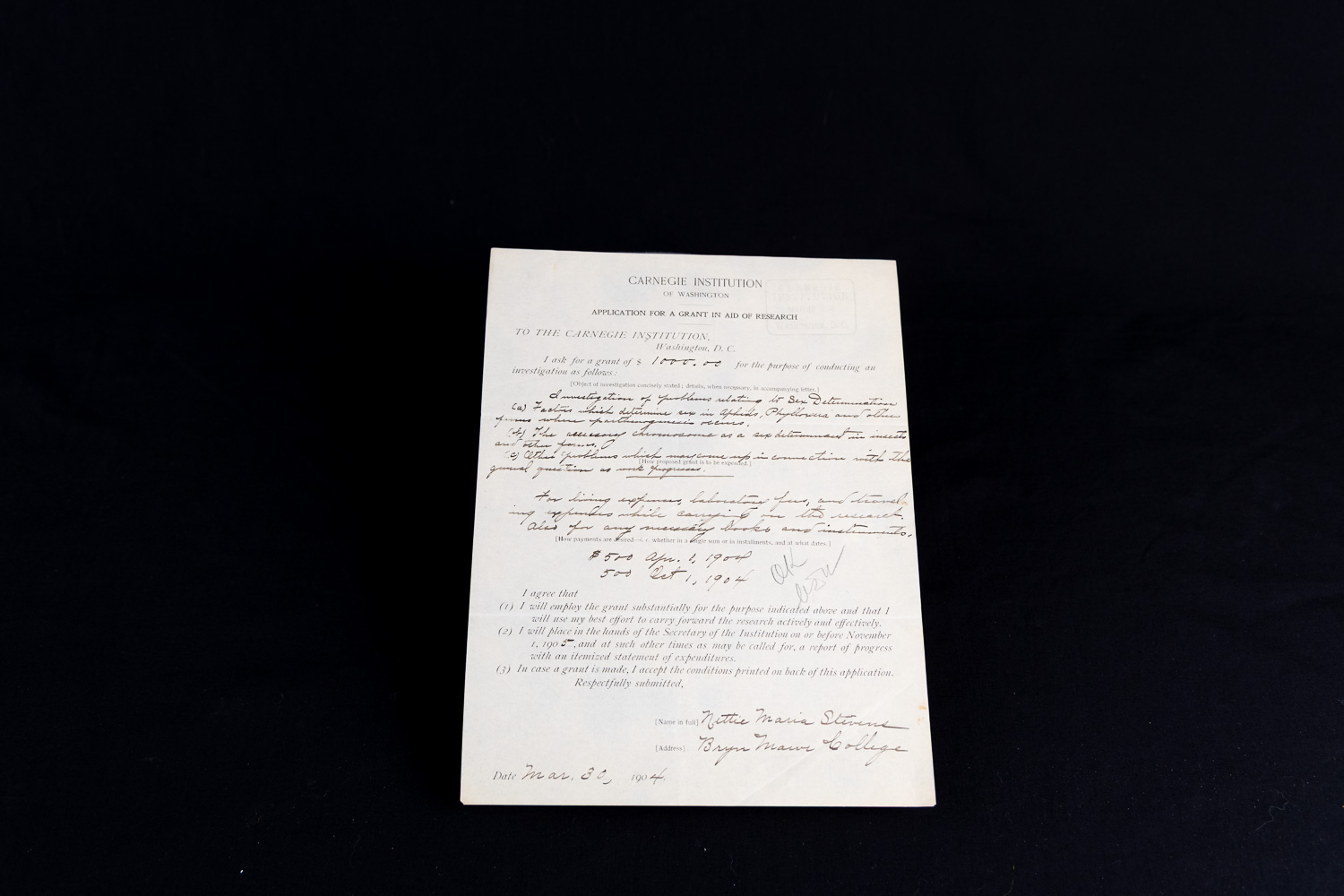
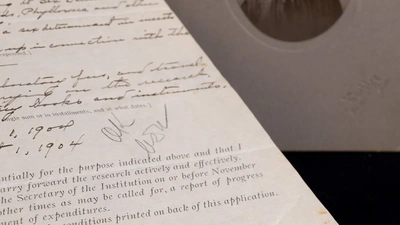
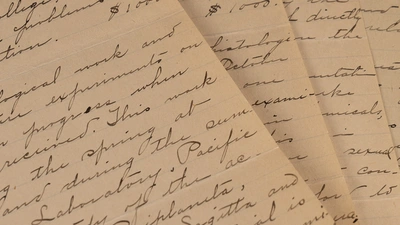
In 1904, a grant application made its way through the still-forming administrative channels of a two-year-old institution. Submitted by a newly-minted Ph.D. named Nettie Maria Stevens, it requested funds for the "Investigation of problems related to Sex Determination." Carnegie Science awarded her $1,000 (around $36,000 in today’s money). That document is object No. 3 in our 125th anniversary series.
Stevens had arrived at her scientific career by an unconventional route: years as a schoolteacher, an undergraduate degree from Stanford University at 35, and a Ph.D. in cytology from Bryn Mawr at 42. It was there that she met geneticist Thomas Hunt Morgan—later a Nobel Prize winner. Morgan recognized her potential and championed her application to Carnegie Science. Morgan himself would go on to be a long-time Carnegie research associate, funded by Carnegie between 1914 and 1945.
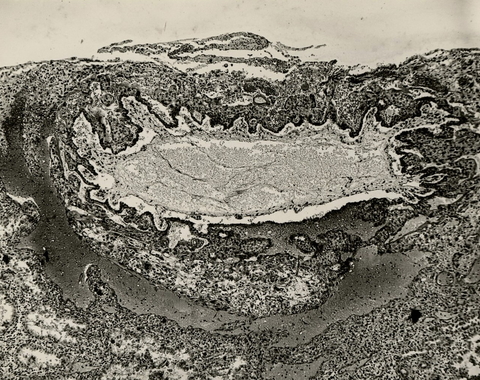
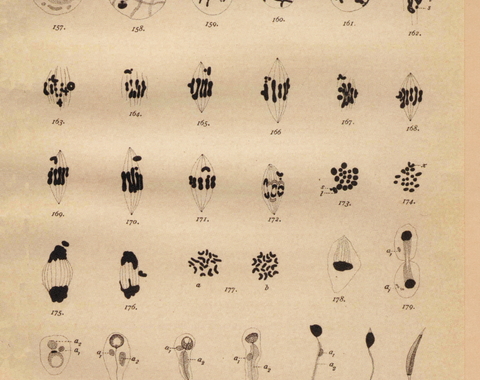
Stevens’ grant was renewed in 1905—the same year she produced part one of a remarkable paper, published by Carnegie, offering definitive evidence that X and Y chromosomes determine biological sex. It challenged the widespread belief that environmental factors like temperature and diet were responsible, and it was the first demonstration of an inherited trait linked to a specific chromosome.
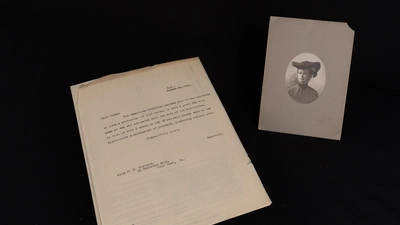
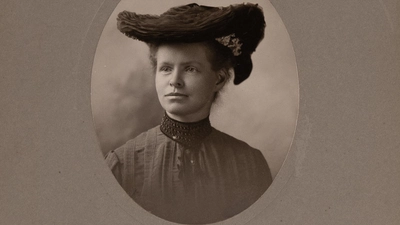
Among the documents that survive from this period is a letter from Carnegie Science requesting that each grant recipient submit a photograph of themselves, "preferably cabinet size." It's a small bureaucratic detail—but it left us with one of the few images we have of Stevens today.
Stevens went on to publish nearly 40 papers before her death in 1912—just nine years after completing her doctorate. While her career may have been short, her impact was not.
To learn more about Stevens's remarkable life and career, read her full biography.

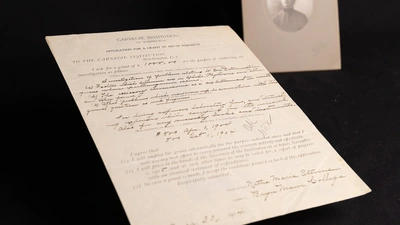
The $1,000 grant awarded by Carnegie Science for the "Investigation of problems related to Sex Determination."

A closer look at Nettie Stevens' signature.

A small, but important, piece of paperwork! The letter reads: "Dear Madam: The Executive Committee has decided that it is desirable to have a photograph of each person to whom a grant had been made or who was connected with the work of the institution. In view of this, I write to ask if you will kindly send to the Institution a photograph of yourself, preferably cabinet size.

Carnegie Science's request for a photograph of grant recipient Nettie Stevens left us with one of the few images we have of this scientist who transformed biology.

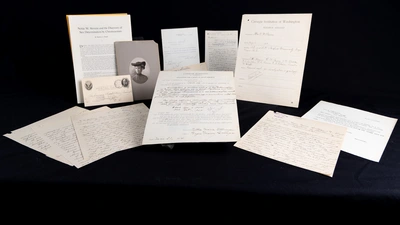
Nettie Stevens' grant and accompanying papers, including recommendations, scientific report, research assistant application, application approval letter, a postcard from Bryn Mawr, and a retrospective look back on the impact of her work.

Nettie Stevens submitted this paper about sex determination in aphids when applying for her grant.
Nettie Stevens' Grant
Nettie Stevens' Signature
Request for Portrait
A Closer Look
Documents from Nettie Stevens
Application Report