Unveiling the Atmospheres of Distant Worlds

For centuries, people have looked at the night sky and wondered what worlds might orbit other stars. In the past few decades, that question has shifted from imagination to discovery. Thousands of planets have now been found beyond our Solar System—some hot enough to melt rock, some cold enough to form water clouds, most unlike any orbiting our Sun.
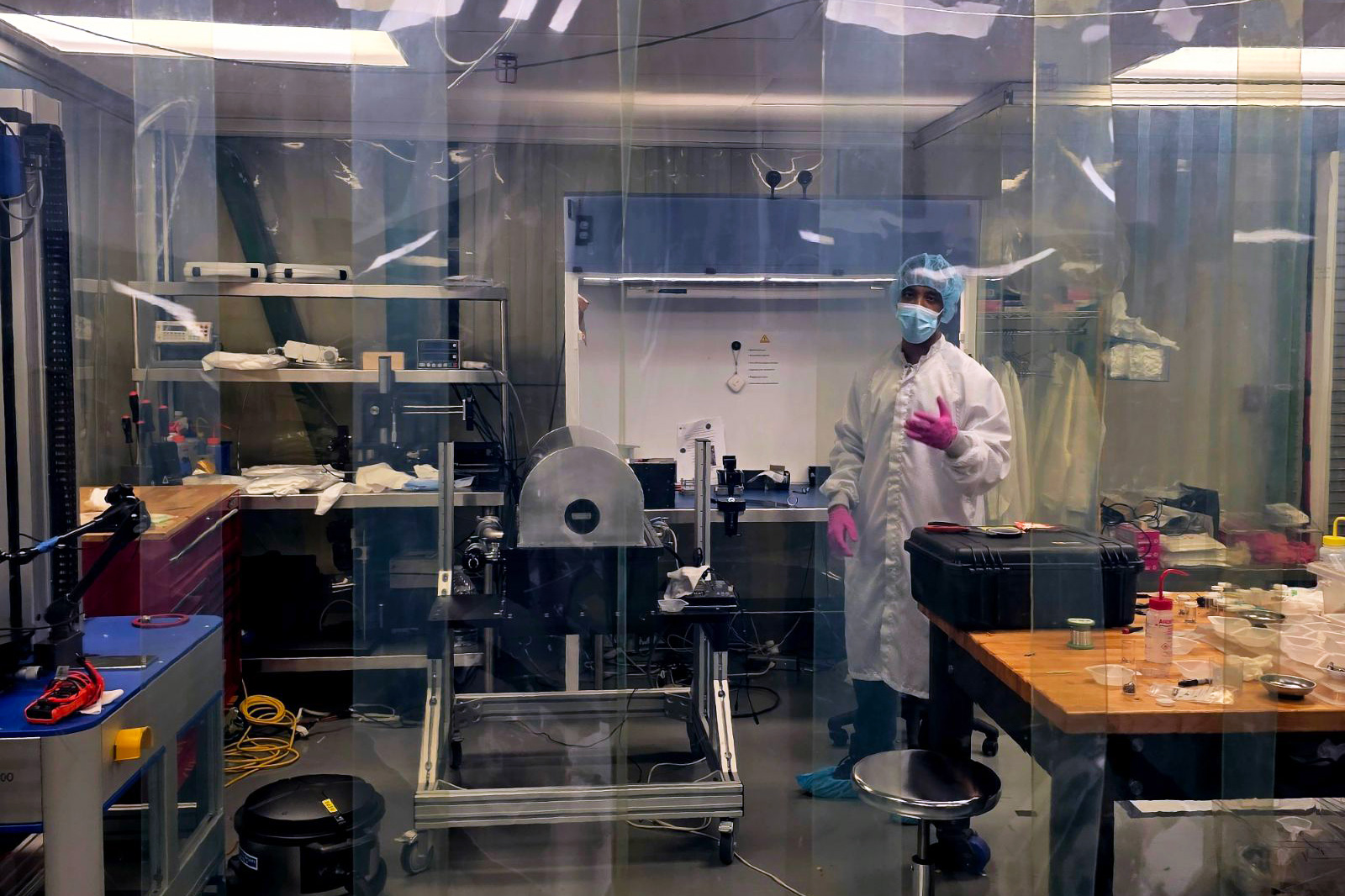
Designed and built at the Carnegie Science Observatories, the new Henrietta Infrared Spectrograph will allow astronomers to study the atmospheres of distant worlds, revealing clues about their chemistries, climates, and histories, expanding the toolkit that astronomers use to learn what these planets are truly like.
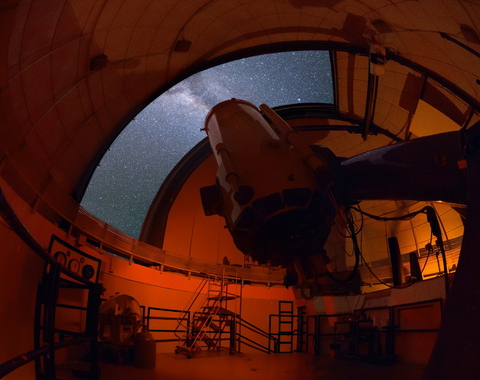
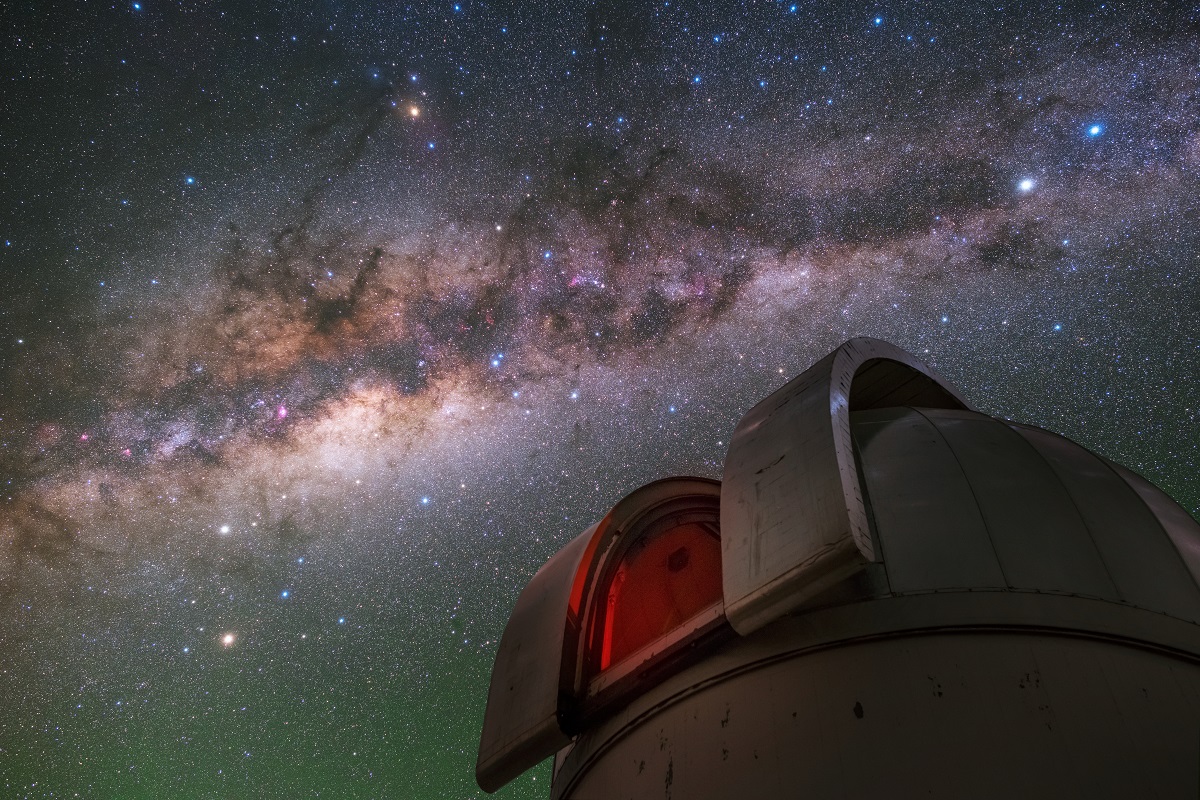
Named for pioneering astronomer Henrietta Hill Swope, the instrument will soon be installed on the 1-meter Swope telescope at Carnegie Science’s Las Campanas Observatory in Chile. The telescope itself was built thanks to a generous gift from Swope—an investment in astronomy that continues to shape discovery decades later.
During her career, Swope studied Cepheid variable stars, whose steady relationship between brightness and pulsation allowed astronomers to measure distances across the universe. Today, the instrument that bears her name carries that legacy forward, extending our reach from mapping the cosmos to better understanding the worlds within it. The spectrograph is expected to see first light in late April.
Why Atmospheres Matter
Over the past 30 years, astronomers have found more than 6,000 exoplanets. Yet these discoveries have raised as many questions as they have answered.
“Mass and size only tell you so much,” said Jason Williams, a Carnegie postdoctoral fellow and the scientific and technical lead of the Henrietta project. “If you measured Earth and Venus that way, you’d think they were almost the same planet. But we know their atmospheres—and their conditions—are completely different.”
That difference is crucial. A planet’s atmosphere can reveal its temperature, weather, winds, and chemistry. It may also hold clues about how the planet formed, how it evolved, and whether it might be capable of supporting life. By analyzing atmospheric molecules, scientists can begin to build a more complete picture of these distant worlds.
Carnegie astronomer Nick Konidaris, an instrumentation specialist, points out that the field is entering a new era. NASA’s Transiting Exoplanet Survey Satellite (TESS) has discovered thousands of planets around bright stars—ideal targets for atmospheric studies. Meanwhile, JWST has demonstrated the incredible potential of studying exoplanet atmospheres from space, particularly in the near-infrared (versus the ultraviolet- and optical-wavelength coverage of its older cousin, the Hubble Space Telescope).
“What’s changed in recent years,” said Konidaris, “is that the types of planet atmospheres we are sensitive to, and the level of detail with which we can study them, has totally exploded.”
How Henrietta Works
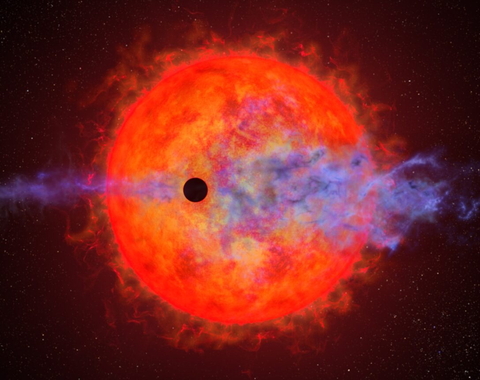
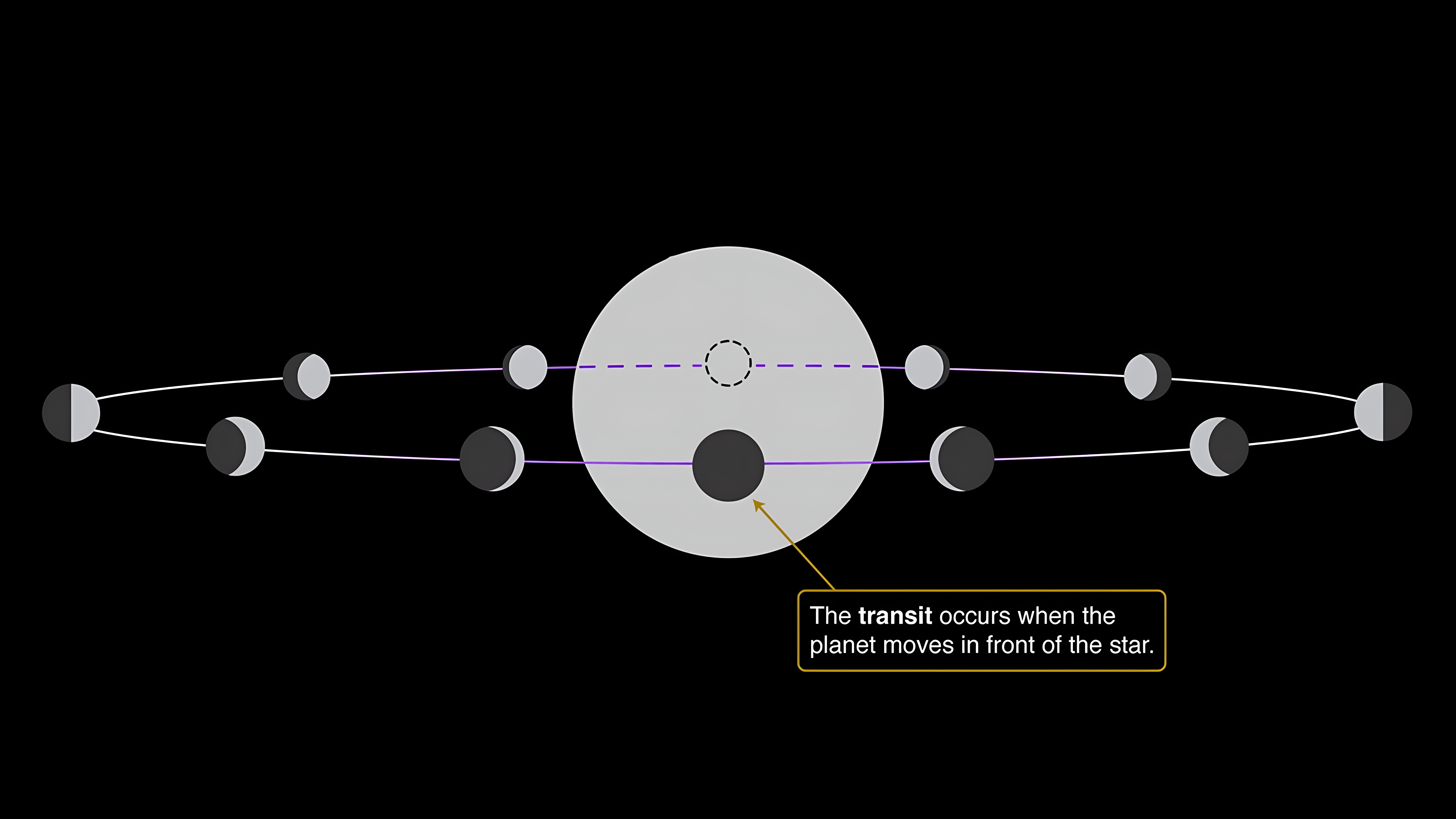
Henrietta will study planets as they pass in front of their stars, an event called a transit. During a transit, a tiny fraction of starlight filters through the planet’s atmosphere before reaching a telescope in space or on Earth. Molecules in the atmosphere absorb specific wavelengths of light, leaving behind a chemical fingerprint, enabling astronomers to determine which molecules are present.
Carnegie astronomer Johanna Teske—a member of the Henrietta team—noted that in 2012, Venus transited across the Sun, which was visible to amateur astronomers with backyard telescopes. Exoplanet transits are the same phenomenon, just farther away and happening around other stars.
"With these transits, we are not observing the planet and star separately. Rather, the whole planetary system is falling across just a few pixels of our detector,” Teske said. “It is still mind-boggling to me how much information we can get from this very indirect method, just by studying the patterns in the light."
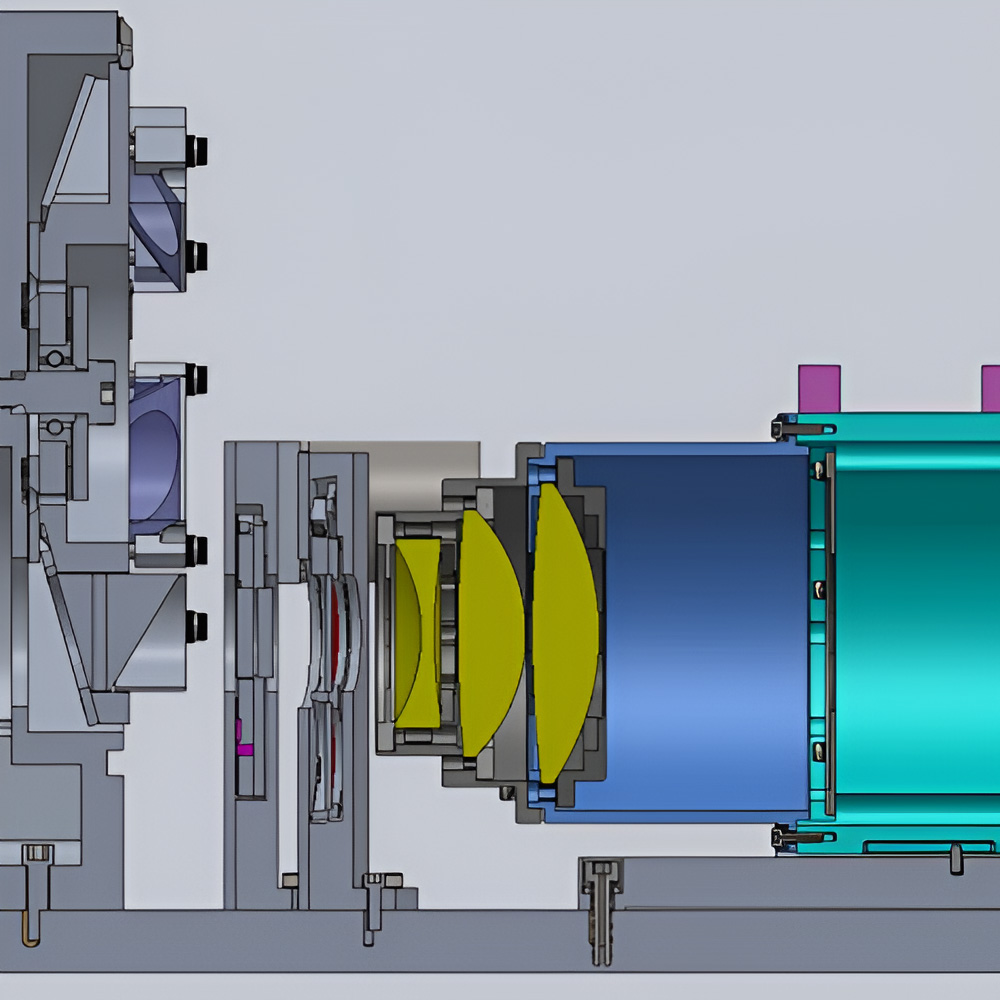
Henrietta is built to observe in the near-infrared, a region of light invisible to the human eye, but rich in chemical information. Many of the gaseous molecules scientists hope to detect in planetary atmospheres—such as water, methane, ammonia, and carbon monoxide—absorb strongly at these wavelengths.
The instrument also uses advanced optical diffuser technology to stabilize the incoming light and improve precision. Combined with the exceptionally dry conditions at Las Campanas Observatory, this approach could allow ground-based telescopes to achieve measurements once thought possible only from space.
A New Kind of Survey
One of Henrietta’s biggest strengths will be its efficiency. Carnegie owns and operates the Swope telescope, which will allow the team to observe hundreds of nights each year. This level of access is rare and will make it possible to study dozens of planets in a systematic way.
Rather than focusing on a single world, Henrietta will help scientists build large samples and compare different classes of planets. This statistical approach could transform how researchers understand planetary systems.
“In our Solar System, we only have one example of each type of planet—one Earth, one Jupiter, one Venus,” said Williams. “But in the galaxy, there are many classes of planets to observe. Henrietta will help us see how much they vary and what that tells us about how planets form.”
The team hopes the instrument will catalog the atmospheres of roughly 50 exoplanets in its first year—something that prior to JWST took a decade of observations.
A Carnegie Tradition
Henrietta reflects Carnegie Science’s long tradition of designing and building instruments in-house to answer fundamental scientific questions. The project has brought together astronomers, physicists, engineers, machinists, and Observatories staff.
“This is the Carnegie approach,” said Konidaris. “We understand every part of the instrument, from how light enters the telescope to how it becomes data on a screen. That level of craftsmanship helps us do better science.”
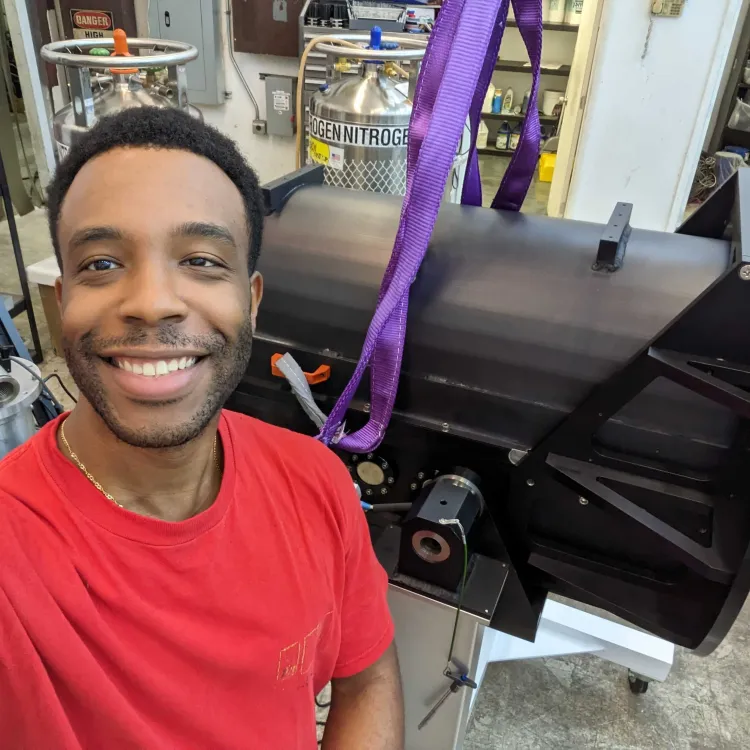
For Williams, who started working on Henrietta as a graduate student and has spent half a decade helping to design and build the instrument, the first night of observations will be a major milestone.
“Seeing that first light image will mean that we got everything right—from the telescope down to the image that we see,” Williams said. “It’s the moment when an idea becomes reality.”
The project has been defined by patience. It’s a reminder that many of astronomy’s biggest advances begin with incremental, painstaking work. Instruments like Henrietta are built by people willing to invest years of their lives in questions that may take years more to answer. On that first night under the Chilean sky, when the spectrograph turns towards its first distant world, it will mark not only a technological achievement, but the culmination of a young scientist’s commitment to expanding what humanity can know.
And for the rest of us, that moment will set the stage for discoveries we can’t yet predict, as Henrietta begins to help piece together how planets—and perhaps life—emerge across the galaxy.
Meet the Henrietta Team





Related Content