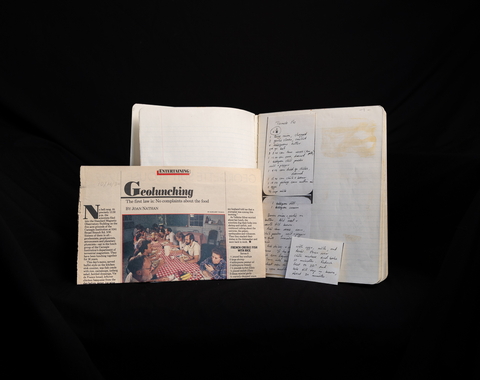
Object 23 | The Ping Pong Table

Not every rivalry at Carnegie Science goes through peer review.
Postdoctoral fellows come to our campuses from around the world with plans to stay only a few short years. Community has to be built quickly. At the Earth and Planets Laboratory, a good deal of it has been built around a ping-pong table.
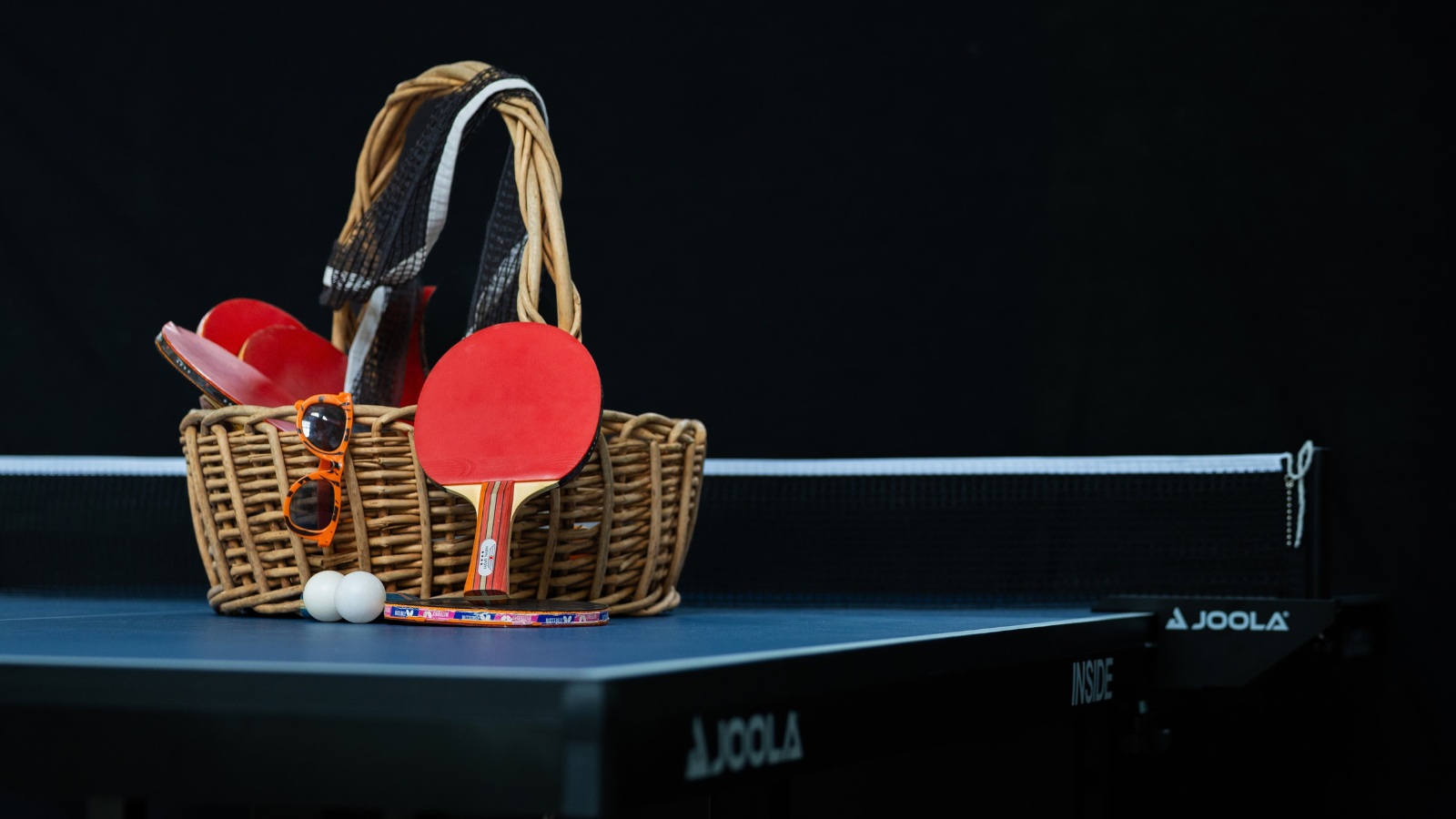
The table that kicked off the current tradition arrived at the Broad Branch Road (BBR) campus’ Greenewalt dining hall in the summer of 2017, a gift from George Cody, then interim director of the former Geophysical Laboratory, which later merged with the Department of Terrestrial Magnetism to form today’s Earth and Planets Laboratory.
In September, Amol Karandikar, EPL's laser heating and spectroscopy lab manager, and Venkata Bhadram, then a postdoc in Tim Strobel's lab, announced their intention to organize a BBR community tournament for Postdoc Appreciation Week. It pitted postdocs against mentors, administrators against scientists, officemate against officemate. Anyone could enter, including, as the email invitation promised, people who had never held a racket.
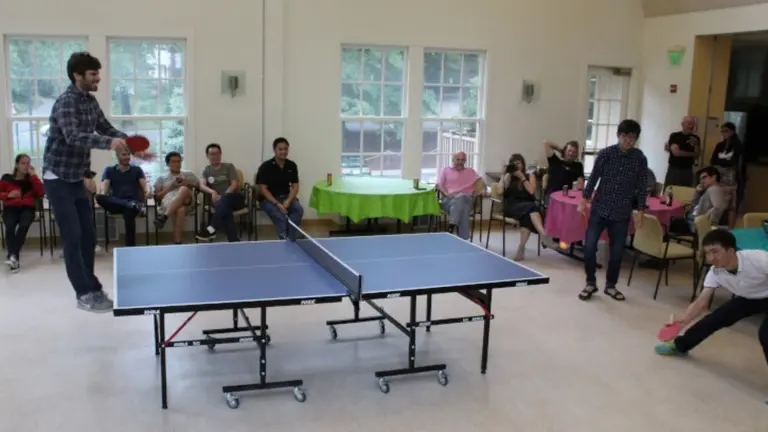
The organizers billed it as the first-ever ping-pong tournament at BBR. But seismologist Alan Linde, now emeritus, remembered an earlier one.
Sometime in the 1980s, by Linde's account, when the Department of Terrestrial Magnetism was still the only division on campus, astronomer Kent Ford organized a doubles tournament. Ford invented the image-tube spectrograph, which he and Vera Rubin used to measure stellar velocities and build the case for dark matter. He also ran a ping-pong bracket.
The 1980s tournament was held in the Standardizing Magnetic Observatory. Constructed to hold almost no residual magnetism, it was where the late John Warren Graham conducted his paleomagnetism experiments in the late 1940s and early '50s, and where the Lunch Club met from about 1950 until 1989, when the facility was torn down to make room for the campus’ modern Research Building and accommodate the arrival of Geophysical Laboratory scientists from another former property in D.C.
The 1980s table disappeared with its building. Nine years of daily play wore out the 2017 table. A replacement arrived earlier this summer.
Karandikar has organized most of the tournaments since 2017. But he doesn't play when he’s running the show; pairings are adjusted to ensure fair matches, and he believes ranking himself would pose a conflict of interest.
"I want to maximize their fun experience," he said.
In 2019, then-Postdoc Jonathan Tucker organized the tournament so that Karandikar could finally compete. He won.
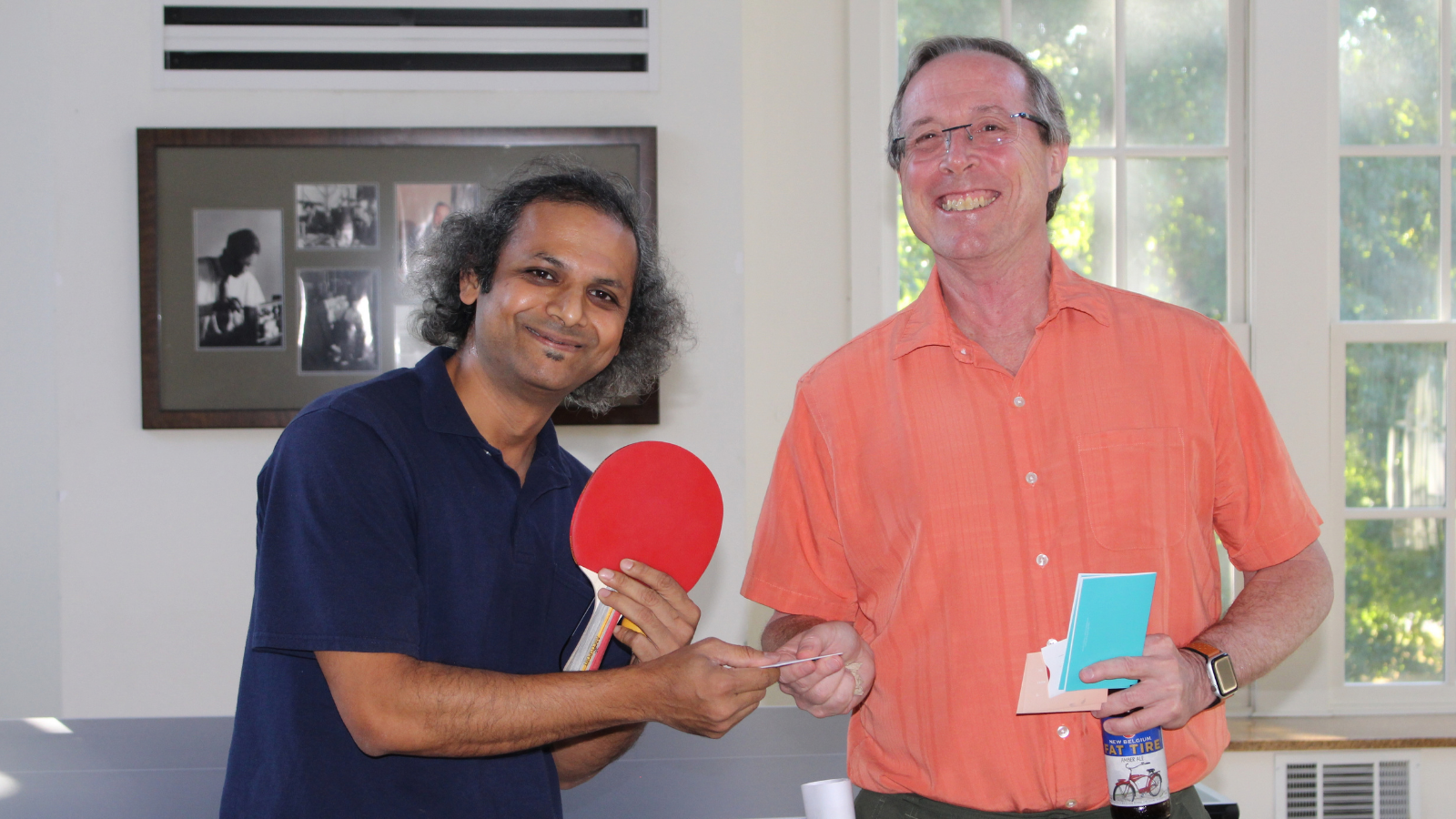
The tournament is usually held during Postdoc Appreciation Week, and Karandikar is quick to note that not every attempted tournament has been a success. One year, exactly one person signed up, and the competition was called off. For now, the 2026 tournament is on hold while he looks for someone to take over the clipboard. Still, the table stays in position.
The impulse to indulge in a little cross-disciplinary competition spans our Carnegie campuses. At the Observatories, the spring picnic includes cornhole played on boards built by Associate Director for Technological Affairs Jeff Crane. A photograph from Biosphere Sciences and Engineering's former Palo Alto campus captures postdocs taking to the field during a celebratory picnic; the division relocated to Pasadena this summer. Across Carnegie, if you give our scientists a patch of grass, a few game pieces, or two paddles, a friendly face-off is not far behind.
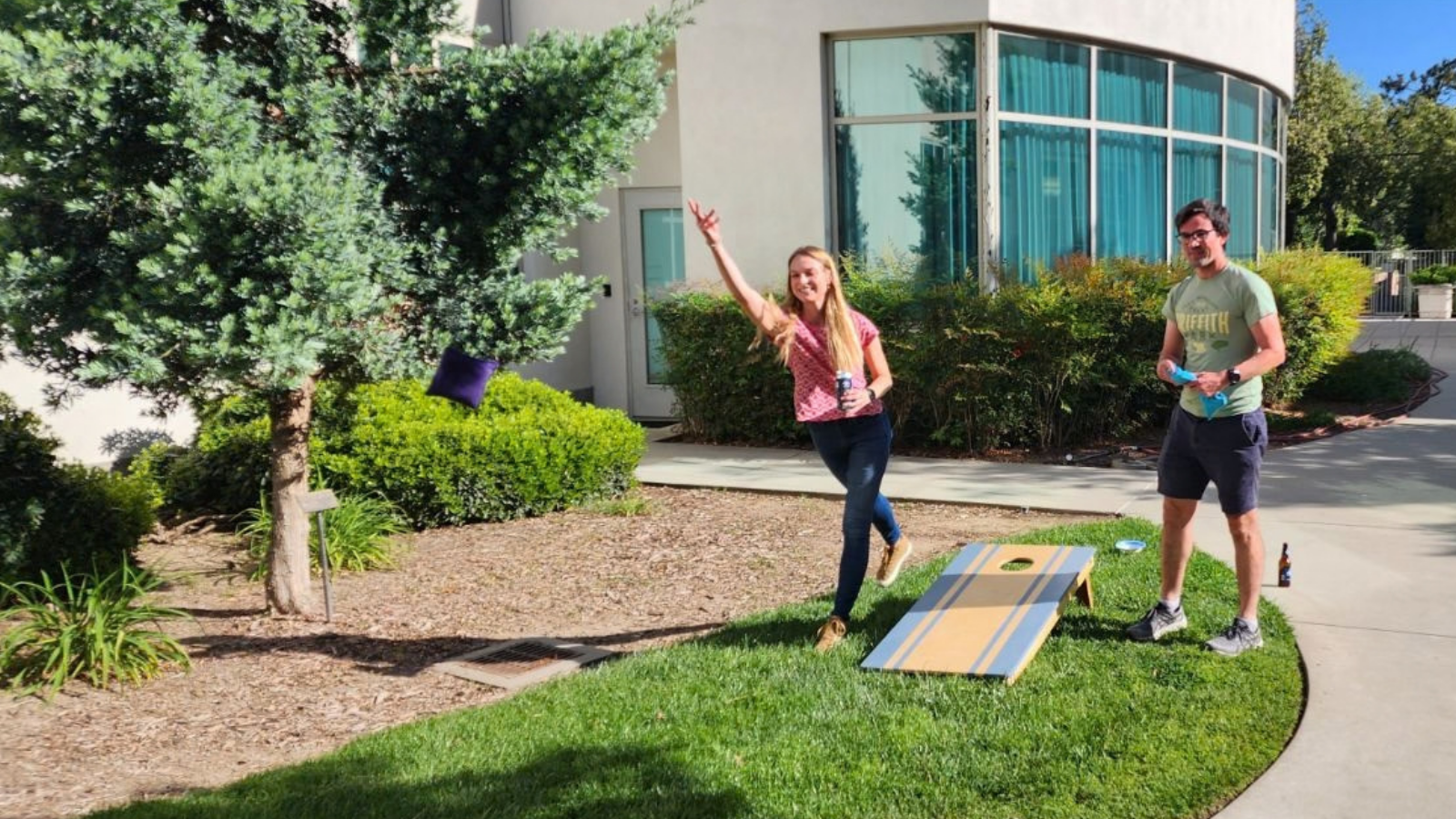
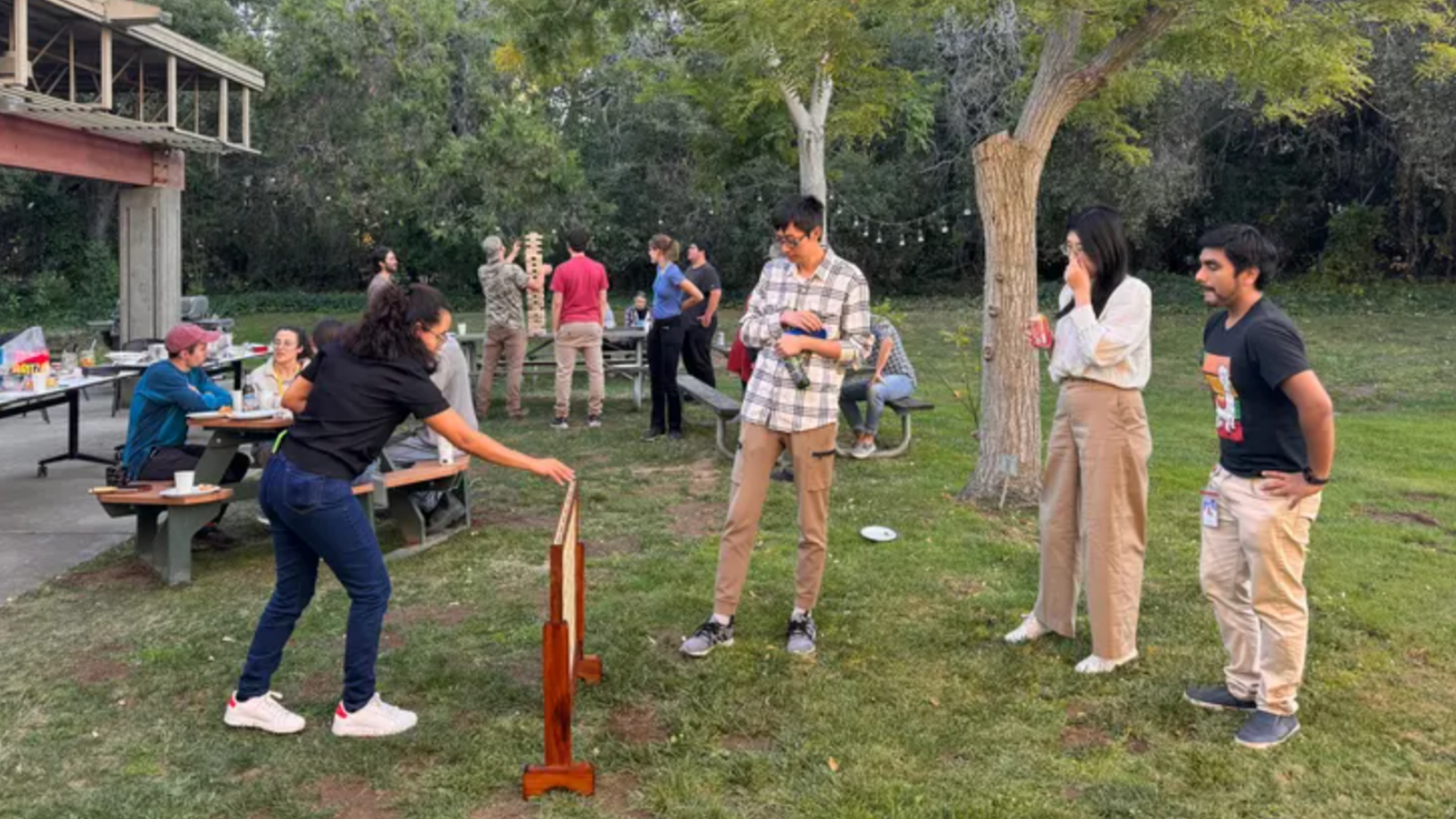
While these games may not appear on anyone's CV, they give a community spread across campuses and disciplines a reason to gather, meet people outside of the lab, and turn colleagues into teammates—or rivals.
Explore all the objects in the #Carnegie125 series.
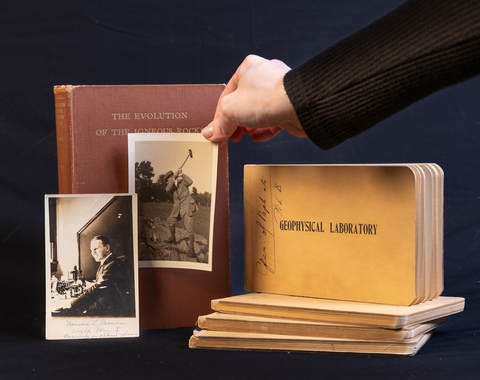
Our 125th anniversary is January 29, 2027. To celebrate, we'll be sharing 125 objects, instruments, images, and specimens that define Carnegie Science’s history and influence. These artifacts spanning astronomy, Earth science, biology, and beyond tell the story of how curiosity-driven research has shaped modern science.