Object 19 | Expedition Flag

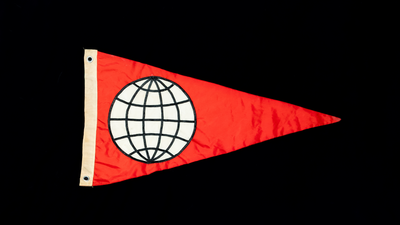
This red pennant, bearing a white globe crossed with black parallels and meridians, has flown from the mast of a non-magnetic research vessel, been carried by scientists into the field, and orbited the Earth aboard the International Space Station. For more than a century it has become a symbol of the institution’s spirit of exploration.
The design began, fittingly, as an act of experimentation. William J. Peters, the first captain of the Department of Terrestrial Magnetism’s (DTM) research vessel, Carnegie, sketched some twenty different versions of a flag for his soon-to-launch ship on notecards, working through a variety of ideas before landing on the one that stuck.

This red pennant, bearing a white globe crossed with black parallels and meridians, has flown from the mast of a non-magnetic research vessel, been carried by scientists into the field, and orbited the Earth aboard the International Space Station. Credit: Carnegie Science

The expedition flag design began, fittingly, as an act of experimentation. William J. Peters, the first captain of the Department of Terrestrial Magnetism’s (DTM) research vessel, Carnegie, sketched some twenty different versions of a flag for his soon-to-launch ship on notecards. Credit: Carnegie Science

The final design choice wasn't his alone, however. DTM Founding Director Louis Bauer and Carnegie President Robert S. Woodward signed off on it. And because the Department of Marine Biology's Tortugas Lab and the Department of Experimental Evolution at Cold Spring Harbor also maintained research vessels at sea, their directors got a say too. Credit: Carnegie Science

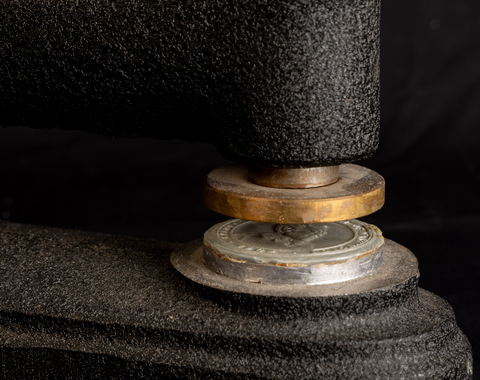
In 1909, the final design was registered with the U.S. Bureau of Navigation as the institution's official house flag, intended to fly aboard every vessel Carnegie Science sent to sea. Credit: Carnegie Science

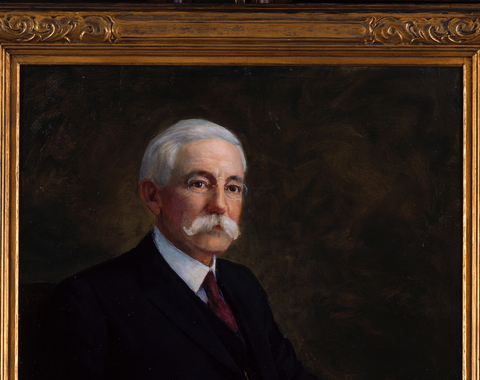
William J. Peters, the first captain of the Department of Terrestrial Magnetism’s (DTM) research vessel, Carnegie, and the designer of the expedition flag. Credit: Carnegie Science
Expedition Flag
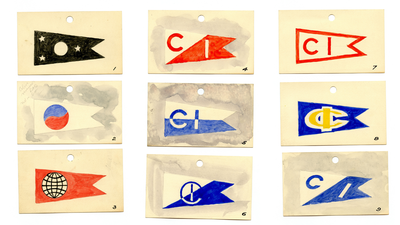
Flag Designs
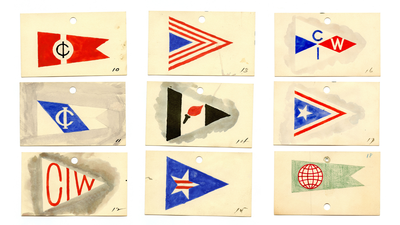
Flag Designs
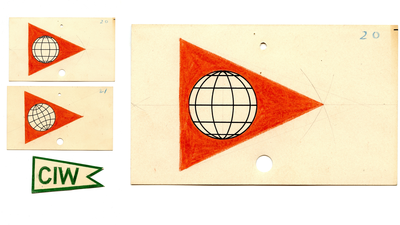
Flag Designs
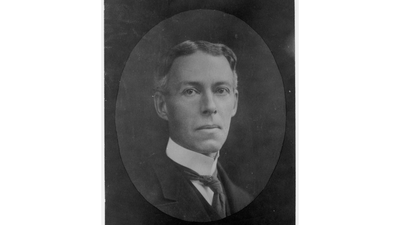
Captain Peters
The final choice wasn't his alone, however. DTM Founding Director Louis Bauer and Carnegie President Robert S. Woodward signed off on it. And because the Department of Marine Biology's Tortugas Lab and the Department of Experimental Evolution at Cold Spring Harbor also maintained research vessels at sea, their directors got a say too. In 1909, the design was registered with the U.S. Bureau of Navigation as the institution's official house flag, intended to fly aboard every vessel Carnegie Science sent to sea.
Later that year, the Carnegie set sail for the first time. The ship itself was a feat of engineering, built almost entirely from non-magnetic materials, so it could measure the Earth's magnetic field at sea without its own hull skewing the instruments. Reflecting on the launch, Bauer’s wife, Adelia, described a vessel “gayly trimmed with the flags of all nations indicating that its mission when completed, was to be of benefit to the whole world, and flying high above them was the newly chosen flag” of the institution. Over the next several years, the Carnegie carried that flag through seven scientific cruises, circling the Earth and charting magnetic fields along the way.
The 1911 Carnegie Science Year Book shows the flag flying not just from the Carnegie's mast, but also from that of the Anton Dohrn, the Tortugas Lab's yacht. But the flag became less a maritime signal than a piece of institutional identity. It appeared on the institution's letterhead and on the back cover of every Descriptive Pamphlet Carnegie Science published between 1909 and 1919. During those years, the flag belonged to the whole institution.
It was the Carnegie's visibility, however, that gradually shifted the flag's primary association toward DTM. As the ship's magnetic survey work made it the institution's most recognizable vessel, the flag came to be identified most strongly with the department.

The expedition flag flies aboard the Carnegie, as it prepares to set sail for the first time. The vessel was described as “gayly trimmed with the flags of all nations indicating that its mission when completed, was to be of benefit to the whole world, and flying high above them was the newly chosen flag” of the institution.” Credit: Carnegie Science

The Carnegie carried the flag through seven scientific cruises, circling the Earth and charting magnetic fields along the way. Credit: Carnegie Science

The 1911 Carnegie Science Year Book shows the flag flying not just from the Carnegie's mast, but also from that of the Anton Dohrn, the Tortugas Lab's yacht. Credit: Carnegie Science

As the Carnegie’s magnetic survey work made it the institution's most recognizable vessel, the flag came to be identified most strongly with the department. Credit: Carnegie Science
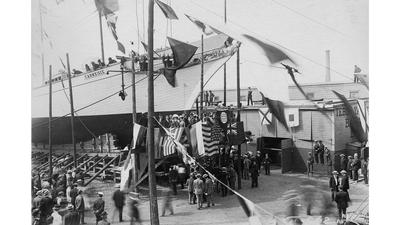
Carnegie Launch
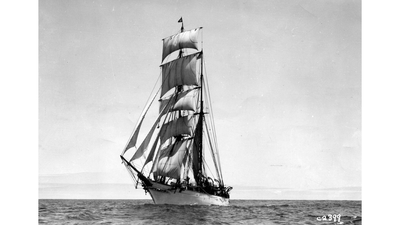
Carnegie Ship
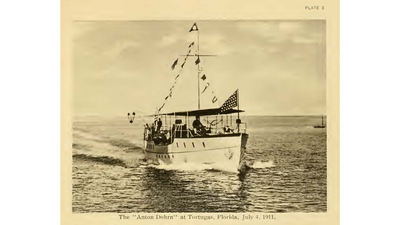
Anton Dohrn
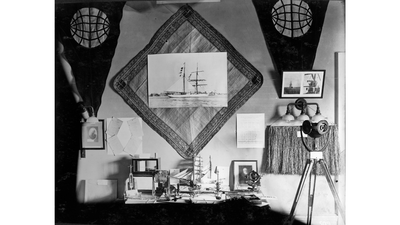
Carnegie Exhibit
The flag might have stayed a memory of the Carnegie era, but in the early 1960s DTM staff came across one of the original expedition flags in storage, a discovery now preserved in the Carnegie Science Archives. A postdoc named Shigeji Suyehiro had it reproduced, and from then it went back to work in the field.
A 1965 photograph of Vera Rubin on a research trip to Lowell Observatory shows the flag painted on the door of a DTM truck. Another image, from a 1980s DTM fieldwork expedition to install seismic strainmeters in the Mojave Desert, shows it flying with pride of place over the site. It even turned up printed on T-shirts. It was a portable piece of institutional identity that travelled wherever remote research efforts took place.

A 1965 photograph of Vera Rubin on a research trip to Lowell Observatory shows the flag painted on the door of a DTM truck. Credit: Carnegie Science

A photograph from a 1980s DTM fieldwork expedition to install seismic strainmeters in the Mojave Desert, shows the flag flying with pride of place over the site. Credit: Carnegie Science

The flag even turned up printed on T-shirts, like the one worn in this photograph by DTM instrument maker Georg Bartels. Credit: Carnegie Science
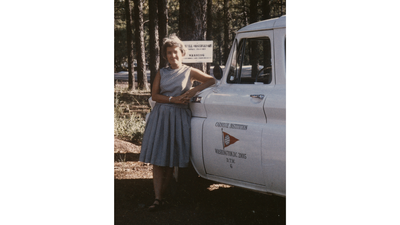
Rubin at Lowell
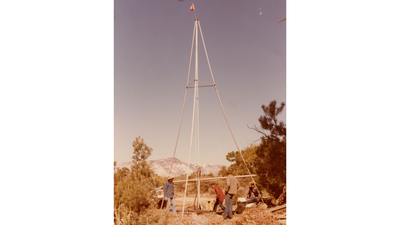
Strainmeter Fieldwork
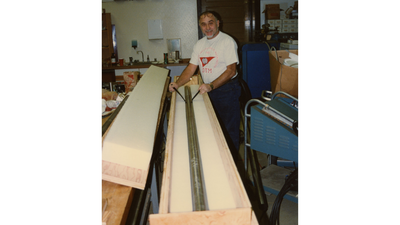
T-shirt
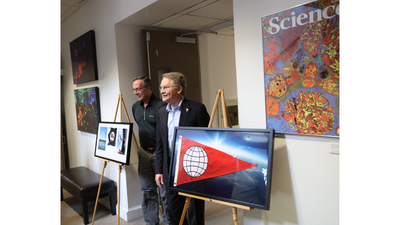
Its most recent trip was arranged by Carnegie Trustee David Walker Thompson, now the Vice Chair of Carnegie Science’s Board, who in 2017 sent the flag aboard the International Space Station through the efforts of his former company, Orbital ATK. After it returned to Earth, the flag was framed and now hangs on the Earth and Planets Laboratory campus near a model of the Carnegie research vessel that carries a miniature version of the same flag atop its mast.
The vessel on which this flag first flew took years to circle the globe. The satellite it rode aboard a century later made the same trip in about an hour and a half. Different vessels, different eras, the same piece of red fabric still marking where Carnegie Science went to look for answers.

The expedition flag’s most recent trip was arranged by Carnegie Trustee David Walker Thompson, now the Vice Chair of Carnegie Science’s Board, who in 2017 sent the flag aboard the International Space Station through the efforts of his former company, Orbital ATK. Credit: Robert S. Kimbrough/NASA ISS

Carnegie Trustee David Walker Thompson and DTM Director Rick Carlson stand with the framed expedition flag after it returned to Earth from the International Space Station. It now hangs on the Earth and Planets Laboratory campus. Credit: Carnegie Science
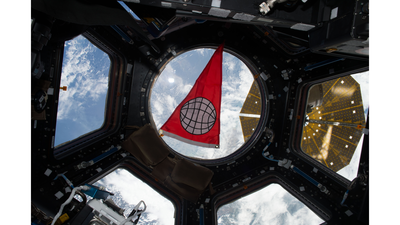
ISS
ISS