Object 28 | Mud Cup, A History of Sportsmanship

Written in 2019, updated in 2026.
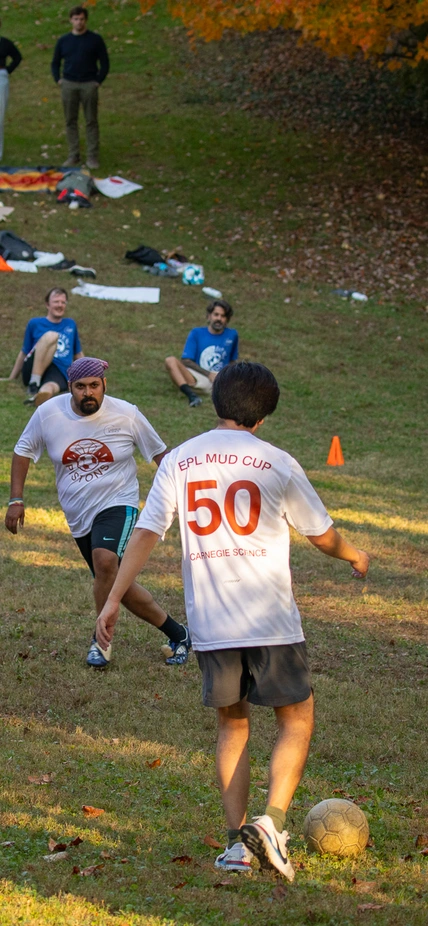
Every year, scientists and staff at Carnegie Science’s Broad Branch Road campus lace up their cleats and take to the field to compete in the Mud Cup—a lighthearted but competitive soccer match that has been a tradition for 50 years.
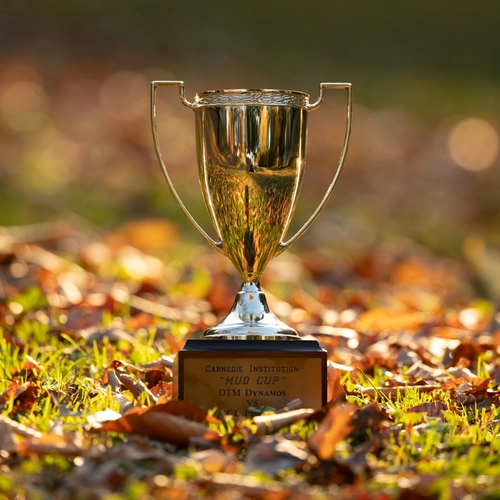
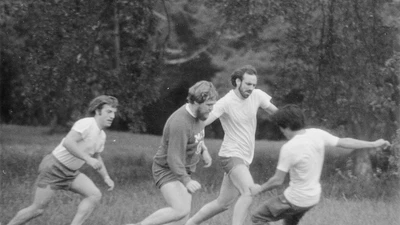
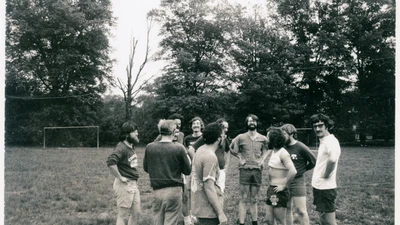
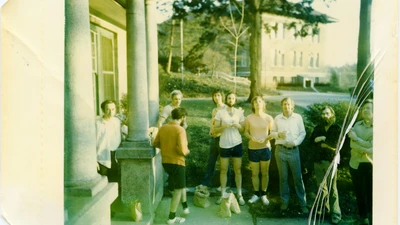
It began on May 3, 1976, when Carnegie’s former Geophysical Laboratory (GL), then two miles away on Upton Street in Washington, D.C., did what it did best: it put the pressure on.
Naming its team the “Laboratory Pistons,” GL challenged the former Department of Terrestrial Magnetism (DTM) to the first official interdepartmental soccer match. DTM accepted with a letter of its own. It said it was amused by the Pistons’ “brash effrontery,” corrected “soccer” to “football,” and put postgame drinks on the line. It named its side the “DTM Dynamics,” later simplified to the Dynamos, and a tradition was born.
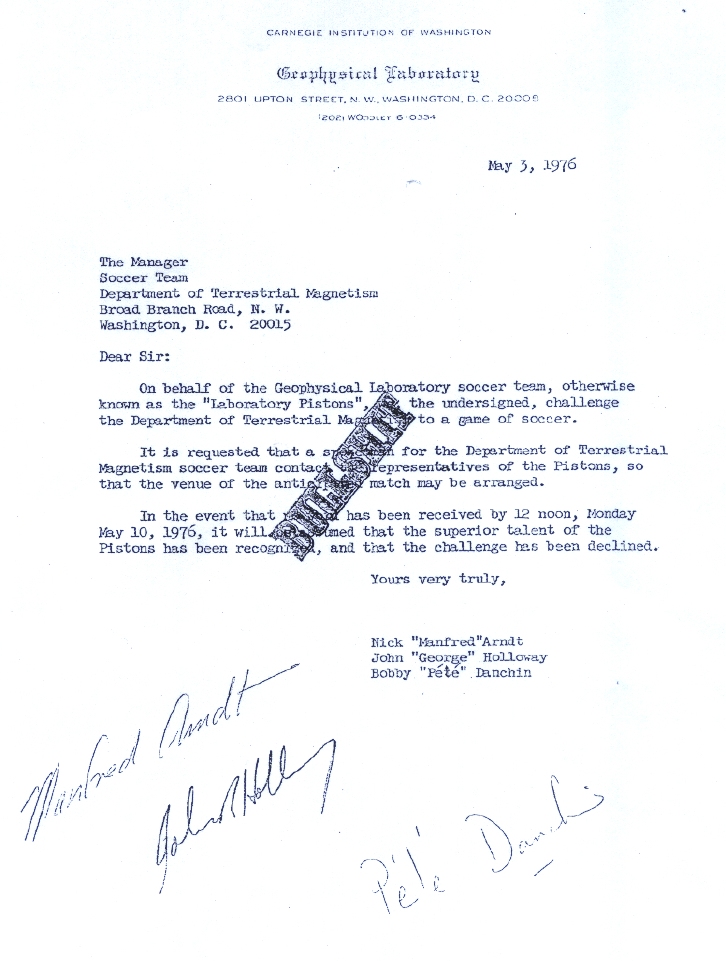
with this letter from the Geophysical Laboratory to the Department of Terrestrial Magnetism. At the time, the two departments were located a few miles apart.
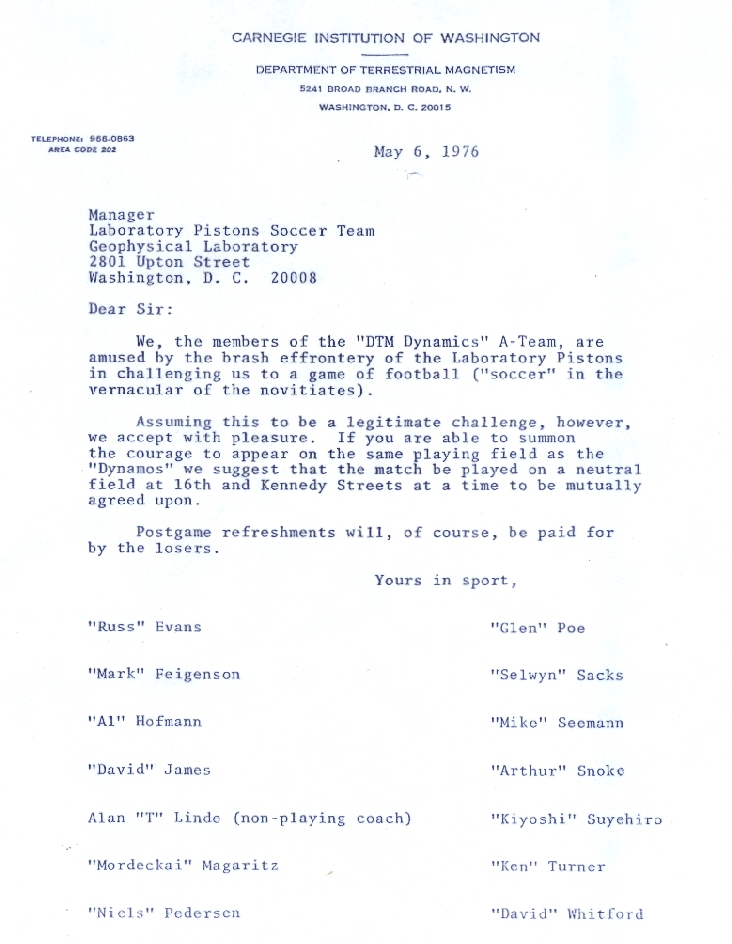
A Campus Rivalry and the First “World Mud Cup”
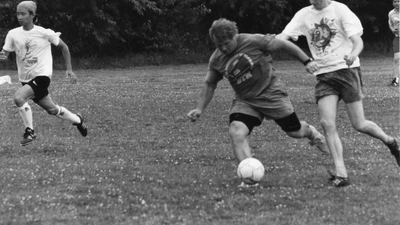
After GL joined DTM at Broad Branch Road in 1990, the friendly rivalry hit its stride. In 1996, CIW News sports reporter Stony Kornblower gave the game a name, the World Mud Cup, in his post-game report. By his account, the Dynamos had built a 2–0 lead when a car pulled up to the DTM goal and two mysterious women in dark raincoats and sunglasses stepped out with secret instructions from the team owner: go easy, or GL might quit Lunch Club (Object 10), and DTM would have to do more of the cooking. The Dynamos dutifully fell back, and the match ended 2–2.
Kornblower, who is absolutely in no way related to Carnegie astronomer Alan Boss (wink wink), is also responsible for the physical trophy.
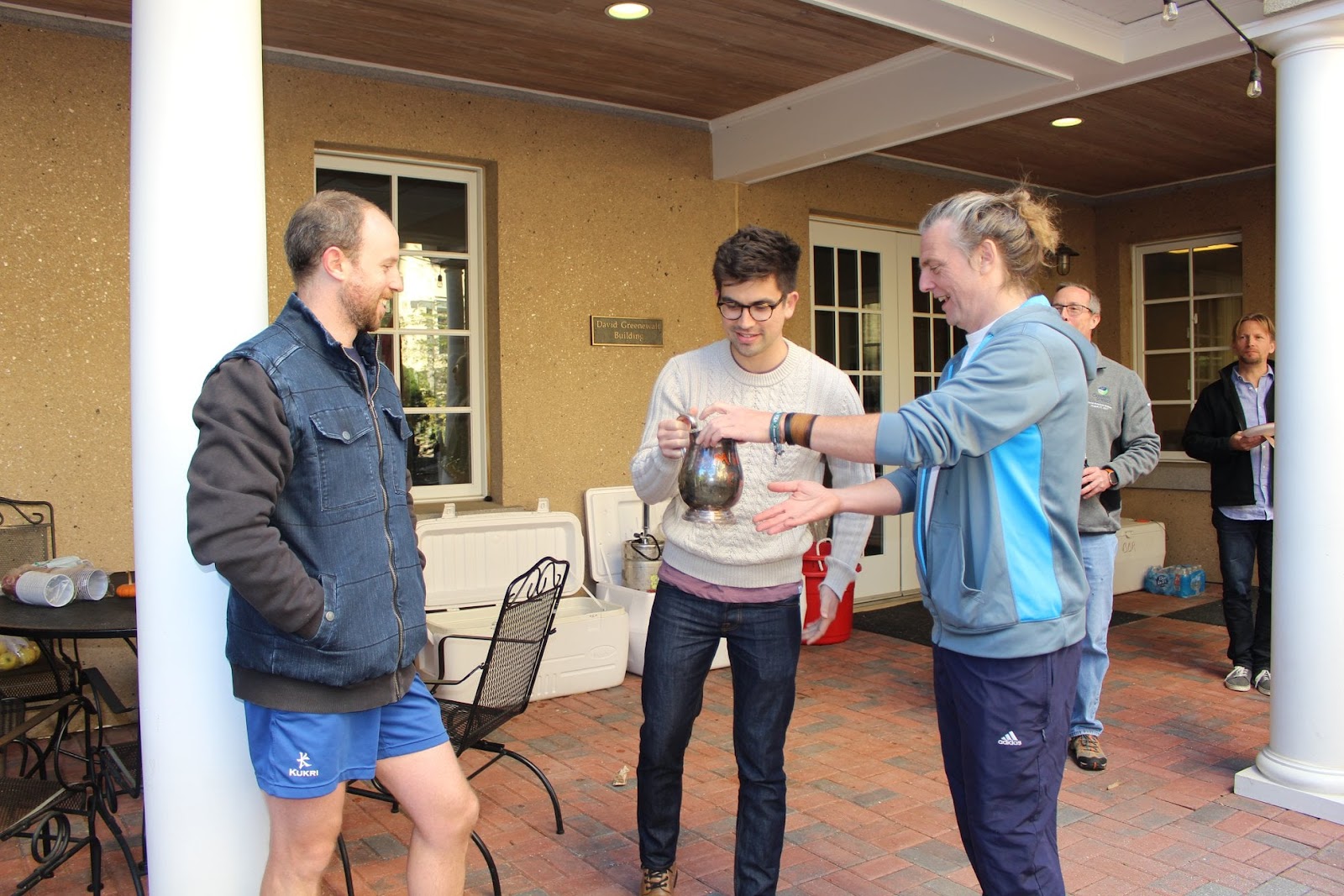
In 2019, Kornblower reflected on the moment he made the cup: “I found a silver-plated pitcher that my wife had picked up at a yard sale and which she did not want to keep. I inscribed ‘World Mud Cup’ on the pitcher with a magic marker for presentation to the winning team at the next match. This has been the tradition ever since.”
For more than two decades, the winners passed the pitcher back and forth, taking celebratory postgame swigs straight from the cup. Eventually, an engraved trophy joined the yard-sale pitcher. Each year, the winning team's captain kept the cup until the next match, and the trophy adorned the office of the winning department’s director.
After a Dynamos win in 2019, then-DTM Director Richard Carlson said, “Though we are disappointed that the Mud Cup has not yet attracted the level of attention that it deserves by recruiters for the World Cup, perhaps because interviews with team members too quickly switch from soccer to discussions of Grüneisen parameters and exoplanet radial velocities, the level of enthusiasm and competition in the Mud Cup is a delight to watch.” He added, while holding the trophy, “The camaraderie the event inspires is its best outcome.”
50 Years of Mud Cup


Team Huddle

DTM Dynamics


Pistons


Dynamos


Champions Pose with the Mud Cup


Mud Cup 1976
Mud Cup 1976
Mud Cup 1976
Mud Cup 1997
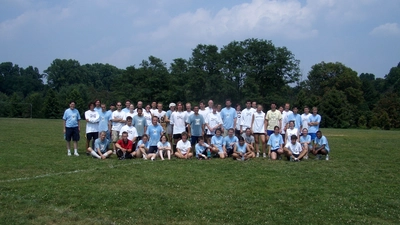
Mud Cup 2004
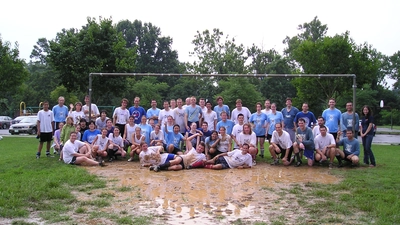
Group Photo
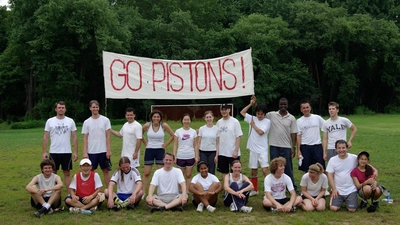
Mud Cup 2009
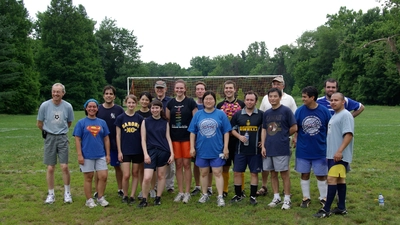
Mud Cup 2009
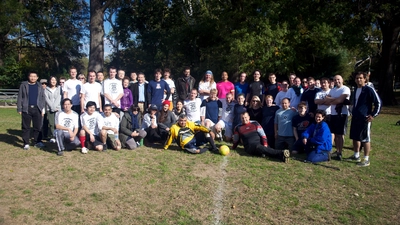
Mud Cup 2013
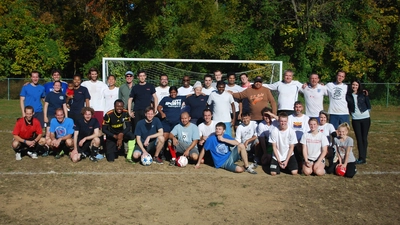
Mud Cup 2015
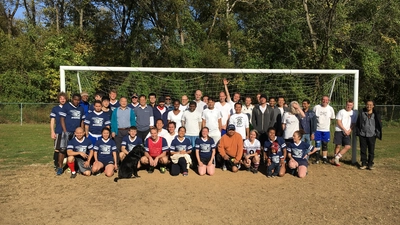
Mud Cup 2016
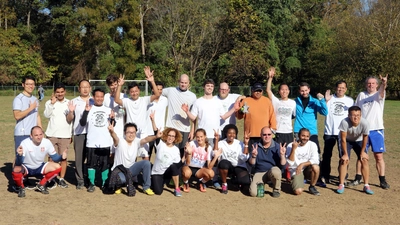
Mud Cup 2017
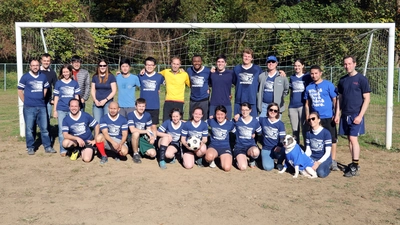
Mud Cup 2017
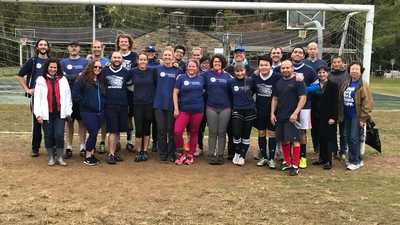
Mud Cup 2018
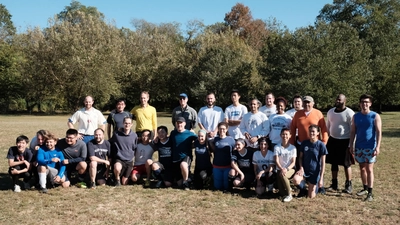
Mud Cup 2019
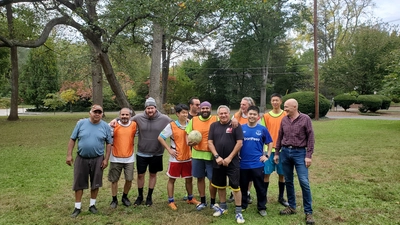
Mud Cup 2024
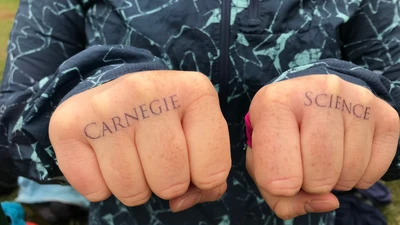
2018 Mud Cup
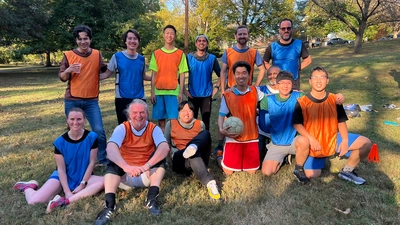
Mud Cup 2025
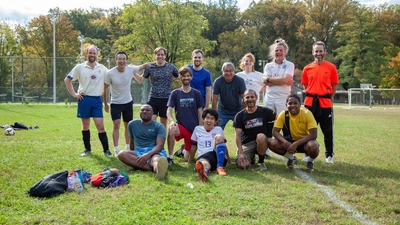
Mud Cup 2021
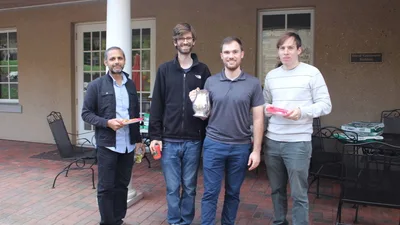
2021 Mud Cup
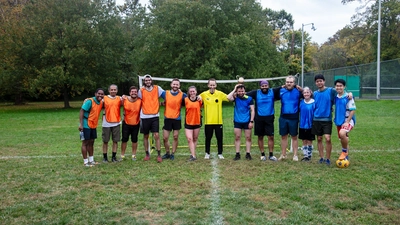
Mud Cup 2023
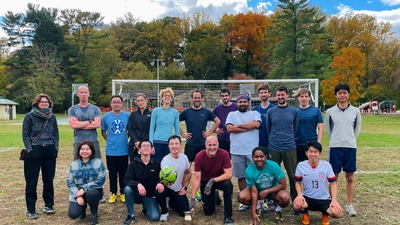
Mud Cup 2022
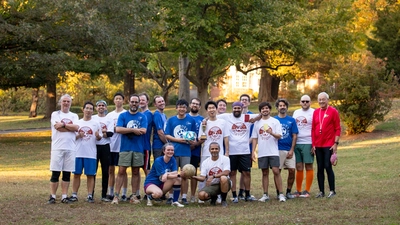
Mud Cup 2026
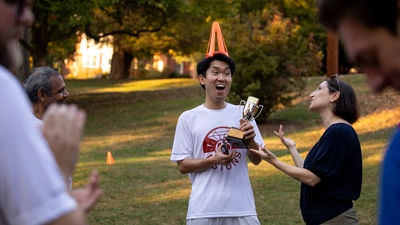
Rachel Awards Mike Wong the Trophy
A Game in Transition
The following year, two things shook up this longstanding tradition. First, the two departments merged to form Carnegie Science’s Earth and Planets Laboratory (EPL), erasing the departmental lines that had shaped the rivalry. Then the pandemic shut down campus life, and a virtual trivia game kept the Cup alive.
Today, the teams technically no longer split along the old departmental lines, but the names and echoes of GL and DTM live on. You can expect to find geochemists, astronomers, and volcanologists playing for the Dynamos, while high-pressure physicists, astrobiologists, and experimental petrologists tend to play for the Pistons.
An Anniversary, a Mystery, and a Challenge
In 2026, the rivalry turned 50, and the pitcher turned 30. Presented as Object 28 in our #Carnegie125 series, it is a silver-plated yard-sale find with “World Mud Cup” written on its side in marker.
Or rather, it was. Recently, the original Mud Cup went missing.
When the Pistons beat the Dynamos 5–1 on Oct. 29, 2026, they lifted the engraved trophy, but there was no silver pitcher for the winners to drink from in celebration.
The anniversary match also ended with a new letter of challenge. EPL United, a new squad drawn from both teams, invited Carnegie’s Pasadena divisions, Observatories and Biosphere Sciences & Engineering, to play for an inaugural Carnegie Cup. Fifty years after DTM’s letter-bound lecture on terminology, the challengers took care to specify soccer, “also known as football.”
If you’ve seen the original Mud Cup, or have any idea where it might be hiding, please contact Rachel Rausch at rrausch@carnegiescience.edu. No questions asked. We’d like to see it back in its rightful place as Object 28.
