
If rocks could talk, the ones at Carnegie’s Earth and Planets Laboratory (EPL) would have some incredible stories to tell—from the birth of the Solar System to the forces shaping our planet’s interior today. Whether they’re analyzing ancient meteorites, tracing the chemistry of deep mantle magmas, or simulating the conditions of planetary interiors, EPL scientists are uncovering the narratives hidden in planetary materials, one element at a time.
That kind of discovery takes more than curiosity—it takes access to some of the most advanced scientific tools in the world. At EPL, researchers are empowered to follow their boldest ideas, thanks in part to the division’s unparalleled suite of instrumentation.
Now, two ambitious initiatives aim to push those capabilities even further: a major renovation of EPL’s Geochemistry Building and the construction of a one-of-a-kind experimental press. These upgrades represent more than new equipment—they’re strategic investments in discovery, designed to ensure that scientists have the tools they need to explore bold new ideas.
"These investments aren’t simply about new equipment or labs,” says EPL Director Michael Walter. “They continue more than a century of Carnegie’s leadership in experimental geology, petrology, geochemistry, and planetary science—now amplified to tackle a new generation of challenges."
Building on two of Carnegie’s deepest scientific traditions—isotope geochemistry and high-pressure experimentation—these enhancements will enable researchers to better uncover the when and how of our planet’s past.
Precision: Unlocking Earth’s History with Atomic Clocks
At EPL, rocks aren’t just storytellers—they’re timekeepers. With the right tools, scientists can read the isotopic signatures hidden inside minerals and meteorites like they’re timestamps, revealing when and how they formed. This allows researchers to reconstruct key events across Earth’s history: from mass extinctions and volcanic cataclysms to the formation of continents and the chemistry of the early Solar System.
Carnegie is a longstanding leader in the fields of geochemistry and cosmochemistry, pioneering analytical techniques that revealed water in Apollo Moon rocks, traced Earth’s deepest diamonds, and analyzed grains of dust older than our Sun. That work continues today—and is about to get a powerful upgrade.

A major renovation of EPL’s Geochemistry Building, led by EPL’s newest Staff Scientists, Andrea Giuliani and Jennifer Kasbohm, will usher in an era of geochronology research at Carnegie. Geochronology—the science of telling time in rocks by quantifying radioactive decay occurring inside minerals—allows scientists to report on the timing, duration, and rate of changes over deep time. Outfitted with advanced clean labs and state-ofthe- art mass spectrometers, the facility will support research that quantifies rates of past climatic shifts, plate tectonics, volcanic eruptions, mantle processes, and how quickly life on Earth responded to these events.
"Carnegie Science has a long legacy of contributing major innovations in geochronology and isotope geochemistry, and Andrea and I are thrilled to continue this work,” says Kasbohm. “Our new clean lab and thermal ionization mass spectrometer will make EPL one of 15 or so labs in the world that produce ages for rocks with incredibly high precision, allowing us to disentangle cause-and-effect relationships across the Earth system."
But understanding a planet’s past isn’t just about knowing when things happened—it’s also about understanding how. That’s where EPL’s legacy in high-pressure experimentation comes in.
Pressure: Seeing Rocks Under Pressure—in a Whole New Light
For over a century, Carnegie scientists have pioneered high-pressure research, replicating the intense conditions found deep within Earth and other rocky planets. These experiments reveal how minerals transform at depth, how fluids migrate through the mantle, and how planetary interiors change as they cool.
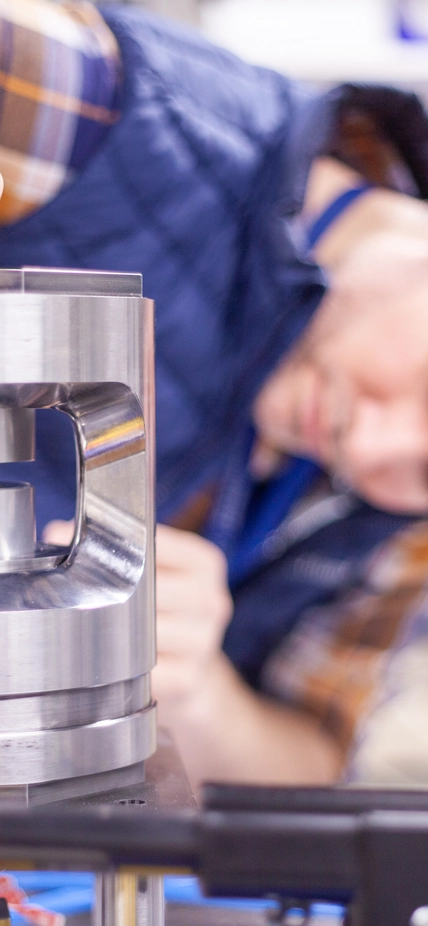
Now, experimental geophysicist Anne Pommier is building on that legacy in a bold new way. She’s leading the development of a first-of-its-kind press that will allow researchers to apply extreme pressures and temperatures to rock samples while simultaneously measuring their electrical conductivity, seismic wave velocities, and chemical transformations. What sets this press apart is its integrated suite of tools: X-ray imaging, electrical impedance measurements, and Raman spectroscopy. Together, they will enable scientists to observe both structural and chemical changes in real time as samples respond to conditions mimicking those of planetary interiors.
While some of these measurements are possible at specialized research facilities known as synchrotrons—massive circular particle accelerators that generate powerful X-rays to probe geomaterials— they come with challenges. Experiments must be scheduled far in advance, access to the instruments is limited to a few days, and researchers often need to transport and test as many samples as they can to make the most of their time.
Carnegie’s new press will eliminate those logistical hurdles by bringing these capabilities together in house for the first time, making complex experiments with multiple probes more accessible, efficient, and reproducible. “What we’re building at EPL will allow us to do all of it—seismic, electrical, chemical—in one experiment, in our own lab,” said Pommier. “It changes the scale of what we can discover.”
It changes the scale of what we can discover.
"What we’re building at EPL will allow us to do all of it—seismic, electrical, chemical—in one experiment, in our own lab," said Pommier. "It changes the scale of what we can discover."
If all goes to plan, the new press will allow researchers to work on experiments over the course of days, weeks, and even months without the pressure of a ticking clock. It will also have the added benefit of opening up time for Carnegie researchers to better train the postdoctoral fellows who work with them. “It’s truly the best way to conduct high-quality research,” says Pommier.
Generously supported by The Brinson Foundation, this interdisciplinary project combines EPL’s unique cross-disciplinary expertise in geophysics, seismology, and petrology. “Anne’s work precisely aligns with our mission to support innovative, high-risk research with extraordinary potential,” says Jamie Bender, Senior Program Officer at The Brinson Foundation. “This instrument could revolutionize high-pressure geophysical research across the globe.”
Possibility: Turning Curiosity into Discovery
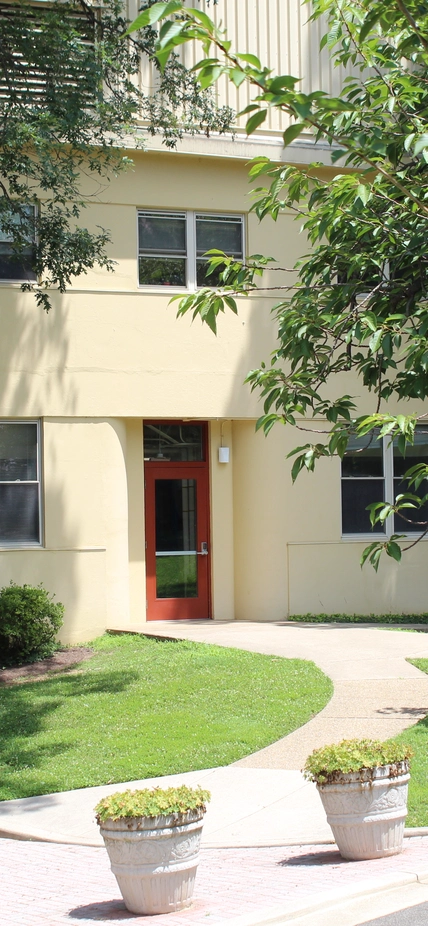
The renovated geochemistry facilities are expected to be operational by early 2026, with the high-pressure instrument partially online by the end of 2025 and fully operational by the end of 2026.
Once in place, these transformative upgrades will expand EPL’s capabilities for generations of scientists to come. They’ll empower researchers to follow their curiosity wherever it leads and move faster from spark to discovery. Because at Carnegie Science, our experts aren’t afraid to ask big questions—or build the tools to answer them.
These investments aren’t simply about new equipment or labs. They continue more than a century of Carnegie’s leadership in experimental geology, petrology, geochemistry, and planetary science—now amplified to tackle a new generation of challenges.
