Home

Navigation Menu

  • Back
  • About
    • Back
    • About

      Contact Us

      Business Address
      5241 Broad Branch Rd. NW

      Washington , DC 20015
      United States place Map
      Call Us (202) 387-640
    • Who We Are
      • Back
      • Leadership
      • Our Blueprint For Discovery
      • Board & Advisory Committee
      • Financial Stewardship
      • Awards & Accolades
      • History
    • Connect with Us
      • Back
      • Outreach & Education
      • Newsletter
      • Yearbook
    • Working at Carnegie
      • Back
      • Applications Open: Postdoctoral Fellowships

    Contact Us

    Business Address
    5241 Broad Branch Rd. NW

    Washington , DC 20015
    United States place Map
    Call Us (202) 387-6400
  • Research
    • Back
    • Research Areas & Topics
    • Research Areas & Topics
      • Back
      • Research Areas
      • From genomes to ecosystems and from planets to the cosmos, Carnegie Science is an incubator for cutting-edge, interdisciplinary research.
      • Astronomy & Astrophysics
        • Back
        • Astronomy & Astrophysics
        • Astrophysical Theory
        • Cosmology
        • Distant Galaxies
        • Milky Way & Stellar Evolution
        • Planet Formation & Evolution
        • Solar System & Exoplanets
        • Telescope Instrumentation
        • Transient & Compact Objects
      • Earth Science
        • Back
        • Earth Science
        • Experimental Petrology
        • Geochemistry
        • Geophysics & Geodynamics
        • Mineralogy & Mineral Physics
      • Ecology
        • Back
        • Ecology
        • Atmospheric Science & Energy
        • Adaptation to Climate Change
        • Water Quality & Scarcity
      • Genetics & Developmental Biology
        • Back
        • Genetics & Developmental Biology
        • Adaptation to Climate Change
        • Developmental Biology & Human Health
        • Genomics
        • Model Organism Development
        • Nested Ecosystems
        • Symbiosis
      • Matter at Extreme States
        • Back
        • Matter at Extreme States
        • Extreme Environments
        • Extreme Materials
        • Mineralogy & Mineral Physics
      • Planetary Science
        • Back
        • Planetary Science
        • Astrobiology
        • Cosmochemistry
        • Mineralogy & Mineral Physics
        • Planet Formation & Evolution
        • Solar System & Exoplanets
      • Plant Science
        • Back
        • Plant Science
        • Adaptation to Climate Change
        • Nested Ecosystems
        • Photosynthesis
        • Symbiosis
    • Divisions
      • Back
      • Divisions
      • Biosphere Sciences & Engineering
        • Back
        • Biosphere Sciences & Engineering
        • About

          Contact Us

          Business Address
          5241 Broad Branch Rd. NW

          Washington , DC 20015
          United States place Map
          Call Us (202) 387-640
        • Research
        • Culture
      • Earth & Planets Laboratory
        • Back
        • Earth & Planets Laboratory
        • About

          Contact Us

          Business Address
          5241 Broad Branch Rd. NW

          Washington , DC 20015
          United States place Map
          Call Us (202) 387-640
        • Research
        • Culture
        • Campus
      • Observatories
        • Back
        • Observatories
        • About

          Contact Us

          Business Address
          5241 Broad Branch Rd. NW

          Washington , DC 20015
          United States place Map
          Call Us (202) 387-640
        • Research
        • Culture
        • Campus
    • Instrumentation
      • Back
      • Instrumentation
      • Our Telescopes
        • Back
        • Our Telescopes
        • Magellan Telescopes
        • Swope Telescope
        • du Pont Telescope
      • Observatories Machine Shop
      • EPL Research Facilities
      • EPL Machine Shop
      • Mass Spectrometry Facility
      • Advanced Imaging Facility
  • People
    • Back
    • People
      Observatory Staff

      Featured Staff Member

      Staff Member

      Staff Member

      Professional Title

      Learn More
      Observatory Staff

      Search For

    • Search All People
      • Back
      • Staff Scientists
      • Leadership
      • Biosphere Science & Engineering People
      • Earth & Planets Laboratory People
      • Observatories People
    Observatory Staff
    Dr. Gwen Rudie
    Staff Scientist, Director of the Carnegie Astrophysics Summer Student Internship (CASSI)

    Featured Staff Member

    Gwen Rudie

    Dr. Gwen Rudie

    Staff Scientist, Director of the Carnegie Astrophysics Summer Student Internship (CASSI)

    Learn More
    Observatory Staff
    Dr. Gwen Rudie
    Staff Scientist, Director of the Carnegie Astrophysics Summer Student Internship (CASSI)

    Gwen Rudie specializes in observational studies of distant galaxies and the diffuse gas which surrounds them—the circumgalactic medium.

    Search For

    Search All Staff
  • Events
    • Back
    • Events
    • Search All Events
      • Back
      • Public Events
      • Biosphere Science & Engineering Events
      • Earth & Planets Laboratory Events
      • Observatories Events

    Upcoming Events

    Events

    Events

    Solar telescopes at the Carnegie Science Observatories annual Open House
    Public Program

    City of Astronomy Week 2025

    Carnegie Astronomers

    November 16

    12:00pm PST

    Caleb Sharf NLS - A Giant Leap
    Public Program

    The Giant Leap

    Dr. Caleb Scharf

    November 6

    6:30pm EST

    Two people look at each other
    Public Program

    Face Value: How the Brain Shapes Human Connection

    Nancy Kanwisher

    October 29

    6:30pm EDT

  • News
    • Back
    • News
    • Search All News
      • Back
      • Biosphere Science & Engineering News
      • Earth & Planets Laboratory News
      • Observatories News
      • Carnegie Science News
    News

    Recent News

    News

    Read all News
    This artist’s concept shows what the ultra-hot super-Earth exoplanet TOI-561 b could look like based on observations from NASA’s James Webb Space Telescope and other observatories. Webb data suggests that the planet is surrounded by a thick atmosphere above a global magma ocean. Credit: NASA, ESA, CSA, Ralf Crawford (STScI)
    Breaking News
    December 10, 2025

    Ultra-hot lava world has thick atmosphere, upending expectations

    Carnegie Observatories Santa Barbara Street campus.
    Breaking News
    December 04, 2025

    Carnegie Science Names Michael Blanton 12th Observatories Director

    Profile photo of Dr. Stella Ocker
    Breaking News
    November 24, 2025

    Postdoc Spotlight: Stella Ocker Explores the Space Between the Stars

  • Resources
    • Back
    • Resources
    • Search All
      • Back
      • Employee Resources
      • Scientific Resources
      • Postdoc Resources
      • Media Resources
      • Archival Resources
    • Quick Links
      • Back
      • Employee Intranet
      • Dayforce
      • Careers
      • Observing at LCO
      • Locations and Addresses
  • Donate
    • Back
    • Donate
      - ,

    • Make a Donation
      • Back
      • Support Scientific Research
      • The Impact of Your Gift
      • Carnegie Champions
      • Planned Giving
    Jo Ann Eder

    I feel passionately about the power of nonprofits to bolster healthy communities.

    - Jo Ann Eder , Astronomer and Alumna

    Header Text

    Postdoctoral alumna Jo Ann Eder is committed to making the world a better place by supporting organizations, like Carnegie, that create and foster STEM learning opportunities for all. 

    Learn more arrow_forward
  • Home
  • Events
Hybrid

Lunch Talk: Sonja Panjkov (Univeristy of Melbourne)

Milky Way & Stellar Evolution
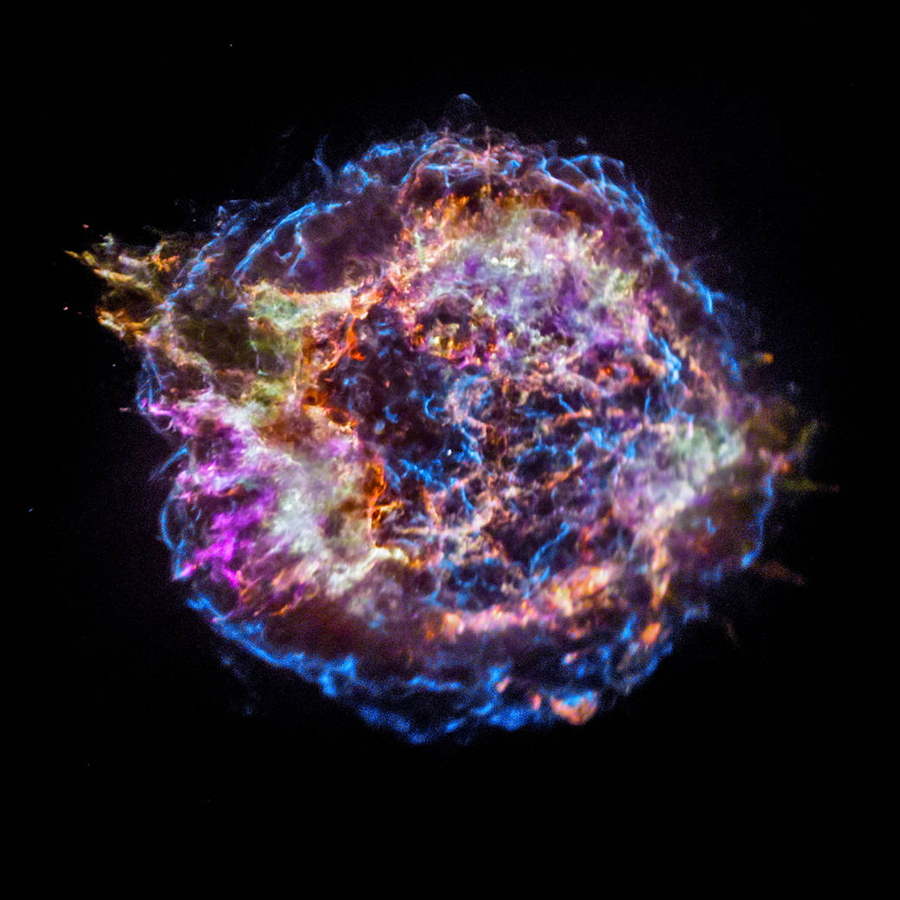
Supernova Remnants: The Fingerprints of Stellar Death

Supernovae play an important role on the cosmological stage, however key questions persist regarding their nature. In this talk, I will discuss how supernova remnant properties can be used to better understand the progenitor star, including its mass and supernova type. More specifically, I will show how the star formation history maps of Harris and Zaritsky (2009) can be used to constrain the progenitor masses of the Large Magellanic Cloud core-collapse remnants. These results support the theoretical predictions of successful core-collapse supernovae from high mass progenitors, going some way in addressing the Red Supergiant Problem (Smartt et al., 2009).  Then, since Type Ia remnants are more circular and mirror-symmetric than core-collapse remnants (Lopez et al., 2009), I quantify the level of asymmetry in the X-ray emission of the Small Magellanic Cloud remnants, and from this I predict the likely SN type for each remnant. Finally, I will discuss how the morphologies of certain key emission lines vary amongst the population of Galactic and Magellanic Cloud remnants, and how this relates to the underlying supernova mechanism. 
May 19, 2023
Add to Calendar
11:00am - 12:00pm PDT
Location:
Hybrid

813 Santa Barbara St
Pasadena, CA 91101-1232
United States

Hosted by:
Observatories
Zoom
Supernova remnant

Image credit: NASA/CXC/SAO

Get the latest

Subscribe to our newsletters.

Privacy Policy
Home
  • Instagram instagram
  • Twitter twitter
  • Youtube youtube
  • Facebook facebook

Science

  • Biosphere Sciences & Engineering
  • Earth & Planets Laboratory
  • Observatories
  • Our Research Areas
  • Our Blueprint For Discovery

Legal

  • Financial Statements
  • Conflict of Interest Policy
  • Privacy Policy

Careers

  • Working at Carnegie
  • Scientific and Technical Jobs
  • Administrative & Support Jobs
  • Postdoctoral Program
  • Carnegie Connect (For Employees)

Contact Us

  • Contact Administration
  • Media Contacts

Business Address

5241 Broad Branch Rd. NW

Washington, DC 20015

place Map

© Copyright Carnegie Science 2025