“Everyone Should Be Welcome to Ask Questions and Pursue the Truth"

Great science begins with great questions, and great questions can come from anyone. This Women's History Month, we spoke with some of the researchers at Carnegie Science who are working to make sure more people get the chance to ask them.
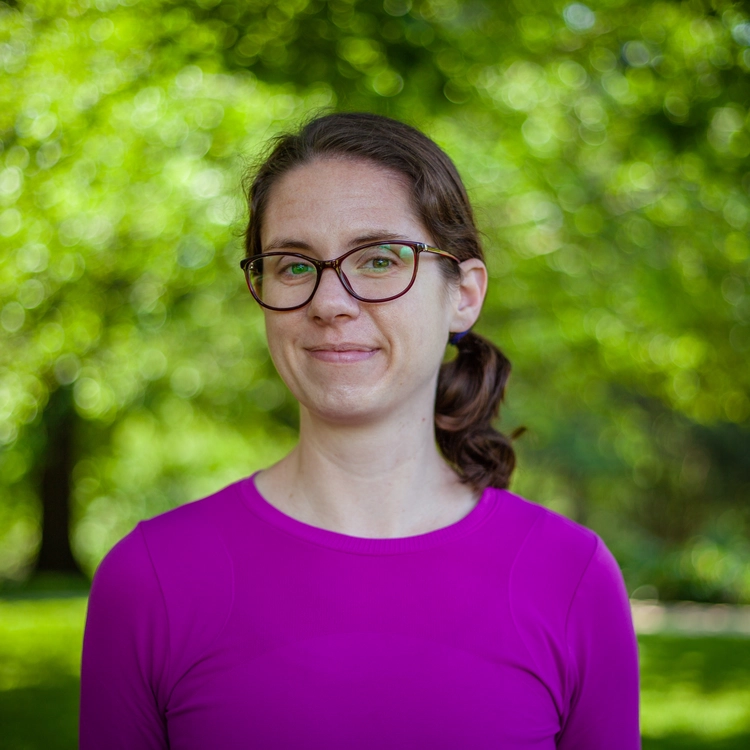
"Broadening participation in science is important because each new perspective brings a new way of thinking and fresh creativity," says Anat Shahar, Carnegie’s Vice President for Research.
That belief shapes Carnegie's approach to growing the scientific community: investing at every stage of the pipeline from early curiosity to a scientific career. At each step along that path, people are lost to the field—sometimes not for lack of interest and talent, but for lack of access and support. Among our efforts to combat this phenomenon are summer internship programs, which reach undergraduates at a pivotal time in their lives, before the pipeline narrows further.
“At Carnegie, we have a responsibility to train the next generation of scientists," says Shahar. "While we mostly do this with postdocs, we must also help train the undergraduate students who could one day become graduate students so that the pipeline continues to grow."
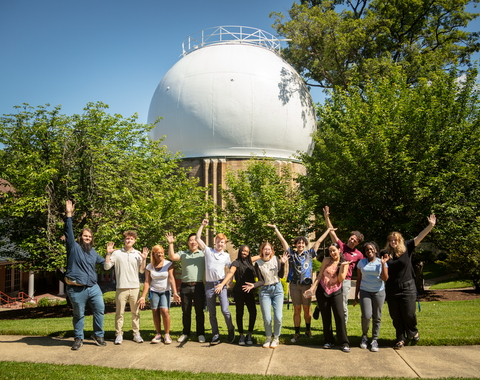
Each summer, at CASSI in Pasadena, California, and EPIIC in Washington, D.C., Carnegie researchers and engineers welcome student interns to work alongside them on real research questions. For many, these internships are their first experience with research outside the classroom and provide a glimpse of what a future career could look like.
Carnegie Astrophysics Summer Student Internship is based at the Carnegie Science Observatories in Pasadena, CA. It’s open to any California undergraduate interested in astronomy and astrophysics research. The CASSI program is supported, in part, by The Rose Hills Foundation.
Both Carnegie programs receive hundreds of applications each summer for 10-20 spots. If you're an undergraduate interested in learning more, visit the link below.
Learn more about CASSIEPIIC is based at the Carnegie Science Earth and Planets Laboratory in Washington, D.C. Currently funded through NSF's Research Experiences for Undergraduates program and has also been supported by Dr. Bevan French and the Marilyn Fogel Fund. EPIIC is open to undergraduates interested in astronomy, planetary, Earth, and materials sciences.
Both Carnegie programs receive hundreds of applications each summer for 10-20 spots. If you're an undergraduate interested in learning more, visit the link below.
Learn more about EPIICShahar knows firsthand how transformative this experience can be. "Before coming to Carnegie as an intern, I had no idea how to do research, what a career in science looked like, or that being a scientist could be such a fun job," she says. "By the end of the summer, I knew that this was what I wanted to do with my life."
Below, three scientists who spend their summers running these programs share what drives them and why this work matters more than ever.
We want science to be accessible and welcoming for every intern.
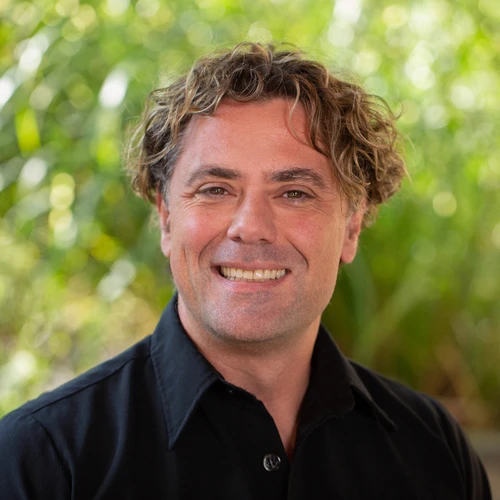
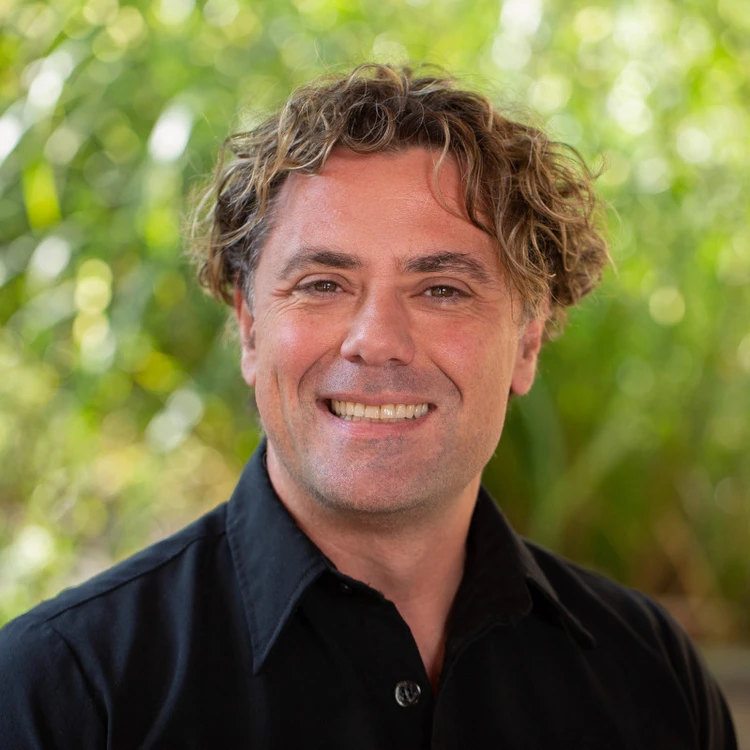
| Dionysis FoustokosResearch Scientist, Earth and Planets Laboratory; |
Why is broadening participation in science important?
As I often say to elementary school students, “science” isn’t anything that requires special skills. It all starts with questioning our current understanding, then moving on to reading what has been done in order to develop a series of questions to address. For human civilization to evolve, “science” needs the participation of as many of us as possible. It needs people who are eager to explore and question the world around them.
Scientific exploration as a means of communication has the power to unite individuals and, thus, elevate the well-being of society as a whole. Planet Earth and its inhabitants would be much better off if there were no barriers to who can be a “scientist.” Limiting the fundamental right to explore and understand the natural world to those who have certain advantages in life will ultimately hinder the progress of our civilization.
How does our internship program work toward that goal?
Our internship program welcomes everyone. There are no limits; however, we try to offer more opportunities to those at the early stages of their educational development, to those who have had no previous research experiences, and to those attending colleges with limited research programs.
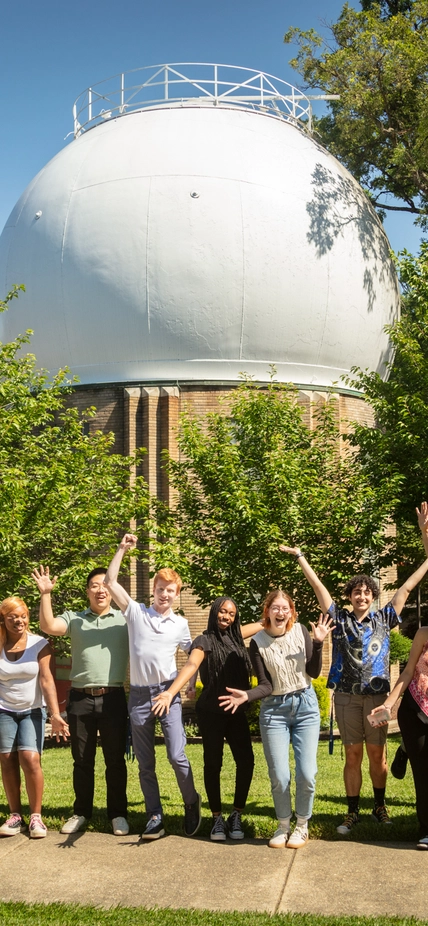
The program receives nearly 400 applications every year for 10–12 available internships. With an acceptance rate of 3 percent, we wish that there were more resources available to support the overwhelming demand for scientific engagement—because this is what we do at Carnegie. Our interns are exposed to hands-on research and treated as peers within the scientific community on campus. We want science to be accessible and welcoming for every intern.
What drew you to this work?
I grew up in a poor neighborhood in a marginalized suburb of Athens, Greece. To engage in scientific thinking during high school, I joined a mathematical society that was a two-hour bus ride away. Very few of my classmates made it to higher education. As I advanced in my journey to become a scientist, I realized it’s my ethical duty to provide young students with the opportunities I didn’t have.
We, as scientists, have a responsibility to promote this wonderful sense of exploration and discovery. Our goal is to foster a flourishing and expanding scientific community, welcoming the participation of as many young people as possible. The key point, in my opinion, is to remove the myth from “science.” It’s something that everyone does to one degree or another. There are so many students out there, eager to learn, to explore, and to discover, but for some of them, life circumstances make all this hard to achieve. We need to welcome everyone in this wonderful place called “science.”
I see exploring nature and the universe as, almost, a fundamental right of every person.
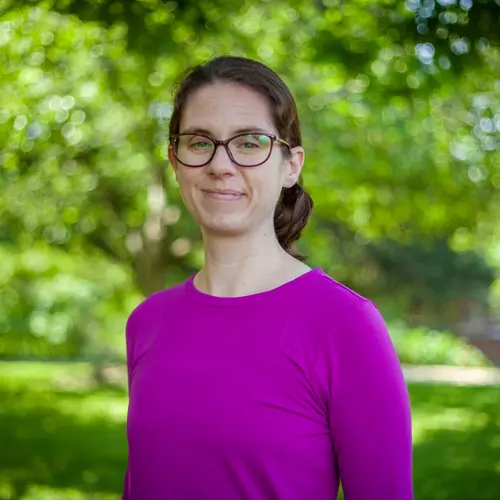
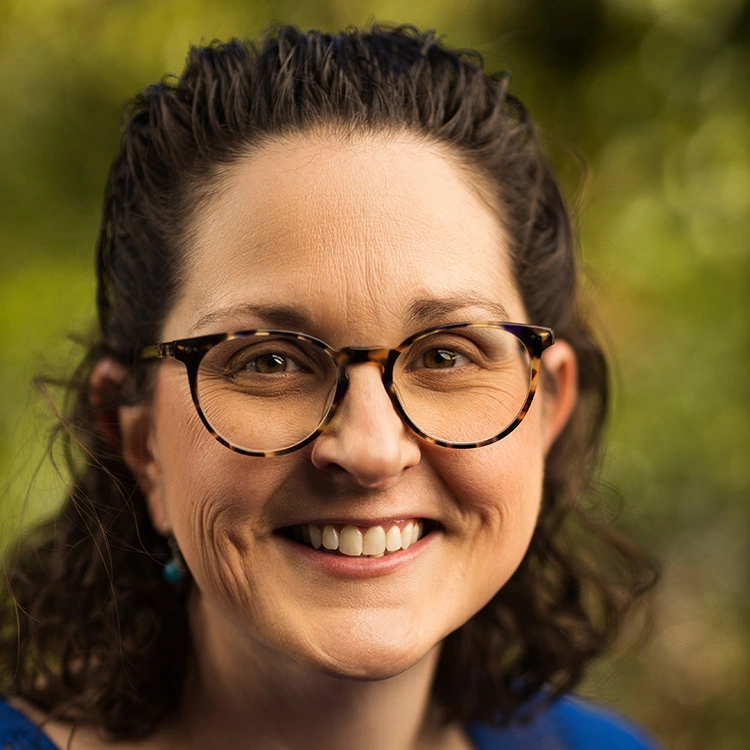
| Johanna TeskeStaff Scientist, EPL & Observatories; |
Why is broadening participation in science important?
A lot of arguments in favor of broadening participation in science fall under the umbrella of “it makes science better”—that is, considering a wider spectrum of approaches and perspectives helps the most robust ideas and solutions rise to the top. There is plenty of evidence in the literature to support this argument, and I don’t disagree; I’ve seen it in action myself. But I think the pursuit of new knowledge, the ability to follow one’s curiosity to investigate how the universe works (working within the bounds of what is humane and ethical), should be open to everyone, regardless of whether it has some measurable effect on the efficiency or magnitude of knowledge generation.
Again, I think broadening participation often does have these effects, but that shouldn’t be a requirement. I see exploring nature and the universe, and seeking to better understand our place in it, as almost a fundamental right of every person, like the freedom of expression and religion. And obviously, historically, science has not been so open, indeed the opposite.
How does our internship program work toward that goal?
Ha, well, it’s just a tiny step, but it’s hard to change by doing nothing. I think both CASSI and EPIIC are motivated by empowering students to see themselves as scientists when they may not have before, and developing a broad set of skills that will help them continue to think critically and creatively about the universe. For EPIIC, we try to focus on bringing in students who have little to no prior research experience or come from smaller schools, especially community colleges.
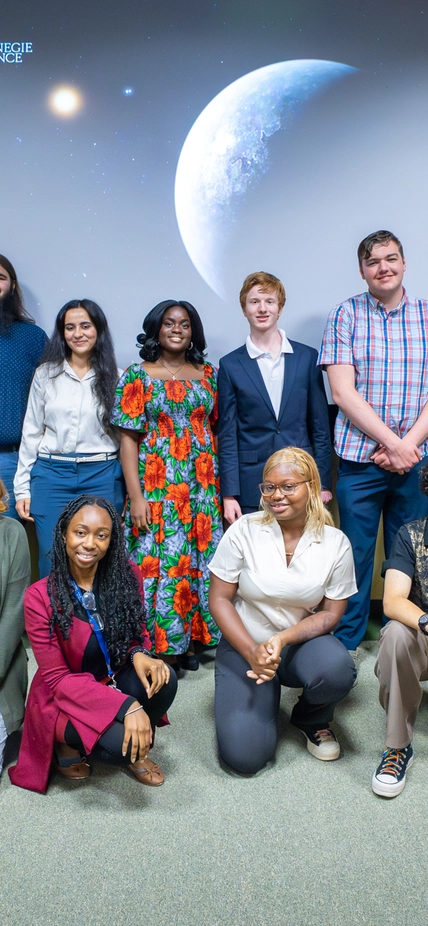
During the summer, we help students practice asking and answering their own scientific questions and considering perspectives different from their own through professional development programming and group discussions. We also try to set the expectation that science can be a rigorous yet friendly, collaborative, and creative pursuit—basically trying to break down barriers to pursuing science that students may have seen for themselves or others.
What drew you to this work?
A few things. I did two summer research internships myself in college, which had a big influence on the trajectory of my life, so I know what a difference these experiences can make. Selfishly, it also just feels really good to see students grow in their mastery of complex topics. What a high it is to struggle with a problem and solve it, to explore new investigation pathways with colleagues, or explain a discovery you made to someone else and have them understand it!
Ultimately, there are a lot of big problems on Earth (let alone across the universe!) that we are going to need a lot of people to care about and help solve, even in small ways that add up to something big collectively. I like to think that our internship program helps prepare students to identify and work to solve all sorts of problems, whether in the STEM fields we work on at EPL, or in other areas of life.
When I was hired as a postdoc at Carnegie in 2013, there were only 3 female postdocs and 2 female staff members.
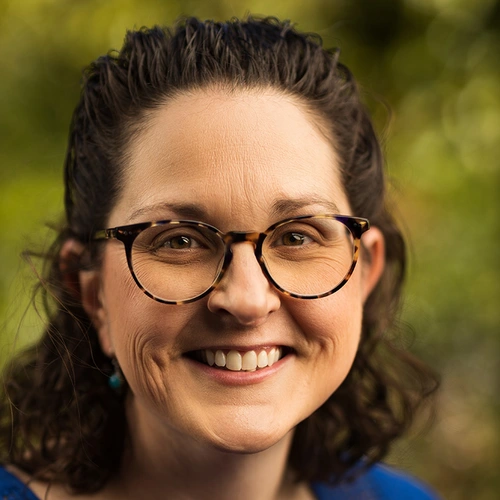
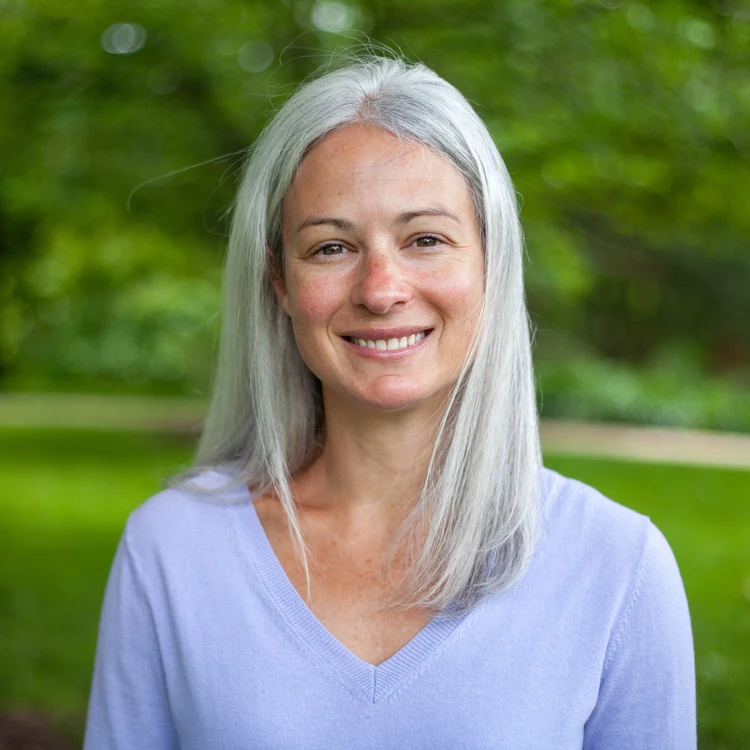
| Gwen RudieStaff Scientist, Carnegie Science, Observatories; |
Why is broadening participation in science important?
Science, foundationally, is a search for truth. If we want to pursue that search to the best of our abilities as a human population, we need to be able to draw creative ideas and innovation from as broad a source population as possible.
I also like this term of “broadening participation” because, as a field, we often take it to mean the people we include. And that is a big piece of it. But I also think it means asking more from (i.e., broadening the participation of) each individual. When we open the doors widely to contributions from thoughtful individuals, regardless of their background, we have the greatest possibility of hastening our progress toward truth.
What drew you to this work?
My mother got her Ph.D. in inorganic chemistry from MIT in the late 1970s. But it only took a few more years for her to be ushered out of the workforce by the sexism that was prevalent at the time. During my undergraduate years, roughly 30 years later, I was still commonly one of a small number of women in my physics classes and in my Ph.D. program at Caltech.
When I was hired as a postdoc at Carnegie in 2013, there were only 3 female postdocs and 2 female staff members. In 2015, when I was hired as a staff member, I believe I was only the fourth woman hired onto the scientific staff at OBS in the full century-long history of this institution. I’ve become uncomfortably used to being one of the few or the only of my “type” in a room, and I know the pressure and the loneliness that that brings.
So part of my passion for this work comes from my lived experience, and from my mother’s. But more so, even than that, I think my interest comes from a very simple belief that science is best served by opening the doors and an inherent belief in the importance of fairness. I have always loved science. And I think everyone—regardless of their background—should be allowed and welcome to ask questions and pursue the truth. It’s really my belief in the importance of fairness and my love for science that most draws me to this work.
What brings you back to CASSI summer after summer?
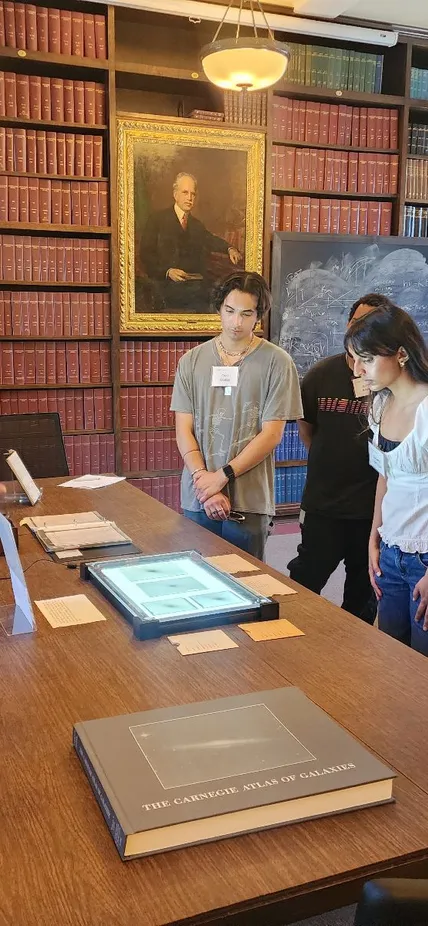
What keeps me in the work, and specifically running CASSI, are the students themselves. Our interns arrive with such energy, enthusiasm, and deep appreciation. They grow so quickly—not just in their scientific understanding but also in their confidence as scientists—in such a short period. It reminds me again every year that (a) what we do is cool and (b) that progress is so very possible in this world. When this program makes a difference in the lives of our students, even if just in a small way, it feels like the biggest win!
Meet the Scientists