What's beneath Bermuda?


Why it matters
Bermuda may help reveal hidden processes inside Earth.
The archipelago could be one of a kind. Or it could be the first known example of a broader geological process that has been overlooked.
By studying places that do not fit existing models, Carnegie scientists can test long-standing ideas about how Earth works and uncover new processes shaping our planet from the inside out.
-
0
Seismic Stations
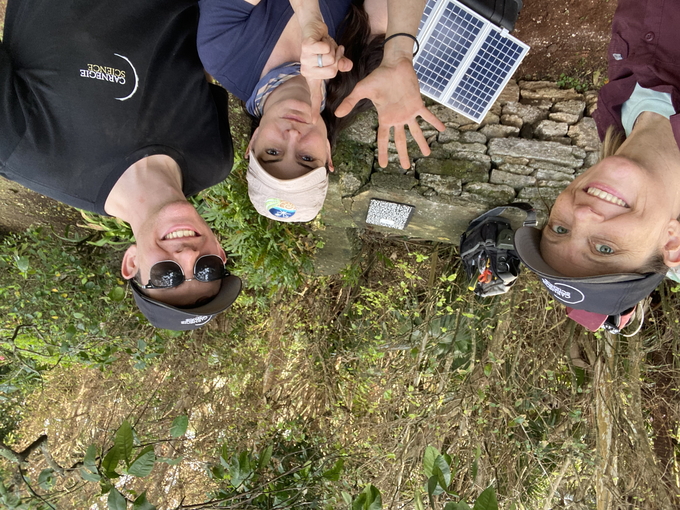
The team has installed 10 seismometers around the island.
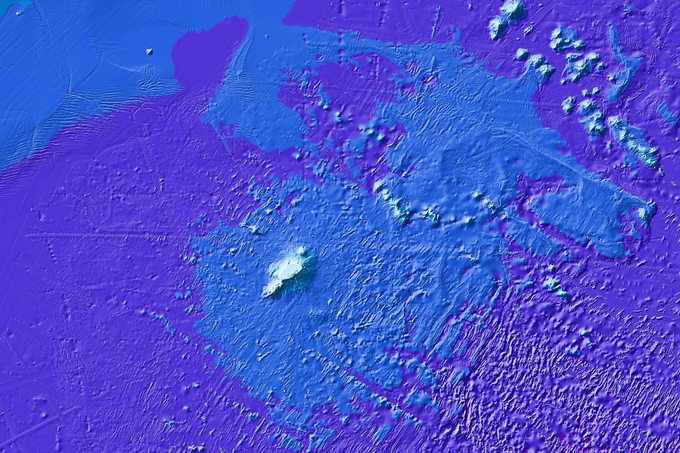
Bermuda's last volcanic eruption was more than 30 million years ago, and no active mantle plume has been found beneath the island today. By the standard model of how volcanic islands form and fade, Bermuda should have slowly subsided back toward the seafloor long ago. Instead, it still rises 1,600 feet above the surrounding ocean floor.
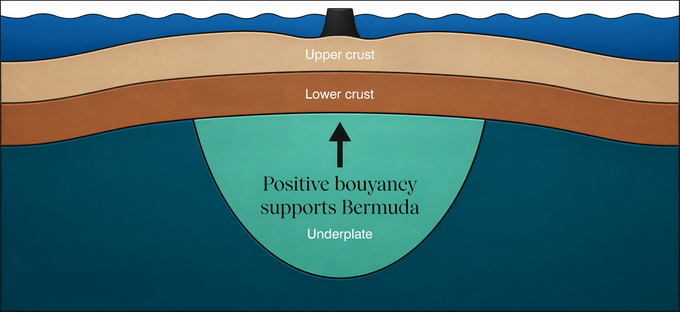
Carnegie Science researchers William Frazer, Diana Roman, and Lara Wagner are working to find out what's holding it up. Because scientists can't drill 20 miles beneath the island to see what's there, the team uses seismic waves as a kind of ultrasound for the planet. Their early work, drawing on data from Bermuda's single existing seismic station, identified an interesting feature: a buoyant layer of rock more than 12 miles thick sitting just below the oceanic crust.
This hidden "underplate" may be what's keeping Bermuda elevated long after its volcanoes went silent, and the finding is reshaping how scientists think about the deep processes that build and sustain volcanic islands.