So, You Want to Buy a Telescope?

So, you’ve been stargazing with your naked eyes or a set of binoculars, but you’re eager to see further and more detail. It might be time for a telescope.
But how do you get started?
“A telescope is a major purchase and you want to select something that will enhance your stargazing experience while minimizing frustration,” says Jeff Rich, astronomer and outreach lead at the Carnegie Science Observatories. “I’m always sad when I talk to someone during an outreach event who bought a telescope that’s user guide was more complicated than they anticipated to use and they just gave up on the whole hobby.”
That’s why it’s important to spend some time considering what’s out there and pick the telescope that will match your needs, so that you can keep up the hobby and maybe even someday expand into the exciting world of astrophotography.
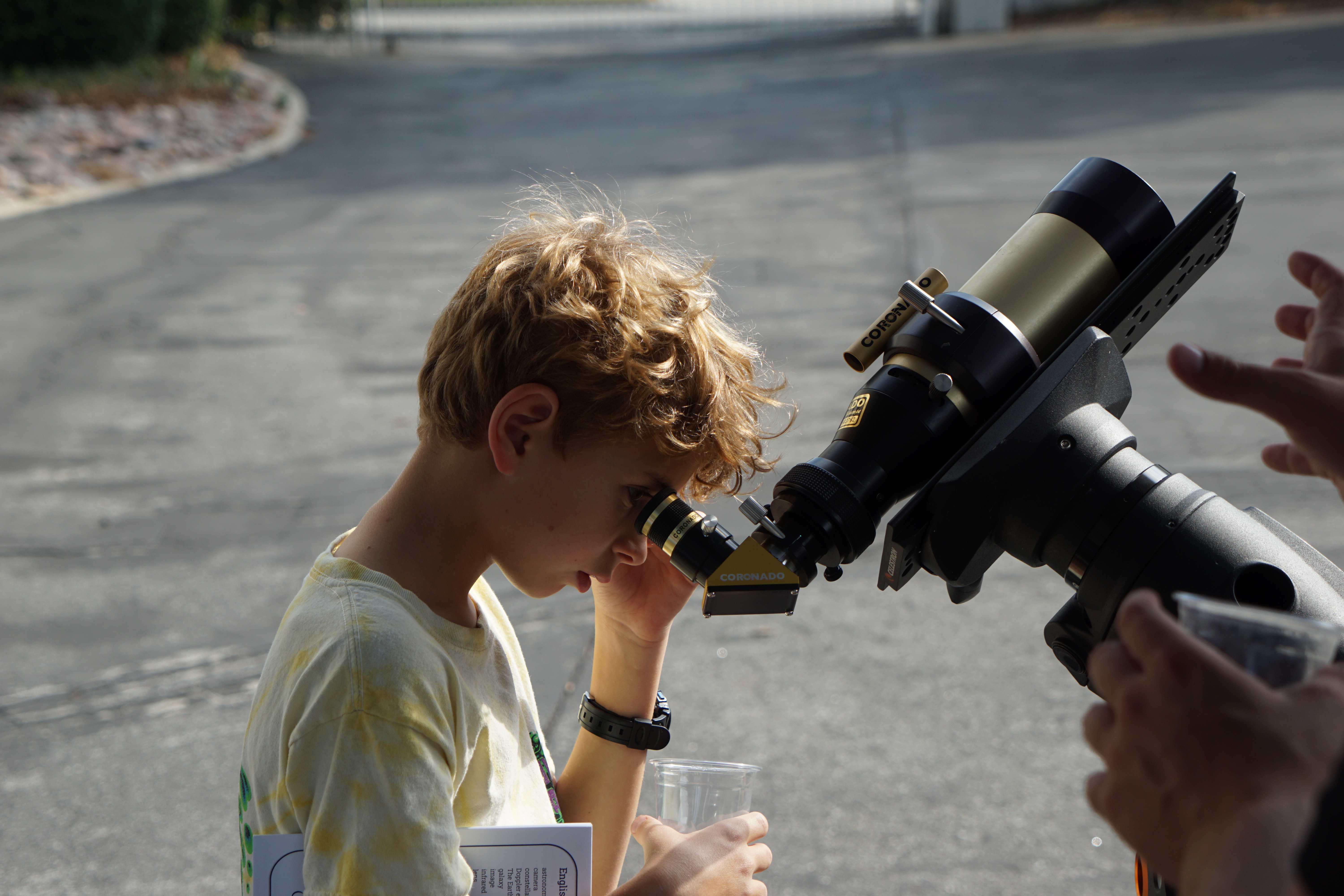
The Basics
At-home, tube-style telescopes used by amateurs can fall into two main categories--reflectors, which use mirrors to gather and focus light, and refractors, which use lenses to do the same. There are also compound or catadiopric telescopes, which use both, but they are a bit more complicated for a beginner to use.
One of the most popular reflector telescopes for backyard stargazers is called a Dobsonian, says Carnegie Science Observatories astronomer Jack Piotrowski, who specializes in instrumentation design and development. It was named after a prolific sidewalk astronomer John Dobson, who worked tirelessly to garner excitement about the night skies and even taught members of the public how to build their own telescopes at home.
“A 6-inch (or 150 millimeter) Dobsonian telescope gathers about 13 times more light than your 8x42 binoculars can, and a whooping 475 times more light than the naked eye, enabling you to see much more,” he explains.
A telescope’s magnification is determined by its focal length divided by the focal length of its eyepiece, Rich adds. One big difference between a tube-style telescope and binoculars is that the magnification can be changed by swapping out the eyepiece.
“It works just like changing the lens on your camera to be able to photograph different kinds of objects,” he says.
However, Piotrowski warns against buying an eyepiece that outpaces your telescope’s capabilities.
“As a rule of thumb, the maximum magnification of a telescope is about 2 times the diameter of the aperture in millimeters. Avoid eyepieces that promise a greater magnification than your telescope can deliver,” he cautions. “At that point, you’re not going to be able to really tap into the eyepiece’s power, as you won’t have enough light.”
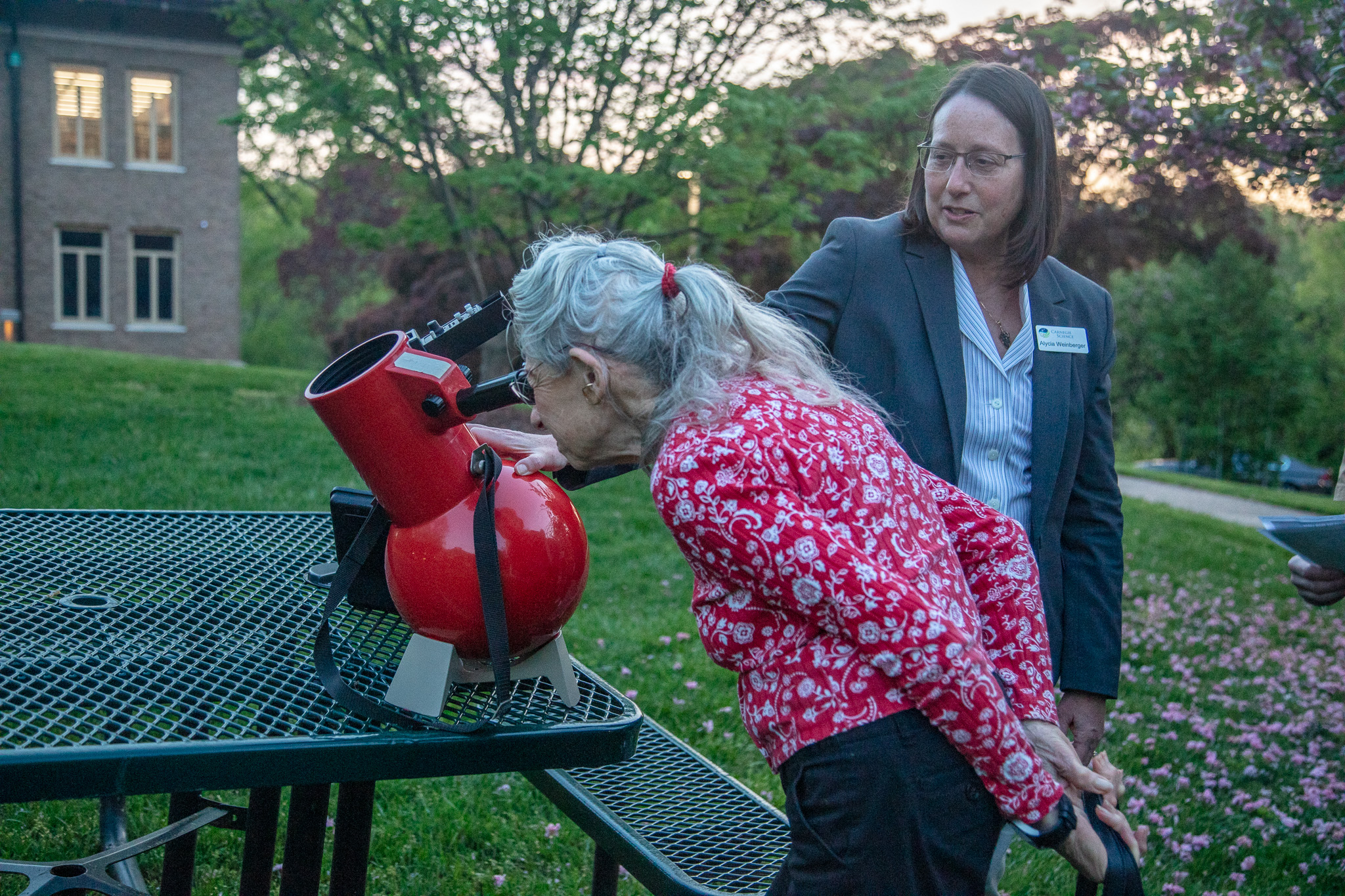
Finding Yourself on the Sky
Once you’re equipped with a telescope, you’ll be able to look at objects that are more distant and thus fainter.
That’s great!
But there are a couple of important things to keep in mind.
One, the darker the skies, the easier it will be to see faint celestial objects. Of course, backyard astronomy is fun no matter what. But if you can get away from streetlights and other urban “light pollution,” you’ll be able to take full advantage of your new toy.
Two, it can be difficult to find the object you want to observe now that you’re looking at a small spot in the sky with high magnification.
“It’s like looking at a landscape from a hot air balloon to understand the lay of the land vs being dropped into a habitat and having to understand the landscape by walking around,” Rich jokes.
This is why even professional astronomers use tools to help them find objects in the sky.
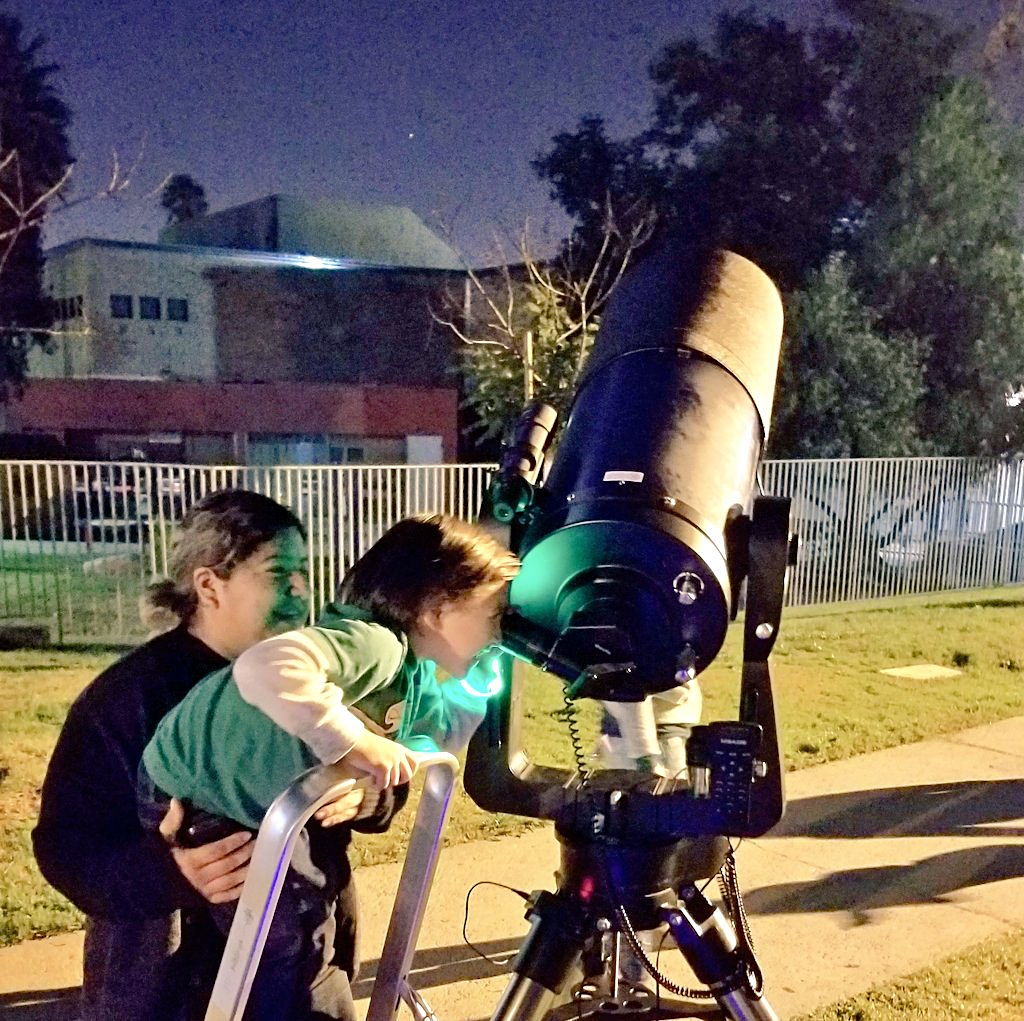
Stellarium is a popular tool for planning a night of stargazing. It’s a free open-source desktop and app-based “planetarium” that shows the sky in 3D. You can use it to determine what will be visible in your area and make a plan for how to find each celestial object that you want to check out.
You can also go old-school and use constellations to help you find the objects you want to observe, adds Piotrowski.
“I love the idea of connecting with ancient navigators and old-time sailors, who plotted their journeys using these same groupings of stars and now we can use them to orient ourselves as we plan a night of backyard astronomy,” he concludes.
