Search
Search for names, keywords, research areas, etc.

caption test
Search
The contact person for 2022-2023 series is Munazza Alam. Email: malam at carnegiescience.edu.
Abstract: Rotating tanks are a powerful teaching tool from the elementary through graduate school levels. They are ideal for demonstrating the basic fluid dynamics that underlie weather, climate, ocean circulation, and planetary and stellar interior fluid motions. Over the past 5 years, we have developed a series of do-it-yourself (DIY) kits for building and carrying out desktop rotating tank experiments. In this talk, Dr. Aurnou will go over the basic concepts and then carry out a set of desktop experiments with participants taking active part in these hands-on science activities. With the interesting weather we have been having the last few weeks, winter-time instabilities of the polar jet stream will be the main problem we hone in on.
Title: "Determining C/N/O Abundances in Protoplanetary Disks via Observations of Molecular Emission"
Abstract: Characterizing the chemical composition of planet-forming materials in protoplanetary disks around young stars is an important step in interpreting the formation and evolution histories of planets. While molecular emission from protoplanetary disk gases is sensitive to various physical and chemical disk properties, it only provides a partial view of the complete chemical contents of the disk. Using physical/chemical disk modeling we attempt to connect molecular line observations of protoplanetary disks to the underlying chemical abundances in disk materials. In this talk, I will present modeling results and submillimeter molecular line observations focused on major carriers of carbon, nitrogen, and oxygen in protoplanetary disks. I will also discuss the potential for deriving C, N, and O abundances from telescope observations of bright, observable molecular species.
Title: "Clinopyroxene-melt Trace Element Partitioning in Fe-rich Basaltic Systems"
Abstract: Trace element partitioning in Fe-rich basaltic systems is understudied but is important for understanding petrogenesis of Fe-rich magmatic bodies. Clinopyroxenes are a major host of incompatible elements in planetary interiors, thus the study of their incompatible trace element inventories can yield important information on the melting and fractionation processes during igneous petrogenesis. This work explores trace element partitioning in clinopyroxenes with variable Fe and Al content at 1 and 2 GPa and utilizes the results to create predictive lattice strain models. These models can be applied to understand the evolution of natural Fe-rich magmatic systems on Earth and in the Solar System.
Abstract: The recent launch of JWST promises detailed characterization of hot gaseous exoplanets through emission and transmission spectroscopy observations. In this talk, I will discuss the current understanding of the atmospheric circulation of hot gaseous exoplanets ("hot Jupiters’’) as determined from interpreting astronomical observation with a combination of analytic theory and general circulation modeling. I will introduce the hottest gaseous exoplanets, "ultra-hot Jupiters,’’ as a novel extreme class of exoplanet characterized by thermal dissociation of molecules and patchy mineral cloud coverage. I will describe the current efforts to characterize the atmospheres of hot and ultra-hot Jupiters with JWST, along with potential avenues for further exploration.
Abstract: Earth’s core-mantle boundary features a complex landscape of multi-scale structures whose heterogeneous compositions and physical properties likely influence key phenomena in Earth’s interior. Interdisciplinary advances in the past decade have shown that mountain-scale structures discovered at roots of mantle plumes may be strongly enriched in solid FeO, a material exhibiting various unique but poorly constrained properties at deep Earth conditions.
Here, Dr. Dobrosavljevic will share his recent experimental results on the melting of FeO, as well as theoretical work on the material’s insulator-metal transition at these extreme conditions. These findings suggest the presence of solid FeO-rich regions at Earth’s mantle base can explain independent observations from multiple geophysical probes.
Abstract: I will be discussing my previous search for nearby companion planets to hot Jupiters, the calculation of their occurrence rates, and the implications of the formation pathways of these systems. I will also bookend the life of hot Jupiters with a discussion on the orbital decay of hot Jupiters into their host stars and the new possibilities emerging to detect this phenomenon. Time permitting, I will also present my efforts to identify and statistically validate the best-in-class targets for atmospheric characterization with JWST and future missions.
Abstract: Presolar stardust grains are tiny and rare components of meteorites. They were produced in the winds and explosions of ancient dying stars and were part of the molecular cloud from which the Solar System formed. By analyzing their compositions, we can learn how stars synthetized elements and their isotopes. Studying presolar grains is also the only known way of directly examining some of the building blocks of the Solar System in the laboratory. They can tell us what type of material and which processes ultimately formed the Sun and planets. In this talk, we will explore a new dataset of presolar grain abundances and multi-element isotopic compositions collected with the Carnegie NanoSIMS. The samples include previously unstudied meteorites and material recently returned from asteroid Ryugu by the Hayabusa2 spacecraft. We will examine what these presolar grains can tell us about their origin and the early evolution of the solar system.
Abstract: I will be discussing my previous search for nearby companion planets to hot Jupiters, the calculation of their occurrence rates, and the implications of the formation pathways of these systems. I will also bookend the life of hot Jupiters with a discussion on the orbital decay of hot Jupiters into their host stars and the new possibilities emerging to detect this phenomenon. Time permitting, I will also present my efforts to identify and statistically validate the best-in-class targets for atmospheric characterization with JWST and future missions.
Abstract: On January 15, 2022, the largest explosive eruption instrumentally recorded occurred at Hunga Tonga-Hunga Ha’apai volcano in the Tonga-Kermadec island arc. In this talk, I will first summarize the 2022 eruptive sequence and the multidisciplinary observations that made this eruption exceptional. I will then show how we can use gravity data derived from satellite altimetry to determine the architecture of the magmatic system. Multibeam bathymetry data acquired post-eruption reveal the seafloor changes associated with the eruption including the dramatic ~850m caldera collapse. We will see how the eruption and associated caldera collapse reorganized magma storage under Hunga Tonga volcano.
Abstract: Properties of carbon at extreme pressures and temperatures are of critical importance for constructing interior models of carbon-rich exoplanets. Among the questions that have long perplexed the scientific community are the existence and potential synthesis of high-pressure post-diamond carbon phases, and the inelastic response of diamond to strong shock compression. In particular, very recent ramp compression and X-Ray diffraction experiments at the National Ignition Facility (NIF) challenged theoretical prediction of the existence of a high-pressure BC8 post-diamond phase by compressing diamond to extreme pressures up to 20 Mbar. In this talk, Dr. Oleynik will describe recent advances in simulating atomic-scale dynamics of material’s response at experimental time and length scales using quantum-accurate, billion-atom molecular dynamics simulations with machine-learning models of interatomic interactions and employing the most powerful computers in the world. Specifically, Oleynik will focus on atomic-scale mechanisms of solid-solid and solid-liquid phase transitions of carbon and nature of inelastic deformations in diamond. These transformative simulations guide our experimental campaigns at NIF, Omega, Z, and EuXFEL facilities towards observing predicted phenomena.
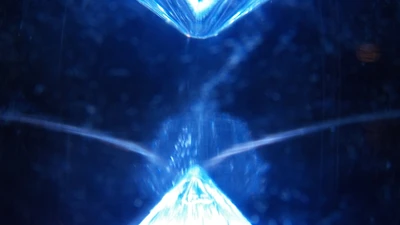
Diamond Anvil Cell image from the CAVE, GL
SPECIAL SEMINAR
Wednesday, July 26, 2023
Time: 11:00 a.m.
Speaker: Professor Nathan Mayne, University of Exeter, UK
Topic: Exoplanet Climates in 3D Challenges & Opportunities
Host: Anjali Piette
Abstract: Planetary climates are tricky requiring a range of model complexities to understand, interpret and predict observations. Simple models aid our understanding of the key mechanisms but can provide seemingly robust inferences which are actually dependent on the physical ingredients or assumptions (e.g., 1D versus 3D), whereas higher complexity models are more resource intensive and dependent on a larger number of input parameters. Our progress in understanding the Earth's climate, and that of its neighbouring solar system planets, a relatively small number of well observed cases, is helping us accelerate our understanding of the vast (overwhelming?) diversity of exoplanets. In turn, studies of exoplanets are benefitting the understanding of our own changing climate. One lesson from Earth climate research is clear, a range of approaches and perspectives is vital to make progress.
In this talk I will detail the research undertaken by our team at the University of Exeter employing, predominantly, 3D climate models across a range of complexities to try to unravel the interactions between chemistry, radiative transfer, dynamics and biology in planetary climates. I will focus on simulations of gas giant exoplanets, including clouds and chemical kinetics, compared to observations from JWST, and simulations of terrestrial planets, connecting the Early Earth with potentially habitable candidates. Additionally, I will briefly describe the knowledge transfer with Earth climate research through a co-development framework with the UK Met Office. Finally, I will mention the context of our work within the recent exoplanet Model Intercomparison Projects of the CUISINES framework.
Filter By:
Are you looking for...

Find the latest press releases, feature stories, and more.

Find scientific seminars and upcoming public events.

Learn about the scope of our research, which spans the entire natural world.
