Home

Navigation Menu

  • Back
  • About
    • Back
    • About

      Contact Us

      Business Address
      5241 Broad Branch Rd. NW

      Washington , DC 20015
      United States place Map
      Call Us (202) 387-640
    • Who We Are
      • Back
      • Leadership
      • Our Blueprint For Discovery
      • Board of Trustees
      • Financial Stewardship
      • Awards & Accolades
      • History
    • Connect with Us
      • Back
      • Newsletter
      • Yearbook
    • Working at Carnegie
      • Back
      • Applications Open: Postdoctoral Fellowships

    Contact Us

    Business Address
    5241 Broad Branch Rd. NW

    Washington , DC 20015
    United States place Map
    Call Us (202) 387-6400
  • Research
    • Back
    • Research Areas & Topics
    • Research Areas & Topics
      • Back
      • Research Areas
      • From genomes to ecosystems and from planets to the cosmos, Carnegie Science is an incubator for cutting-edge, interdisciplinary research.
      • Astronomy & Astrophysics
        • Back
        • Astronomy & Astrophysics
        • Astrophysical Theory
        • Cosmology
        • Distant Galaxies
        • Milky Way & Stellar Evolution
        • Planet Formation & Evolution
        • Solar System & Exoplanets
        • Telescope Instrumentation
        • Transient & Compact Objects
      • Earth Science
        • Back
        • Earth Science
        • Experimental Petrology
        • Geochemistry
        • Geophysics & Geodynamics
        • Mineralogy & Mineral Physics
      • Ecology
        • Back
        • Ecology
        • Atmospheric Science & Energy
        • Adaptation to Climate Change
        • Water Quality & Scarcity
      • Genetics & Developmental Biology
        • Back
        • Genetics & Developmental Biology
        • Adaptation to Climate Change
        • Developmental Biology & Human Health
        • Genomics
        • Model Organism Development
        • Nested Ecosystems
        • Symbiosis
      • Matter at Extreme States
        • Back
        • Matter at Extreme States
        • Extreme Environments
        • Extreme Materials
        • Mineralogy & Mineral Physics
      • Planetary Science
        • Back
        • Planetary Science
        • Astrobiology
        • Cosmochemistry
        • Mineralogy & Mineral Physics
        • Planet Formation & Evolution
        • Solar System & Exoplanets
      • Plant Science
        • Back
        • Plant Science
        • Adaptation to Climate Change
        • Nested Ecosystems
        • Photosynthesis
        • Symbiosis
    • Divisions
      • Back
      • Divisions
      • Biosphere Sciences & Engineering
        • Back
        • Biosphere Sciences & Engineering
        • About

          Contact Us

          Business Address
          5241 Broad Branch Rd. NW

          Washington , DC 20015
          United States place Map
          Call Us (202) 387-640
        • Research
        • Culture
      • Earth & Planets Laboratory
        • Back
        • Earth & Planets Laboratory
        • About

          Contact Us

          Business Address
          5241 Broad Branch Rd. NW

          Washington , DC 20015
          United States place Map
          Call Us (202) 387-640
        • Research
        • Culture
        • Campus
      • Observatories
        • Back
        • Observatories
        • About

          Contact Us

          Business Address
          5241 Broad Branch Rd. NW

          Washington , DC 20015
          United States place Map
          Call Us (202) 387-640
        • Research
        • Culture
        • Campus
    • Instrumentation
      • Back
      • Instrumentation
      • Our Telescopes
        • Back
        • Our Telescopes
        • Magellan Telescopes
        • Swope Telescope
        • du Pont Telescope
      • Observatories Machine Shop
      • EPL Research Facilities
      • EPL Machine Shop
      • Mass Spectrometry Facility
      • Advanced Imaging Facility
  • People
    • Back
    • People
      Observatory Staff

      Featured Staff Member

      Staff Member

      Staff Member

      Professional Title

      Learn More
      Observatory Staff

      Search For

    • Search All People
      • Back
      • Staff Scientists
      • Leadership
      • Biosphere Science & Engineering People
      • Earth & Planets Laboratory People
      • Observatories People
    Observatory Staff
    Dr. Andrew Steele
    Staff Scientist

    Featured Staff Member

    Andrew Steele

    Dr. Andrew Steele

    Staff Scientist

    Learn More
    Observatory Staff
    Dr. Andrew Steele
    Staff Scientist

    Andrew Steele's principal interest is in developing protocols, instrumentation, and procedures for life detection in samples from the early Earth and elsewhere in the Solar System.

    Search For

    Search All Staff
  • Events
    • Back
    • Events
    • Search All Events
      • Back
      • Public Events
      • Biosphere Science & Engineering Events
      • Earth & Planets Laboratory Events
      • Observatories Events

    Upcoming Events

    Events

    Events

    Colloquium

    Prof. Liam Connor (Harvard University)

    Early results and grand plans for FRB cosmology

    May 5

    11:00am PDT

    Colloquium

    Prof. Wenbin Lu (UC Berkeley)

    Title TBA

    May 12

    11:00am PDT

    Colloquium

    Dr. Matilde Mingozzi (Space Telescope Science Institute)

    Title TBA

    May 19

    11:00am PDT

  • News
    • Back
    • News
    • Search All News
      • Back
      • Biosphere Science & Engineering News
      • Earth & Planets Laboratory News
      • Observatories News
      • Carnegie Science News
    News

    Recent News

    News

    Latest

    • - Any -
    • Biosphere Sciences & Engineering
    • Carnegie Science
    • Earth & Planets Laboratory
    • Observatories
    expand_more
    Read all News
    Meteor v magma
    Breaking News
    April 22, 2026

    Where did Earth get its water?

    This artist’s view shows the hot Jupiter exoplanet 51 Pegasi b, sometimes referred to as Bellerophon, which orbits a star about 50 light-years from Earth in the northern constellation of Pegasus (The Winged Horse). Credit: ESO/M. Kornmesser/Nick Risinger (skysurvey.org)
    Breaking News
    April 07, 2026

    Carnegie’s Earth and Planets Laboratory welcomes prestigious 51 Pegasi b Fellow

    This picture of Neptune was produced from the last whole planet images taken through the green and orange filters on NASA's Voyager 2 narrow angle camera. Credit: JPL
    Breaking News
    April 03, 2026

    The depths of Neptune and Uranus may be “superionic”

  • Resources
    • Back
    • Resources
    • Search All
      • Back
      • Employee Resources
      • Scientific Resources
      • Postdoc Resources
      • Media Resources
      • Archival Resources
    • Quick Links
      • Back
      • Employee Intranet
      • Dayforce
      • Careers
      • Observing at LCO
      • Locations and Addresses
  • #Carnegie125
    • Back
    • #Carnegie125
    • 125 Objects
  • Donate
    • Back
    • Donate
      - ,

    • Make a Donation
      • Back
      • Support Scientific Research
      • The Impact of Your Gift
      • Carnegie Champions
      • Planned Giving
    Jo Ann Eder

    I feel passionately about the power of nonprofits to bolster healthy communities.

    - Jo Ann Eder , Astronomer and Alumna

    Header Text

    Postdoctoral alumna Jo Ann Eder is committed to making the world a better place by supporting organizations, like Carnegie, that create and foster STEM learning opportunities for all. 

    Learn more arrow_forward
  • Home

Abstract
Ultra-light dark matter (ULDM) refers to a class of theories, including ultra-light axions, in which particles with mass m(psi) < 10(-20) eV comprise a significant fraction of the dark matter. A galactic scale de Broglie wavelength distinguishes these theories from cold dark matter (CDM), suppressing the overall abundance of structure on sub-galactic scales, and producing wave-like interference phenomena in the density profiles of haloes. With the aim of constraining the particle mass, we analyse the flux ratios in a sample of 11 quadruple-image strong gravitational lenses. We account for the suppression of the halo mass function and concentration-mass relation predicted by ULDM theories, and the wave-like fluctuations in the host halo density profile, calibrating the model for the wave interference against numerical simulations of galactic-scale haloes. We show that the granular structure of halo density profiles, in particular, the amplitude of the fluctuations, significantly impacts image flux ratios, and therefore inferences on the particle mass derived from these data. We infer relative likelihoods of CDM to ULDM of 8:1, 7:1, 6:1, and 4:1 for particle masses log(10) (m psi/eV) is an element of [-22.5,-22.25], [-22.25,-22.0],[-22.0,-21.75], [-21.75,-21.5], respectively. Repeating the analysis and omitting fluctuations associated with the wave interference effects, we obtain relative likelihoods of CDM to ULDM with a particle mass in the same ranges of 98:1, 48:1, 26:1, and 18:1, highlighting the significant perturbation to image flux ratios associated with the fluctuations. Nevertheless, our results disfavour the lightest particle masses with m(psi) < 10(-21.5) eV, adding to mounting pressure on ultra-light axions as a viable dark matter candidate.
View Full Publication open_in_new
Mike Wong and colleague Anirudh Prabhu discuss how to tweak the presentation of a network of Earth's atmospheric chemistry in their shared office on the Broad Branch Road campus.


Mike Wong and colleague Anirudh Prabhu discuss how to tweak the presentation of a network of Earth's atmospheric chemistry in their shared office on the Broad Branch Road campus. Photo courtesy Carnegie Institution for Science/Katy Cain

November 17, 2023
Awards

Carnegie’s Anirudh Prabhu recognized for early career excellence

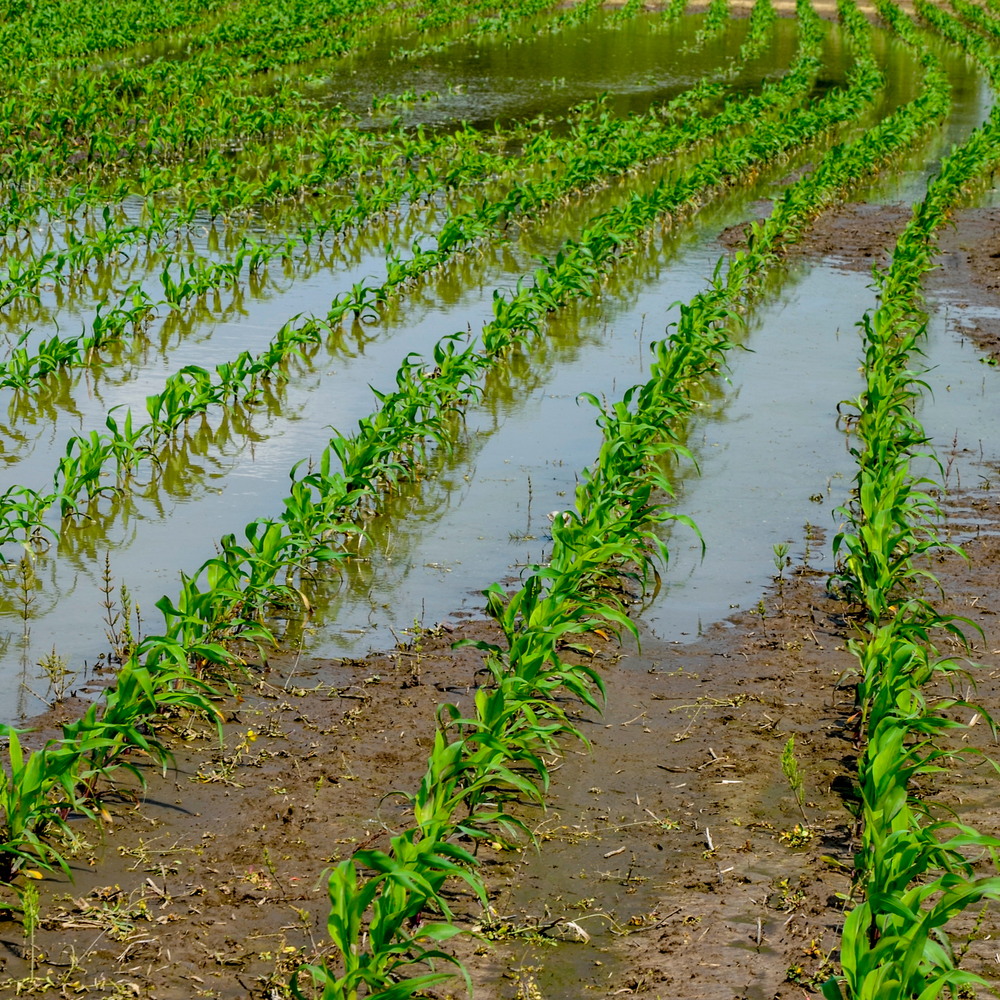
A flooded corn field
November 17, 2023

Carnegie’s Jeff Dukes contributes to new National Climate Assessment

Abstract
During photosynthesis, electron transport reactions generate and shuttle reductant to allow CO2 reduction by the Calvin-Benson-Bassham cycle and the formation of biomass building block in the so-called linear electron flow (LEF). However, in nature, environmental parameters like light intensity or CO2 availability can vary and quickly change photosynthesis rates, creating an imbalance between photosynthetic energy production and metabolic needs. In addition to LEF, alternative photosynthetic electron flows are central to allow photosynthetic energy to match metabolic demand in response to environmental variations. Microalgae arguably harbour one of the most diverse set of alternative electron flows (AEFs), including cyclic (CEF), pseudocyclic (PCEF) and chloroplast-to-mitochondria (CMEF) electron flow. While CEF, PCEF and CMEF have large functional overlaps, they differ in the conditions they are active and in their role for photosynthetic energy balance. Here, I review the molecular mechanisms of CEF, PCEF and CMEF in microalgae. I further propose a quantitative framework to compare their key physiological roles and quantify how the photosynthetic energy is partitioned to maintain a balanced energetic status of the cell. Key differences in AEF within the green lineage and the potential of rewiring photosynthetic electrons to enhance plant robustness will be discussed.
View Full Publication open_in_new
Abstract
We present the lifetime star formation histories (SFHs) for six ultrafaint dwarf (UFD; M-V > - 7.0,4.9 < log(M-* (z=0/M-circle star) satellite galaxies of M31 based on deep color-magnitude diagrams constructed from Hubble Space Telescope imaging. These are the first SFHs obtained from the oldest main-sequence turnoff of UFDs outside the halo of the Milky Way (MW). We find that five UFDs formed at least 50% of their stellar mass by z = 5 (12.6 Gyr ago), similar to known UFDs around the MW, but that 10%-40% of their stellar mass formed at later times. We uncover one remarkable UFD, And xiii, which formed only 10% of its stellar mass by z = 5, and 75% in a rapid burst at z similar to 2-3, a result that is robust to choices of underlying stellar model and is consistent with its predominantly red horizontal branch. This "young" UFD is the first of its kind and indicates that not all UFDs are necessarily quenched by reionization, which is consistent with predictions from several cosmological simulations of faint dwarf galaxies. SFHs of the combined MW and M31 samples suggest reionization did not homogeneously quench UFDs. We find that the least-massive MW UFDs (M-*(z = 5) less than or similar to 5 x 10(4)M(circle dot)) are likely quenched by reionization, whereas more-massive M31 UFDs (M-*(z = 5) greater than or similar to 10(5)M(circle dot)) may only have their star formation suppressed by reionization and quench at a later time. We discuss these findings in the context of the evolution and quenching of UFDs.
View Full Publication open_in_new
Abstract
Climate change, especially in the form of precipitation and temperature changes, can alter the transformation and delivery of nitrogen on the land surface and to aquatic systems, impacting the trophic states of downstream water bodies. While the expected impacts of changes in precipitation have been explored, a quantitative understanding of the impact of temperature on nitrogen loading is lacking at landscape scales. Here, using several decades of nitrogen loading observations, we quantify how individual and combined future changes in precipitation and temperature will affect riverine nitrogen loading. We find that, contrary to recent decades, rising temperatures are likely to offset or even reverse previously reported impacts of future increases in total and extreme precipitation on nitrogen runoff across the majority of the contiguous United States. These findings highlight the multifaceted impacts of climate change on the global nitrogen cycle.
View Full Publication open_in_new
November 03, 2023
Feature Story

Uncovering Alaska's Hidden Caldera

Conny Aerts and Frank Sesno during Kavli Prize Laureate Lecture at the MLK Jr Memorial Library
November 03, 2023
Feature Story

Starquakes create a cosmic symphony

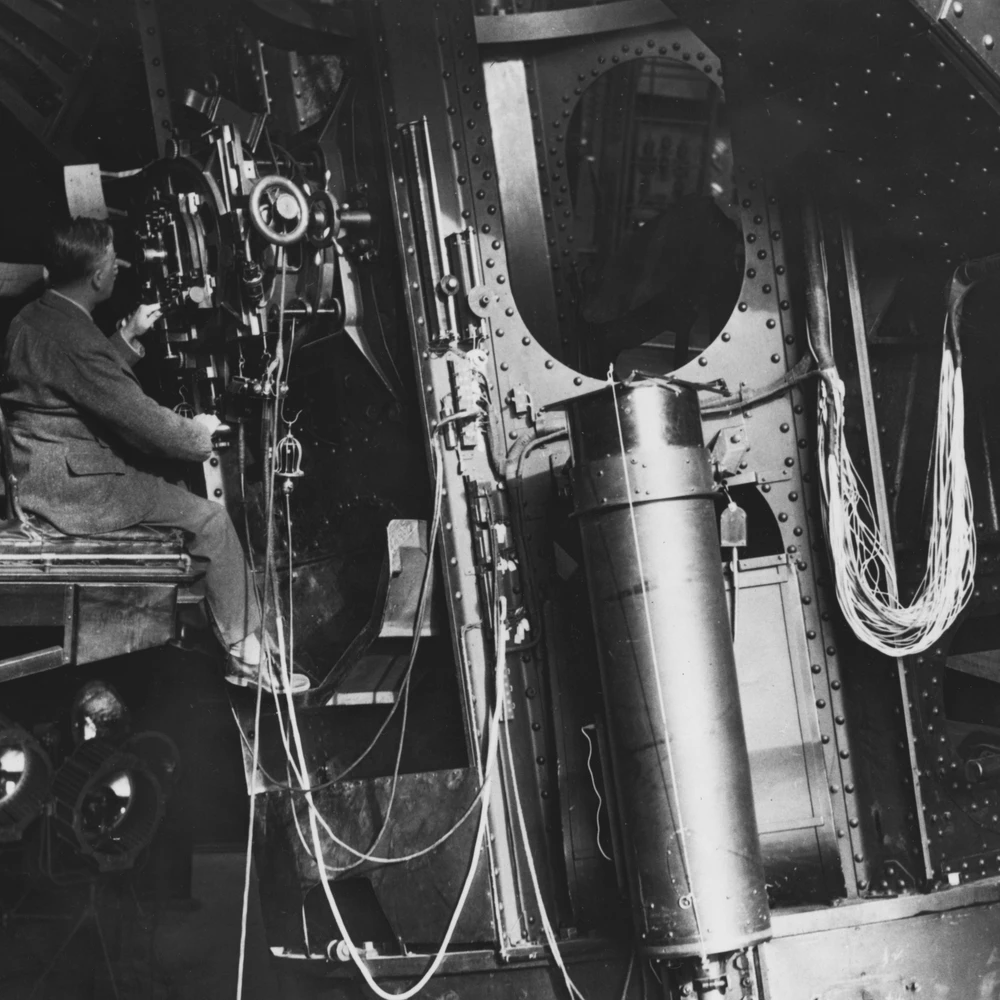
Edwin Hubble and James Jeans at the Mount Wilson Observatory 100-inch Telescope
October 30, 2023
Feature Story

100 Years of Discovering the Universe

Pagination

  • Previous page chevron_left
  • …
  • Page 174
  • Page 175
  • Page 176
  • Page 177
  • Current page 178
  • Page 179
  • Page 180
  • Page 181
  • Page 182
  • …
  • Next page chevron_right
Subscribe to

Get the latest

Subscribe to our newsletters.

Privacy Policy
Home
  • Instagram instagram
  • Twitter twitter
  • Youtube youtube
  • Facebook facebook

Science

  • Biosphere Sciences & Engineering
  • Earth & Planets Laboratory
  • Observatories
  • Our Research Areas
  • Our Blueprint For Discovery

Legal

  • Financial Statements
  • Conflict of Interest Policy
  • Privacy Policy
  • Equal Opportunity Employment

Careers

  • Working at Carnegie
  • Scientific and Technical Jobs
  • Administrative & Support Jobs
  • Postdoctoral Program
  • Carnegie Connect (For Employees)

Contact Us

  • Contact Administration
  • Media Contacts

Business Address

5241 Broad Branch Rd. NW

Washington, DC 20015

place Map

© Copyright Carnegie Science 2026