Geochemists Dionysis Foustoukos and George Cody Receive 2026 Carnegie Science Venture Grant

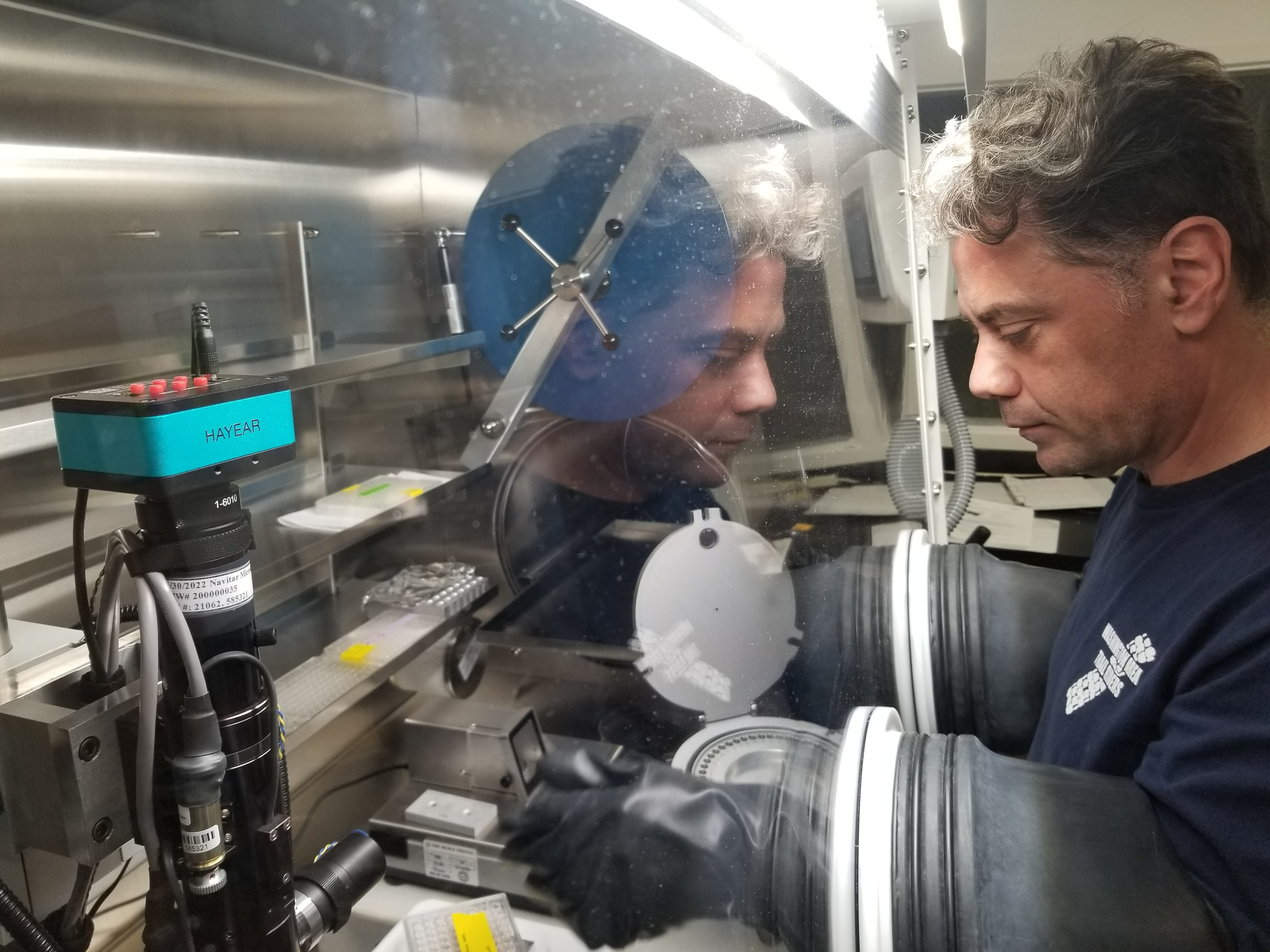
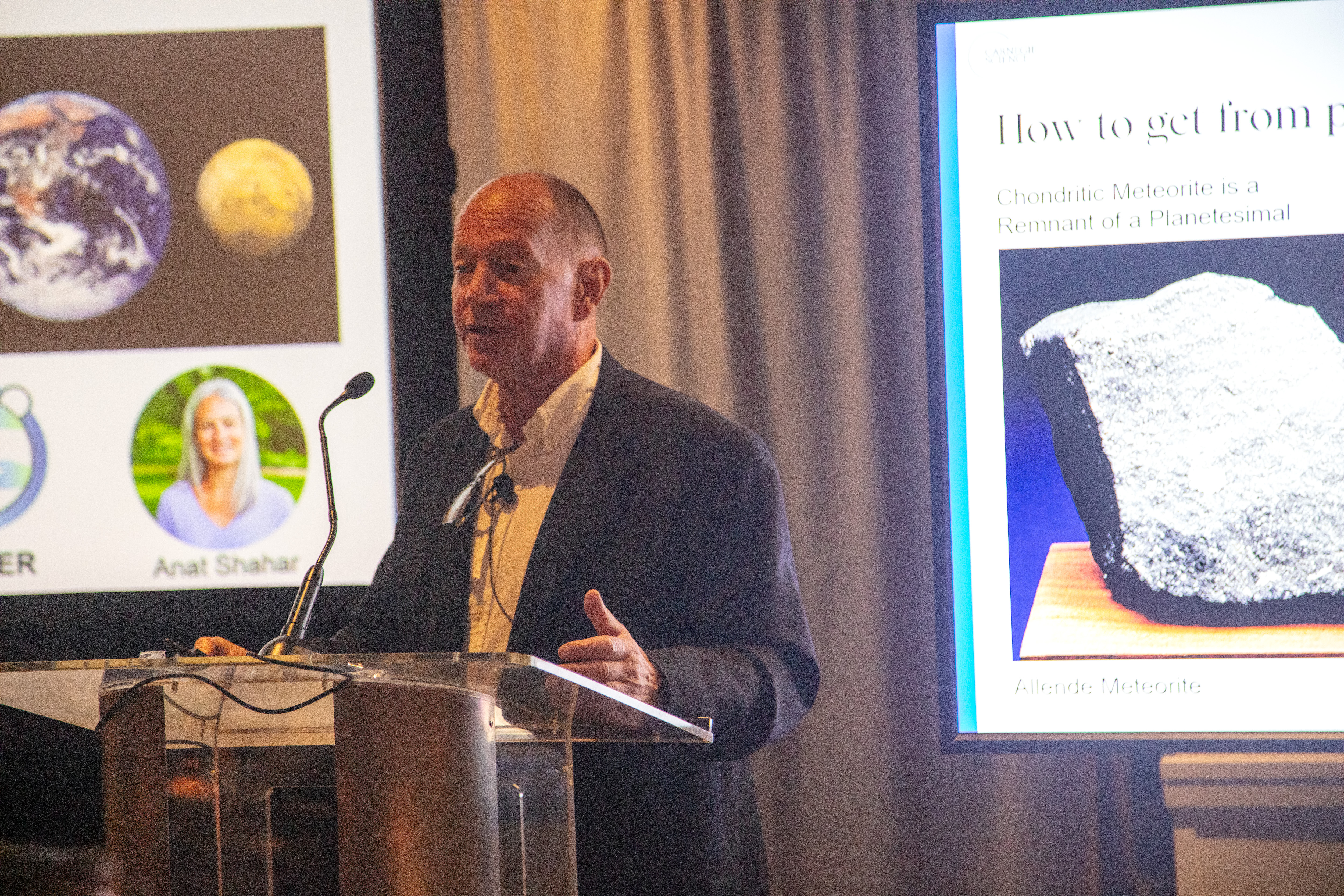
Carnegie Science’s Dionysis Foustoukos and George Cody, geochemists whose work crosses disciplinary boundaries to probe astrobiological questions, will receive $150,000 in institutional seed funding to investigate how hydrothermal chemistry principles gleaned from meteorite research may be applied to the remediation of cyanide, a toxic byproduct of industrial metal production. The duo was awarded funding as part of the Carnegie Science Venture Grant program, which was launched in 2015 to catalyze high-risk, enterprising research projects.
The project was selected from a competitive pool of proposals by Carnegie Science President John Mulchaey and Vice President for Research Anat Shahar on the recommendation of an interdisciplinary committee of Carnegie researchers. Since the program’s inception, 29 Venture Grants have been awarded, launching several exciting initiatives.
“The Venture Grant program was created to celebrate Carnegie Science’s long history of empowering our investigators to pursue bold, new research ideas and creative approaches to big science questions,” Shahar said. “Dionysis and George’s idea applies their deep knowledge of cosmochemistry to addressing a major environmental challenge, which is exactly the kind of integrative thinking that this funding was intended to inspire.”
Funded by The Ambrose Monell Foundation, today’s Venture Grant program aligns strongly with our founder’s vision to encourage investigation, research, and discovery for the betterment of humankind. Thanks to this longstanding partnership, our scientists are trailblazing discoveries, developing transformative technologies, and driving progress that extends far beyond our institution—benefiting the broader scientific community and deepening our understanding of the universe.
Industrialization, infrastructure, and economic development hinge on critical metal production. Traditional processes have struggled to fully mitigate toxic wastewater byproduct and its environmental lifespan, however. Borrowing from existing research surrounding the synthesis and evolution of organic matter inside meteorites, Foustoukos and Cody will explore solutions and methods to separate the components of wastewater, which could enable the recovery of native critical metals, create value-added organic compounds, and destroy harmful cyanide in the process. The grant will support experimentation, while creating opportunities for early-career scientists to collaborate with the principal investigators on what they expect will be a game-changing development in metallurgy.
This bold new endeavor is the latest in a long tradition of Venture Grant projects that push the boundaries of scientific thinking and bring fresh, creative approaches to some of science’s most persistent questions.
In 2023, Biosphere Sciences and Engineering (BSE) plant scientist Adrien Burlacot and ecologist Lorenzo Rosa combined their knowledge of photosynthetic processes and global agriculture to measure temperatures within the photosynthetic organelle, or chloroplast, of Arabidopsis, a frequently studied member of the mustard family. Temperature is a dominant environmental factor in determining how plant life responds to its surroundings. When a plant’s chloroplast absorbs light during photosynthesis, the temperature of that organelle rises. As the process continues through other parts of the cell, more heat is created. Burlacot and Rosa used their Venture Grant to develop a specialized nanothermometer based on existing protein-based models that could more accurately capture the temperature fluctuations in a cell throughout photosynthesis. Plant life—and, with it, agricultural abundance—is hugely dependent on photosynthetic success. Burlacot and Rosa’s investigation into plant temperature regulation, viewed through the lenses of extreme weather and climate change, can offer clues into how plant life will respond and what measures humanity needs to take to ensure future agricultural success.
The following year, Earth and Planets Laboratory astrobiologist Andrew Steele teamed up with former BSE biologist Brittany Belin and Caltech electron microscopist Mark Ladinsky to begin research employing isotope labeling approaches developed by Earth and planetary scientists to examine lipid signals in bacterial interactions within and across species. In pursuing a Venture Grant, the principal investigators received critical seed funding that allowed them to kickstart the project. A core milestone in the early phase of this sustained research was the development of key protocols that they hope will be a turning point for the bacterial lipid field and clear a path for downstream characterization of potentially hundreds of symbiotically relevant lipid signals.
While Venture Grant-funded projects represent some of the most exciting, global-minded research underway at Carnegie Science, the full breadth of our cutting-edge science depends on continued philanthropy from foundations and individuals who are committed to our pursuit of transformational discovery. We are grateful to The Ambrose Monell Foundation for its continued support of our mission and longstanding dedication to advancing academic, environmental, and economic innovation.
