The Brinson Foundation Support Builds Next Generation of Scientists

Is the race toward discovery a marathon or a sprint? Carnegie Science’s 124-year history of excellence poses a third alternative: science is a relay race, made possible by passing the baton from generation to generation.
Through current scientific divisions and historic departments, countless pioneers have handed off knowledge and the responsibility of our mission to those who followed in their footsteps, enabled by the same philanthropic support that has preserved our hallmark model of freedom and flexibility. Those extraordinary acts of generosity have illuminated every corner of our science, from creative experimentation and cutting-edge instrumentation, to public outreach and community education.
Among our most impactful funders is The Brinson Foundation, founded 25 years ago by Gary Brinson, which has carved out a unique place in our community of supporters by channeling their investments into those who are about to take the baton and run headfirst into the future: postdoctoral fellows. The postdoc experience is a hallmark of Carnegie Science’s model, and one that is helping the institution build generations of scientific leaders in labs across the world and within our campuses.
“You can draw a straight line from my postdoc experience at the Carnegie Observatories to my appointment as leader of this historic institution,” said Carnegie Science President John Mulchaey. “I feel strongly that long-term scientific success for individuals and institutions rests on a strong foundation of early-career development. Outside of founder Andrew Carnegie, The Brinson Foundation is our biggest philanthropic supporter of postdocs. It’s impossible to overstate how vital their funding is in that regard. We’re seeing the dividends of their investments today, of course, but the true value of their support will only grow with each passing year.”
Outside of founder Andrew Carnegie, The Brinson Foundation is our biggest philanthropic supporter of postdocs.
Two Decades of Support
The Brinson Foundation’s support of Carnegie scientists stretches back nearly two decades beginning with strategic investments in research and instrumentation projects developed by geoscientists at Carnegie’s Earth and Planets Laboratory, such as quick-deploy boxes equipped with tools that enable volcanologists and seismologists to study erupting volcanoes. In more recent years, the Foundation’s support has expanded to our work at the Carnegie Observatories, centering on two of Carnegie’s best known strengths: instrumentation and interdisciplinary collaboration.
“It has been deeply satisfying to see how grants made by our family’s Foundation to Carnegie over the last 20 years have had a ripple effect,” said foundation chair Monique Brinson Demery. “By supporting the work of early career scientists, we’ve helped ensure that the mentorship skills and instrumentation training gained during these individuals’ time at Carnegie gets carried to institutions worldwide. This is especially evident in the geophysics grants we’ve made dating back to 2007, as well as with the postdoctoral fellowships we enable in observational astronomy. With Carnegie’s guidance, we have been able to support risk-tolerant projects and shift when needed to respond to the greatest funding gaps. This has allowed us to meaningfully contribute to scientific research, a core element of the Foundation’s mission.”
By supporting the work of early career scientists, we’ve helped ensure that the mentorship skills and instrumentation training gained during these individuals’ time at Carnegie gets carried to institutions worldwide.
The Instrumentation Fellows
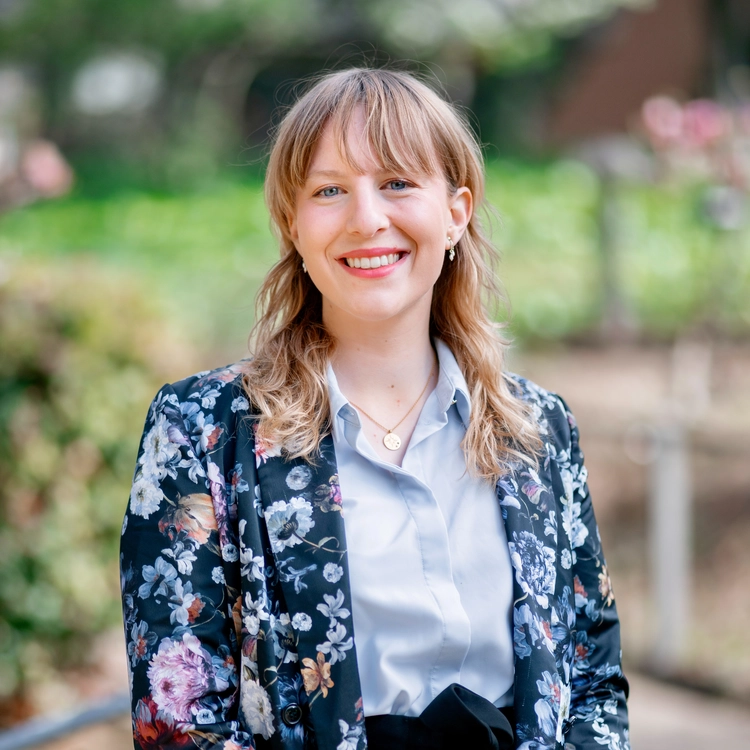
Current Brinson Instrumentation Fellow Maren Cosens is playing a key role in designing and developing MIRMOS—the Magellan InfraRed Multi-Object Spectrograph—which will be installed at Carnegie’s Las Campanas Observatory in Chile. MIRMOS will illuminate hidden processes that shape how galaxies, and the stars and planets within them, form and evolve, providing pivotal clues to how the cosmic web in which we live was spun after the universe was created.
Brinson Instrumentation Fellow Maren Cosens gives a tour of the Carnegie Science Observatories Machine Shop
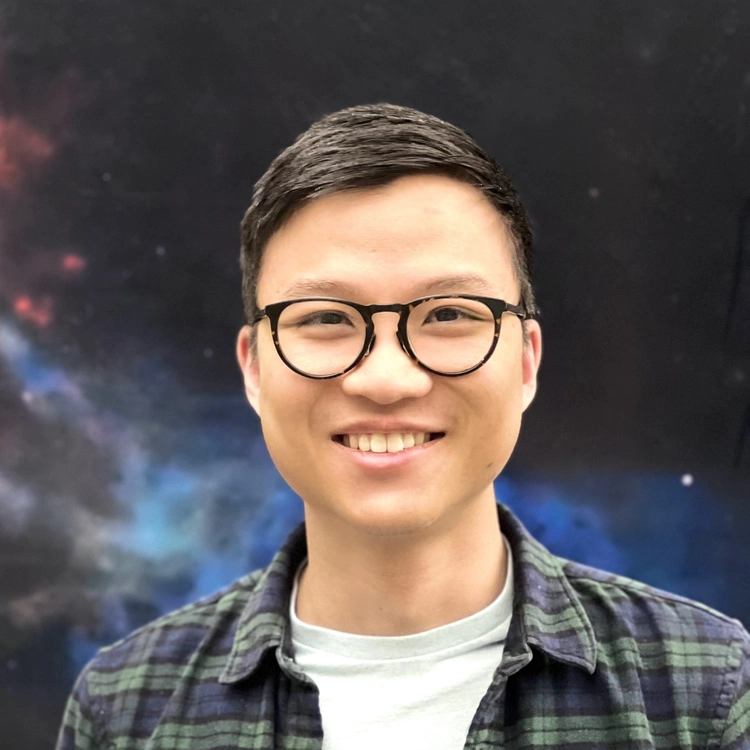
Relatedly, Brinson Instrumentation Fellow Jack Piotrowski is focusing on optical design, analysis, and implementation of multi-object spectrographs, including FALCON and the Via Project, that bring dark matter and the interstellar medium into focus for researchers. While these instruments will outfit the existing Twin Magellan Telescopes at LCO in the years ahead, Piotrowski is also looking further into the technological future as one of the designers of the Giant Magellan Telescope Commissioning Camera. When the GMT, an Extremely Large Telescope, is completed and brought online, it will reign as one of the world’s most powerful telescopes.
This ability to develop next-generation observational tools give Cosens and Piotrowski unique opportunities and advantages as early-career scientists. But their work on the instruments and the data their projects will come to collect will have wide-reaching effects for the fields of astrophysics and planetary astronomy.
Carnegie-Caltech Cohort
In addition to the Instrumentation Fellows, The Brinson Foundation also funds four joint Carnegie-Caltech postdoctoral fellowships in observational astronomy. This investment enhances Carnegie’s long-standing and growing relationship with Caltech. Together, our two historic Pasadena institutions afford these early-career scientists the opportunity to access world-leading telescopes and other facilities associated with both institutions, including the twin Magellan telescopes at Las Campanas and the Keck telescopes in Hawaii.
The current cohort of Carnegie-Caltech Brinson Fellows—Mandy Chen, Maude Gull, Geoffrey Mo, and Stella Ocker—work with senior scientists at Carnegie and Caltech to pursue a range of major astrophysics questions, including galaxy formation and stellar life cycles. Their research employs theoretical and observational techniques, and spans novel phenomena to complex systems.
For instance, Chen’s research centers on the dynamics of the circumgalactic medium, or the outermost, gaseous envelope of galaxies. Her research is built on integral-field spectroscopic data that illuminates both spatial and spectral information about the objects she studies. This relates to another of Chen’s scientific interests, galaxy evolution, and likewise to Ocker’s focus on the diffuse ionized gas that is found in various contexts through the universe. Ocker is parsing how this gas impacts cosmic events like galactic radio pulsars and extragalactic fast radio bursts.
An adjacent interest in supermassive black hole binaries brushes Ocker’s work against Mo’s research on the formation, evolution, and fate of compact binary systems. Mo is using the Hubble Space Telescope—a veteran, but still-productive tool—to conduct an ultraviolet time-domain survey of the globular cluster 47 Tuc, in order to identify binaries in dense stellar environments. Touching on The Brinson Foundation’s interest in instrumentation, Mo is also developing Cerberus, a three-channel high-speed imager for the 200-inch Hale Telescope (named for Carnegie Observatories founder George Ellery Hale) at Palomar Observatory, which will deliver precise photometry for binary characterization.
And systems like these are an interest of Gull’s, too. She has undertaken a systematic study of the most metal-poor massive stars in the Local Group by combining data from the Hubble, JWST, Magellan, and Keck telescopes. Gull is particularly interested in constraining the effects of rotation and the presence of a binary companion on the life and death of massive, metal-poor stars, which are at least eight times as heavy as our Sun and dominate the light of star-forming galaxies. Gull’s research fills a critical gap in the understanding of these stars resulting from their relative rarity in the nearby universe.
Passing the Baton
While these scientists’ research questions are complex and distinct, they aren’t disparate, and they’re all contributing to one common goal: to answer how the universe came to be and how it operates moment by moment. Those questions will likely not be answered soon, but with sustained investment in developing new talent, like that from The Brinson Foundation, we get closer with every year and each generation. Until then, we continue to build our team, pass the baton, and keep our gaze fixed firmly on the future.
Postdocs Supported by The Brinson Foundation