Big Questions, Shared Tables: Carnegie Workshops Shaping Science

When large groups of scientists descend on a campus, something subtle but important happens. Hallway conversations expand. Lunch becomes a working session. Ideas scribbled on whiteboards migrate into notebooks, then into papers, then into new ways of thinking. These moments—rarer now, in an era of virtual meetings and increasingly specialized research—are often where scientific fields quietly pivot.
Across 2024 and 2025, a series of workshops hosted by Carnegie Science created exactly those moments. Though their subjects ranged from evolution and Earth’s deep climate history to the structure of ocean ecosystems, each gathering shared a common purpose: to question assumptions so foundational they often go unexamined—and to explore what science looks like when those assumptions are revisited.
Is Evolution Bigger Than Biology?
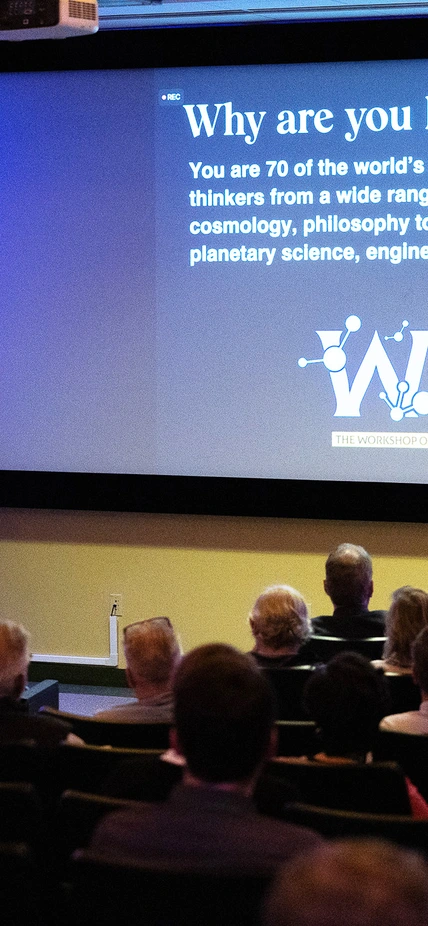
In October 2024, more than 90 scientists, philosophers, and technologists gathered at Carnegie’s Earth and Planets Laboratory with an audacious question: what if evolution isn’t limited to biology?
The Workshop on Information, Selection, and Evolution (WISE) was led by mineralogist Bob Hazen and astrobiologist Mike Wong. Its premise was simple: could evolution be understood as a general principle shaping complex systems—not only living organisms, but also minerals, chemical networks, technologies, and even ideas?
“The questions we are asking require input from everyone—from philosophers to physicists and early-career scientists,” Wong said.
Participants brought expertise spanning biology, planetary science, artificial intelligence, physics, and philosophy. Rather than treating evolution as a metaphor stretched across disciplines, discussions focused on what evolution actually requires: information, selection, and mechanisms for change. The conversations did not end when the meeting adjourned. Since WISE, participants have published 13 original papers across two volumes of a special issue of the Royal Society journal Interface Focus. Smaller follow-on “Mini-WISE” meetings have already generated new papers and seeded future funding proposals, extending the collaboration beyond the initial gathering.
Putting Earth’s Climate on the Same Clock
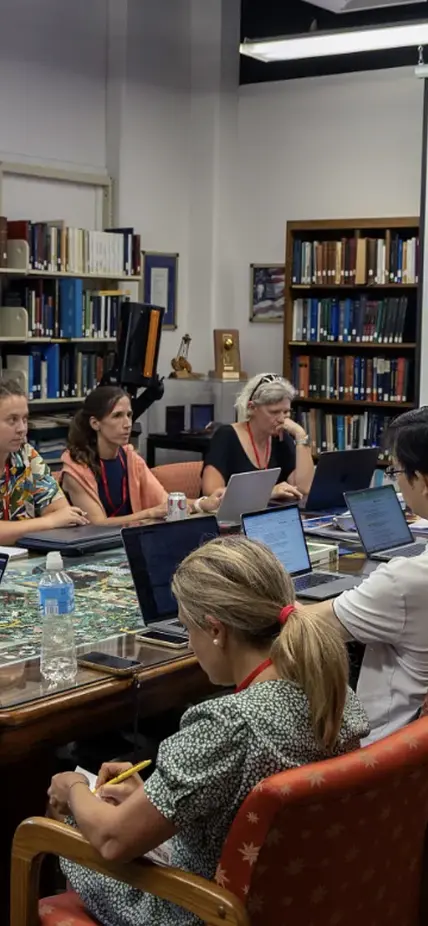
Another workshop tackled a different but equally fundamental problem: time.
Earth’s climate history is recorded in rocks, fossils, and chemical signatures around the globe. But those records don’t always line up. Different regions rely on different dating techniques, making it difficult to compare events—or to understand how quickly past climate changes unfolded.
The Time-Integrated Matrix for Earth Sciences, or TIMES, aims to change that. Hosted in August 2025 at Carnegie’s Earth and Planets Laboratory by geochronologist Jennifer Kasbohm, the TIMES Kickoff Workshop brought together a global collaboration working to recalibrate Earth’s last 100 million years of climate history onto a single, accurate, and precise timeline.
For Kasbohm, who joined Carnegie in 2024, the meeting marked a turning point. Ideas discussed for months in virtual meetings, she noted, “finally sank in once we were all there together.”
Beyond keynote talks and breakout sessions, the workshop tested a new model of collaboration—grouping scientists by geologic time interval rather than by specialty, so that each group mixed disciplines. Those groups, now formalized as “TIMES Teams,” will anchor the project going forward. Since the kickoff, the initiative has established its leadership structure, shared early results at major conferences, and is preparing both a Nature Communications article and a special issue of PAGES Magazine.
Rethinking Ocean Life by Traits
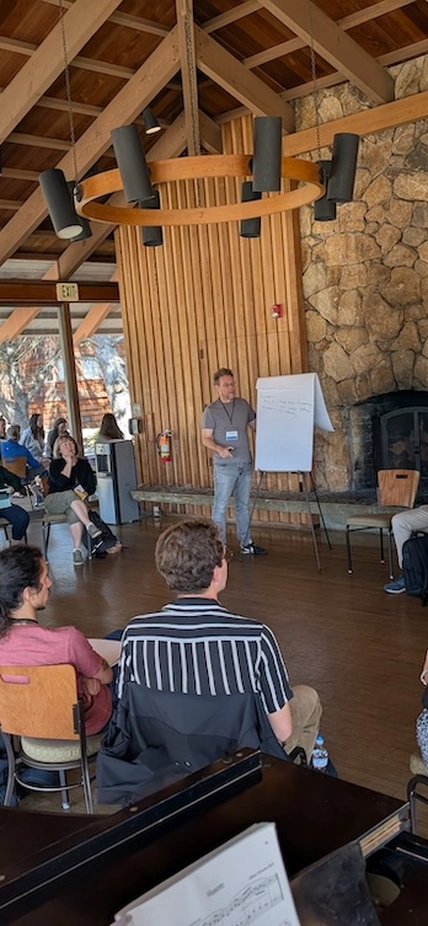
If WISE questioned what evolves, and TIMES questioned how time itself is measured, a third workshop revisited another scientific default: how ecosystems are defined.
In August 2025, scientists gathered at Asilomar State Beach and Conference Grounds in Pacific Grove, California, to reconsider how ocean life is studied—not by species names, but by functional traits. The 7th Workshop on Trait-based Approaches to Ocean Life, hosted by marine scientist Emily Zakem of Carnegie’s Biosphere Sciences & Engineering division, focused on traits such as body size, feeding strategy, and growth rate—characteristics that shape how ecosystems function and cut across taxonomic boundaries.
“Many different organisms can play similar roles in an ecosystem,” Zakem explained. “Traits give us a way to compare across that diversity.”
Researchers studying organisms from bacteria to fish shared ideas through talks, posters, discussions, and informal chalk talks, with conversations extending into shared meals and evenings by the fire. “The goals were to assess the state of the field, allow cross-fertilization of ideas, and look ahead to where trait-based approaches can take us next,” Zakem said. A perspective paper synthesizing insights from the meeting is now in development.
Creating Space for Big Ideas
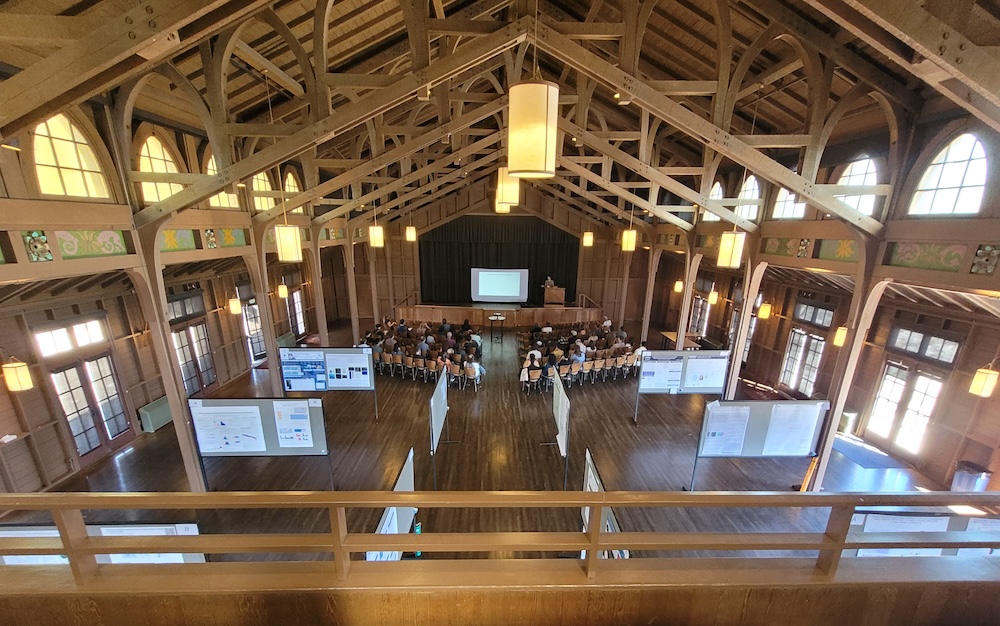
Workshops like these do not happen by accident. They require time, resources, and an institutional willingness to slow science down just enough for people to think together.
At Carnegie Science, that support is deliberate. By investing in small, focused meetings—and in the behind-the-scenes work that makes them possible—the institution creates space for scientists to step outside their daily research and engage deeply with colleagues across fields. Just as importantly, Carnegie gives researchers the freedom to experiment with collaboration itself, whether that means testing new meeting formats, mixing disciplines in unconventional ways, or supporting follow-on gatherings that allow ideas to mature.
In an era when science is increasingly specialized and distributed, these workshops serve as counterpoints. They are reminders that some of the most consequential shifts in science still begin the same way they always have: with people in the same room, asking whether the rules they’ve inherited are still the right ones.
