Massimo Pascale (UCLA)
Overview
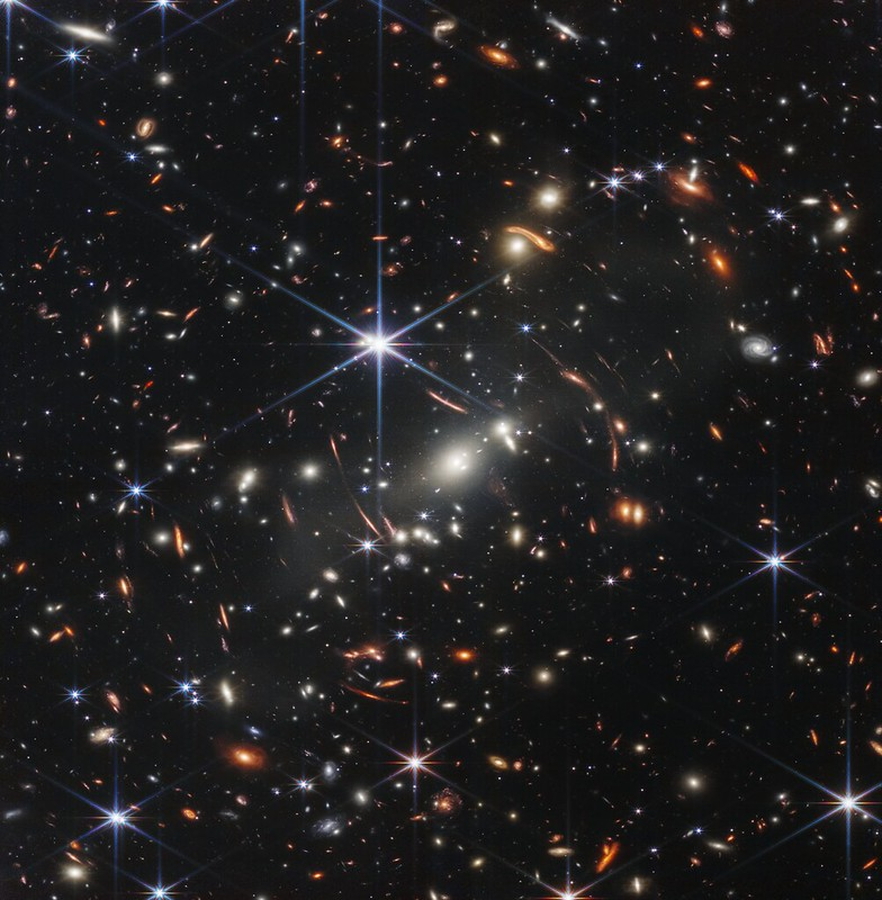
The chance alignment between distant background galaxies and foreground massive galaxy clusters induces a ‘strong-lensing’ effect where magnified, multiple images of the same background galaxy are seen across the cluster field, each with its own relative ‘time-delay’ in the arrival of photons to the observer. In this talk, I will highlight two dramatic applications of cluster strong-lensing in the era of JWST. First, the combination of JWST’s spatial resolution with lensing magnification has opened up parsec-scale views of galaxies in the early universe, allowing us to probe individual young massive star clusters within them. I will discuss how these star clusters act as laboratories for understanding the extremely dense, bursty star formation seen in cosmic dawn galaxies, and also give insight into the prior lives of ancient globular clusters seen in the local universe. Second, JWST has proven to be an effective discovery engine for galaxy cluster-lensed supernovae, whose measurable time delays enable a ‘single-rung’ inference of the Hubble constant. I will report current efforts to measure H0 from these events, including the first precision constraints from a lensed Type Ia supernova, and introduce the growing sample of new supernovae emerging from ongoing JWST programs such as VENUS.