Bermuda Earthquake & Structure Test


Overview
Bermuda sits about 1,600 feet higher than the surrounding seafloor, even though its volcanoes have been quiet for more than 30 million years. Most volcanic island chains, like Hawai'i, are held up by a hot column of rising rock called a mantle plume, but there's no sign of an active plume beneath Bermuda today. So why is it still here?
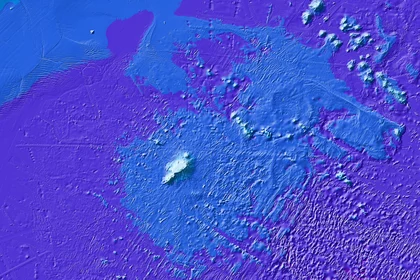
Carnegie Science researchers William Frazer, Diana Roman, and Lara Wagner are working to find out what's holding it up.
Carnegie seismologist William Frazer and Yale's Jeffrey Park have found evidence of a hidden layer of rock more than 12 miles thick sitting just below Bermuda's oceanic crust. This layer appears to be less dense, and therefore more buoyant, than the mantle around it. Rather than something pushing the island up from below, it acts more like a raft keeping Bermuda afloat. The layer likely formed tens of millions of years ago, when carbon-rich molten rock rose from the mantle, settled at the base of the crust, and cooled in place. This process is called underplating.
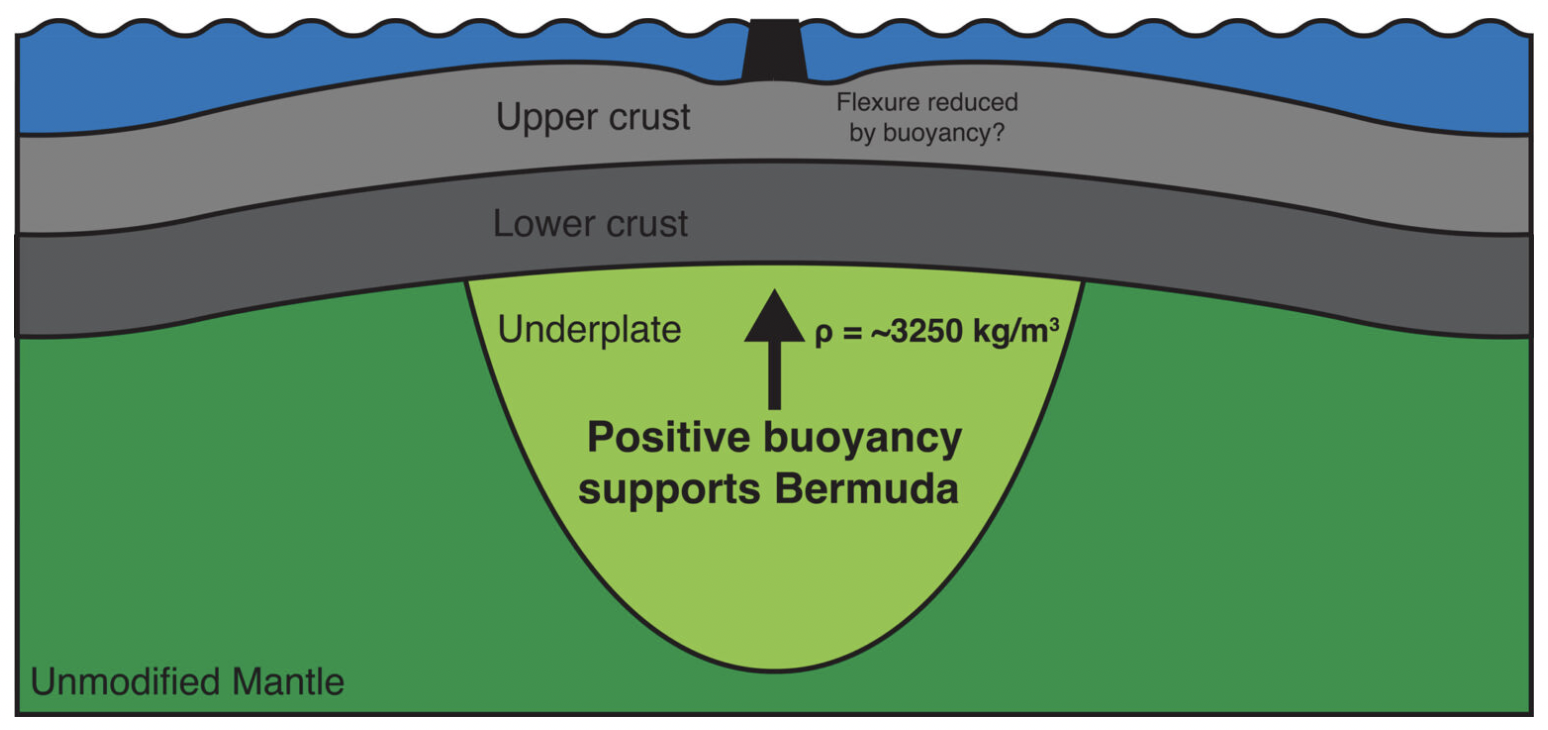
If Bermuda is indeed resting on a buoyant underplate, there should be stress on the crust above it—stress that occasionally releases as small local earthquakes. For decades, all of Bermuda's seismic data came from a single station, which can detect a quake but not pinpoint where it happened or image much beyond what's directly beneath it.
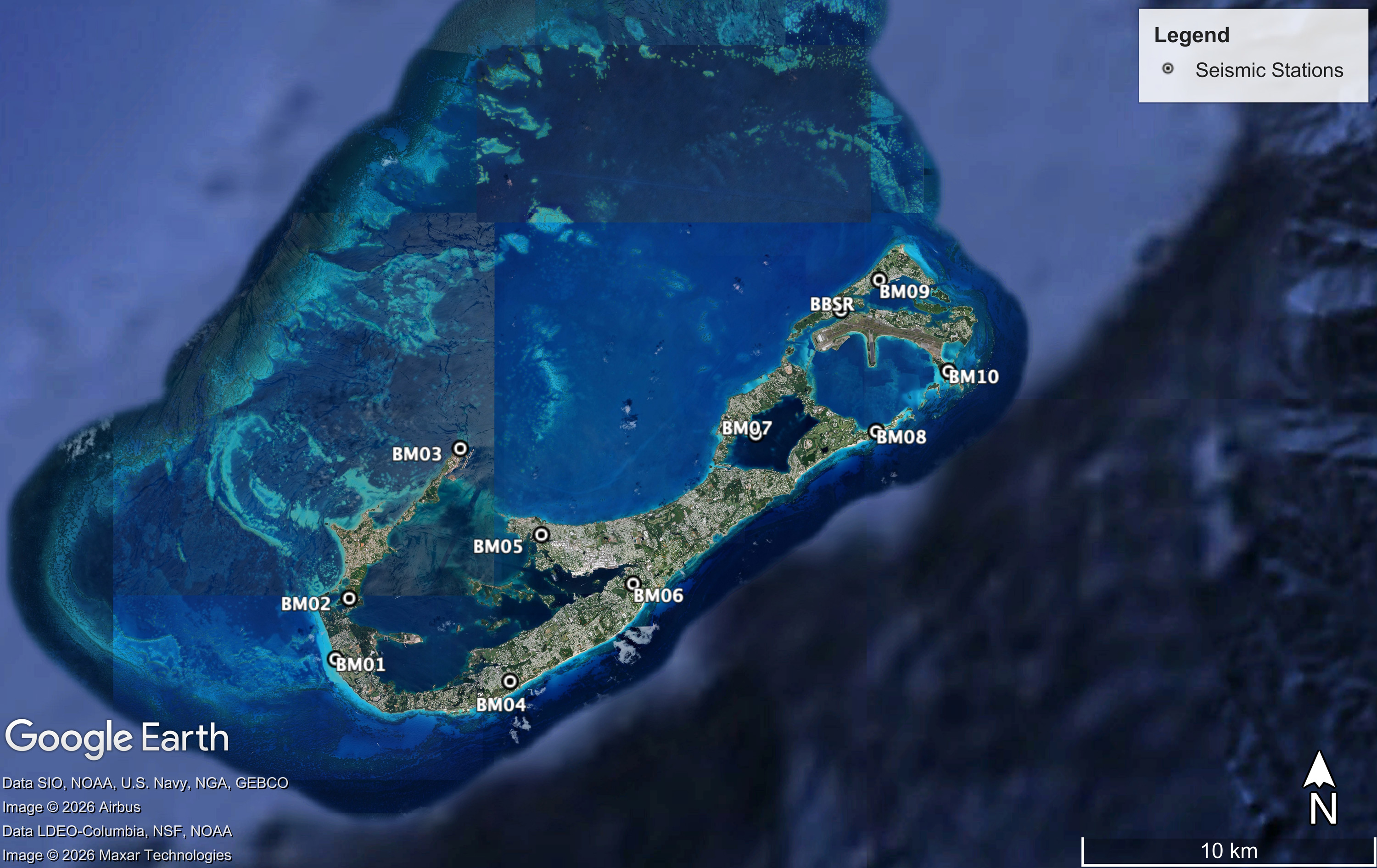
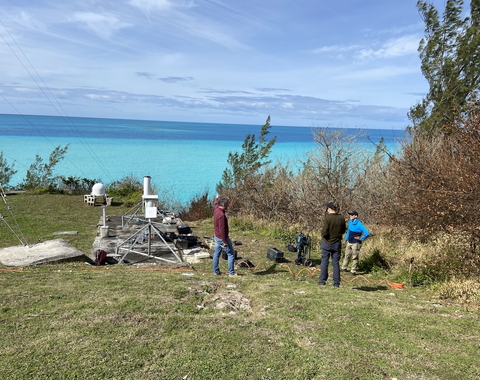
In February 2026, Carnegie researchers William Frazer, Diana Roman, and Lara Wagner deployed a temporary network of 10 portable seismometers (Quick Deploy Boxes) across Bermuda. This seismic array will allow them to triangulate local earthquakes, map where stress is concentrated across the island, and build a fuller three-dimensional picture of what lies beneath the swell.
In May 2026, they're returning to the island to:
- Check that the instruments are functioning properly
- Download the data they've collected so far
- Refine our picture of Bermuda's deep structure and compare it with other volcanic islands
We can't drill 20 miles down to look. Instead, we use seismic waves from earthquakes around the world. As those waves travel through Earth, they speed up or slow down depending on the rock they pass through. Sensitive instruments called seismometers record those waves at the surface, and we use the recordings to build images of structures deep below.
News and Updates
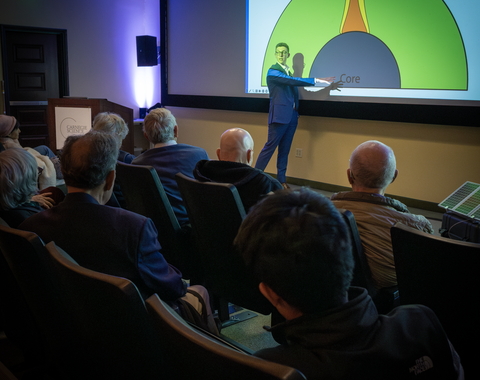
Bermuda: A Geologic Mystery | William D. Frazer

Why does it matter?
Bermuda may help reveal hidden processes inside Earth. This strange archipelago could be one of a kind. Or it could be the first known example of a broader geological process that has been overlooked and is missing from plate tectonic theory.
Publications
William Frazer and Jeffery Park
Geophysical Research Letters
November 28, 2025
Bermuda is an example of a hotspot volcanic ocean island that has long puzzled geoscientists. When a hot mantle plume upwells beneath a tectonic plate, it often generates a chain of volcanic islands or seamounts and a wide (∼500 km) bathymetric swell. These swells are typically thought to be dynamically supported if associated with active volcanism. In the case of Bermuda, there is no evidence for a hot mantle plume or an active chain of volcanoes. However, a large bathymetric swell persists that has not yet been explained. We look for seismic waves that convert at sharp interfaces in the crust with seismic data from a permanent seismic station on Bermuda. We identify features associated with a ∼20 km thick layer of rock below the oceanic crust that has not yet been reported. This thick layer beneath the crust likely was emplaced when Bermuda was volcanically active 30–35 million years ago and could support the bathymetric swell.
Project Partners
This work is being carried out in collaboration with the Government of Bermuda, the Bermuda Institute of Ocean Sciences, the Bermuda Aquarium, Museum and Zoo, ASU BIOS, and the National Museum of Bermuda. All of which have provided locations on which we can place our seismometers.

BEST Station #3 is located on the ground of the National Museum of Bermuda.

BEST Station #1 is located at ASU BIOS Tudor Hill.

BEST Station #2 is located on the grounds of the Bermuda National Trust Scaur Lodge Nature Reserve.

BEST Station #4 is located on the grounds of the Warwick Camp, the home of the Royal Bermuda Regiment.

BEST Stations #5 (Tolu Valley Nursery), #9 (Fort George), and #10 (Coopers Island Nature Reserve) are operated by the Government of Bermuda.

BEST Station #7 is located at the Bermuda Aquarium, Museum, and Zoo on Trunk Island.