Undergrads Return for Another EPIIC Summer

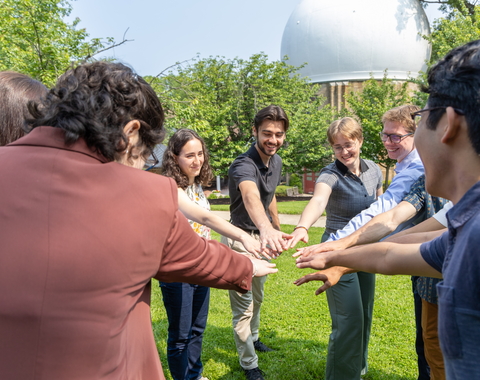
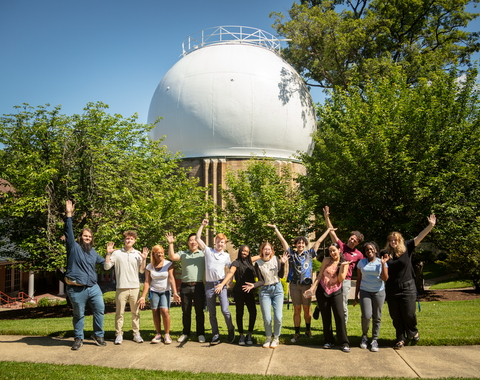
The 2026 EPIIC cohort has arrived! This summer, 12 undergraduate students from across the country are joining the Carnegie Science Earth & Planets Laboratory for 10 weeks of hands-on research, professional development, and the kind of scientific experience that changes a career trajectory.
This year's class comes from community colleges, liberal arts institutions, and major research universities, with majors spanning geology, astrophysics, mechanical engineering, physics, computer science, and even creative writing. Their projects are just as wide-ranging: over these ten weeks, they'll be chasing ancient biosignatures, modeling mantle convection, probing exoplanet atmospheres, squeezing minerals to pressures found deep inside the Earth, and more.
Say hello to the 2026 EPIIC interns:

Abigail Alling
Abigail Alling recently graduated from American University with a degree in Justice and Law and is currently in her freshman year at Rio Salado College with a STEM focus. She will be working with Mike Wong, George Cody, and Robert Hazen to detect potential biosignatures in space, using machine learning and a powerful analytical technique called Py-GC-MS. This summer she is focusing on ultra-processed samples to analyze if technosignatures in space would be classified as biotic, abiotic, or something entirely new, as well as continuing testing ancient samples.
Bella Chan-MacRae
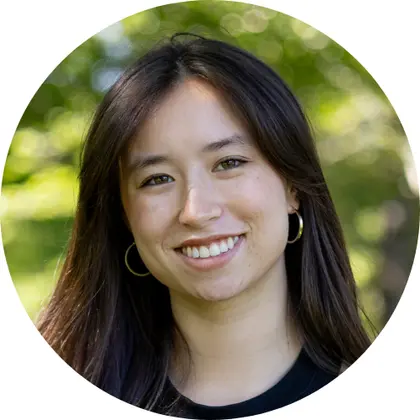
Bella Chan-MacRae is a rising junior at Macalester College studying Geology and English. She will be working with Jennifer Kasbohm to examine hiatuses in ocean drilling cores during the early Miocene. With this data, she is exploring possible causes of early Miocene shark extinctions and what early Miocene environmental change can tell us about present-day climate change.
Sofia Cook
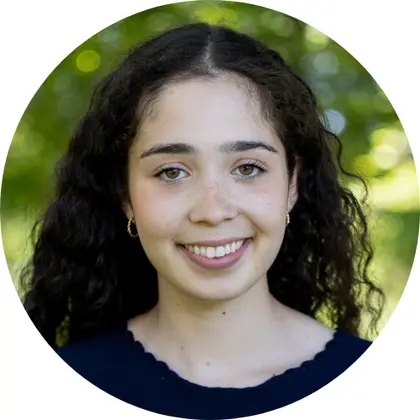
Sofia Cook is a rising junior at the University of Illinois at Urbana-Champaign studying Geology. She will be working with Kevin Wong and Cian Wilson to connect global tectonic activity to long-term shifts in Earth's surface chemistry, tracing how the movement of plates shapes the distribution of boron across the planet.
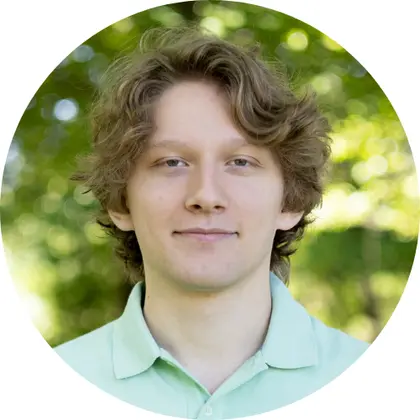
Connor Galbreath
Connor Galbreath is a rising senior at the University of Arkansas studying Honors Physics and Mechanical Engineering. He will be working with Tyler Perez and Alexander Goncharov to measure how heat moves through Earth's key minerals and metallic alloys under extreme deep-Earth conditions, helping scientists understand how our planet has stored and lost heat over billions of years.
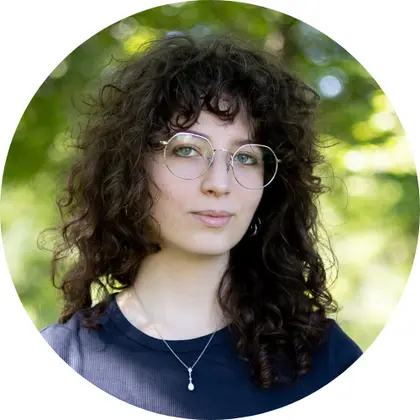
Amelia Lee
Amelia Lee is a rising junior at the University of Virginia studying Astronomy and Physics, having recently completed her associate's degree at Blue Ridge Community College. She will be working with Will Misener and Maggie Thompson to build computer models connecting James Webb Space Telescope observations of distant exoplanets to uncover the correlation between their atmospheric structure and interior properties. These models will decode the chemistry of sub-Neptune worlds with no Solar System analogs, helping us understand the formation of the most abundant exoplanets observed.
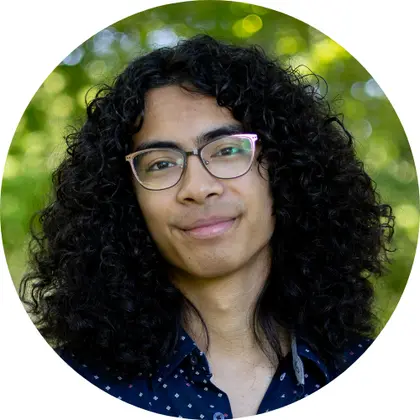
Jakob Zapanta
Jakob Zapanta is a rising junior at Tufts University studying Mechanical Engineering. He will be working with Cian Wilson to develop open-source software tools for modeling mantle convection and chemical transport inside the Earth—work that will be made freely available to the broader scientific community.
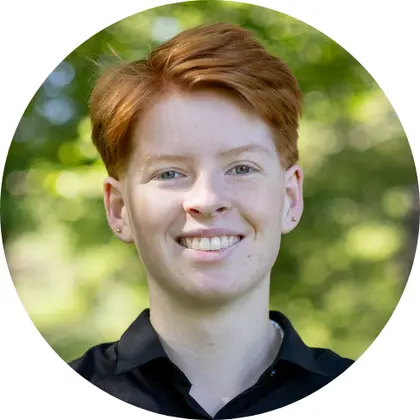
Jasper Marie Suvari
Jasper Suvari is a rising senior at Vassar College studying Earth Science. He will be working with Oded Elazar to study natural diamonds and their microscopic inclusions, investigating how fluids cycle through Earth's deep interior and connecting the chemistry of individual gems to large-scale mantle processes.
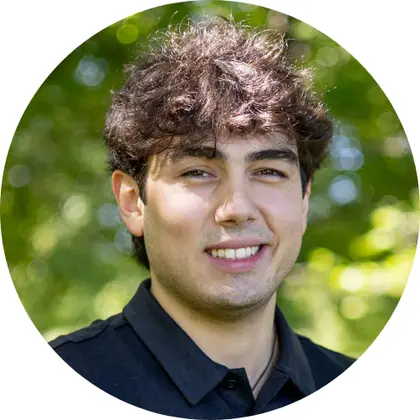
Mauricio Choussy
Mauricio Choussy is a rising senior at Colorado College studying Computer Science and Mathematics. He will be working with Anirudh Prabhu and Mike Wong to apply machine learning to large exoplanet datasets, uncovering patterns in planetary system architecture and potentially identifying undiscovered planets hiding in existing data. Additionally, he will adjust exoplanet characteristics based on their margins of error to determine which variables most heavily influence cluster formations.

Emmalein Pendley
Emmalein Pendley is a rising senior at Missouri State University studying Physics (Astrophysics and Astronomy emphasis), and Geology. They will be working with Peter Driscoll to explore the internal structure and thermal history of earth-sized rocky exoplanets using a Python-based modeling code called INTREPID, and help us understand what makes a world capable of sustaining a magnetic field or volcanic activity on the billion year timescale. Understanding magnetic field strength and other geophysical factors over long timescales can be directly tied to a planet’s ability to maintain a habitable atmosphere and surface conditions.
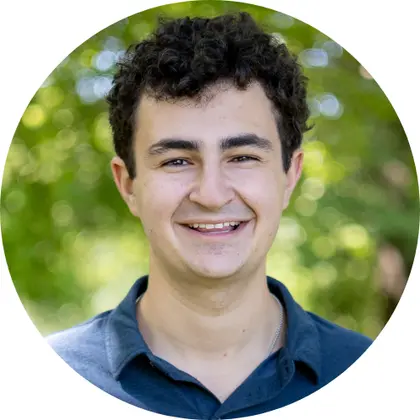
Noah Weinstein
Noah Weinstein is a rising sophomore at the University of Virginia studying Physics and Data Science. He will be working with Tim Strobel to synthesize new materials under high pressure, focusing on low-critical-temperature superconductors that could enable next-generation technologies.
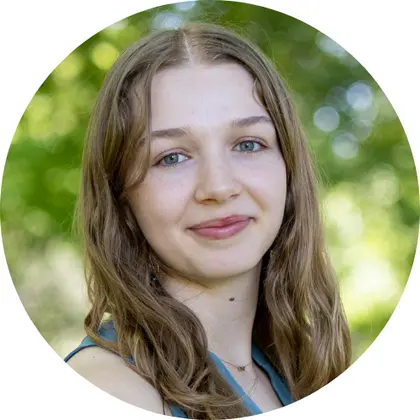
Ayli Stoebenau
Ayli Stoebenau is a rising junior at McGill University studying Geology. She will be working with Andrew Steele and Anushree Srivastava, using Raman spectroscopy to research if impact-induced serpentinization on Mars produces or contributes to a habitable environment. Additionally, she will discern the compositional differences between impact-induced and non-impact-related serpentinization environments, specifically the presence of organics and alteration minerals.
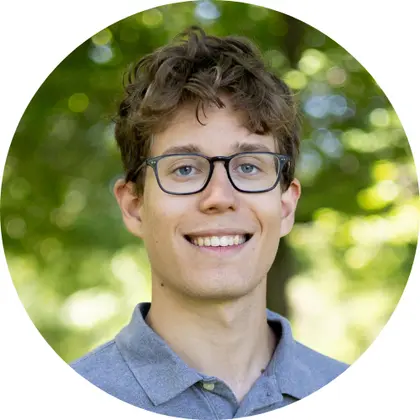
Miles Walters
Miles Walters is a rising freshman at the University of Southern California studying Artificial Intelligence. He will be working with Mike Wong and Anirudh Prabhu to create artificial intelligence models to detect the presence of life in outer space using biosignatures from ancient life, current life, meteorites, and other organisms.