Search
Search for names, keywords, research areas, etc.

caption test
Search
Abstract: Properties of carbon at extreme pressures and temperatures are of critical importance for constructing interior models of carbon-rich exoplanets. Among the questions that have long perplexed the scientific community are the existence and potential synthesis of high-pressure post-diamond carbon phases, and the inelastic response of diamond to strong shock compression. In particular, very recent ramp compression and X-Ray diffraction experiments at the National Ignition Facility (NIF) challenged theoretical prediction of the existence of a high-pressure BC8 post-diamond phase by compressing diamond to extreme pressures up to 20 Mbar. In this talk, Dr. Oleynik will describe recent advances in simulating atomic-scale dynamics of material’s response at experimental time and length scales using quantum-accurate, billion-atom molecular dynamics simulations with machine-learning models of interatomic interactions and employing the most powerful computers in the world. Specifically, Oleynik will focus on atomic-scale mechanisms of solid-solid and solid-liquid phase transitions of carbon and nature of inelastic deformations in diamond. These transformative simulations guide our experimental campaigns at NIF, Omega, Z, and EuXFEL facilities towards observing predicted phenomena.
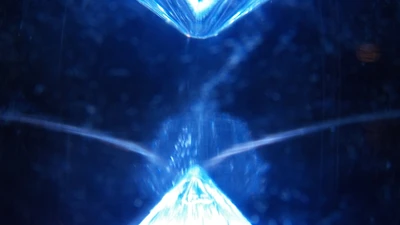
Diamond Anvil Cell image from the CAVE, GL
SPECIAL SEMINAR
Wednesday, July 26, 2023
Time: 11:00 a.m.
Speaker: Professor Nathan Mayne, University of Exeter, UK
Topic: Exoplanet Climates in 3D Challenges & Opportunities
Host: Anjali Piette
Abstract: Planetary climates are tricky requiring a range of model complexities to understand, interpret and predict observations. Simple models aid our understanding of the key mechanisms but can provide seemingly robust inferences which are actually dependent on the physical ingredients or assumptions (e.g., 1D versus 3D), whereas higher complexity models are more resource intensive and dependent on a larger number of input parameters. Our progress in understanding the Earth's climate, and that of its neighbouring solar system planets, a relatively small number of well observed cases, is helping us accelerate our understanding of the vast (overwhelming?) diversity of exoplanets. In turn, studies of exoplanets are benefitting the understanding of our own changing climate. One lesson from Earth climate research is clear, a range of approaches and perspectives is vital to make progress.
In this talk I will detail the research undertaken by our team at the University of Exeter employing, predominantly, 3D climate models across a range of complexities to try to unravel the interactions between chemistry, radiative transfer, dynamics and biology in planetary climates. I will focus on simulations of gas giant exoplanets, including clouds and chemical kinetics, compared to observations from JWST, and simulations of terrestrial planets, connecting the Early Earth with potentially habitable candidates. Additionally, I will briefly describe the knowledge transfer with Earth climate research through a co-development framework with the UK Met Office. Finally, I will mention the context of our work within the recent exoplanet Model Intercomparison Projects of the CUISINES framework.
Join Tim Rehm, Physics PhD Student at Brown University, for this week's astronomy seminar.
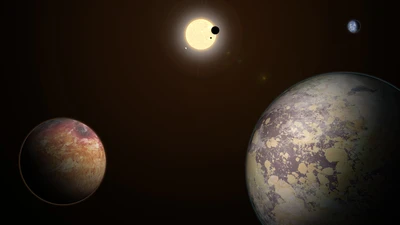
exoplanetary system
Dr. Bean will present the comparative planetology results that have emerged from JWST's first year of exoplanet atmosphere observations. The beautiful spectra that have been obtained for hot Jupiters demonstrate that these objects have diverse metallicities and C/O ratios to go along with their diverse masses and radii. On the other hand, detection of the atmospheres of terrestrial planets have so far remained elusive. In some cases strict upper limits on atmospheric thickness constrain how atmospheric loss and retention depends on key planetary and stellar properties. Dr. Bean will conclude with a look ahead at what these JWST results mean for exoplanet atmosphere characterization in the GMT era.
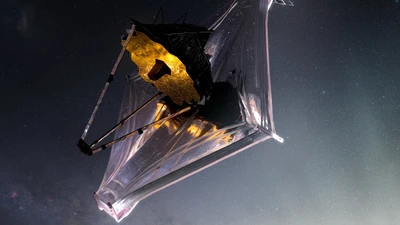
JWST artist's conception
Abstract: Titan stands out amongst satellites in our solar system as a strangely Earth-like world, including an active precipitation cycle with liquid present at the surface. It is also noteworthy for the abundant organics coating the surface, including the equatorial dunes. Titan’s thick, nitrogen-dominated atmosphere is a critical driver of the present-day state of this planetary system, stabilizing liquid hydrocarbons, and producing organics via photochemistry. In this presentation, I will discuss the origin of Titan’s atmospheric volatiles, including nitrogen, methane, and argon. I will review evidence that supports an atmospheric contribution of as much as 50% from complex organic material similar to insoluble organic matter found in chondrites, present experimental work to test this hypothesis, and discuss broader implications for Titan’s interior and habitability.
Abstract: Direct imaging observations of young planetary systems provide a context for the formation and evolution of our solar system. In this talk, I describe our effort to directly image planet-forming disks and protoplanets with the Subaru Coronagraphic Extreme Adaptive Optics (SCExAO) project on the Subaru telescope. Our work provides a new look at the disk around solar-mass star LkCa 15 and a reevaluation of its previously proposed protoplanets. On the other hand, SCExAO data identify evidence for jovian planet formation at a wide separation around the more massive star AB Aurigae: possible evidence for planet formation by disk instability. Finally, I chart the near-term path forward for studying planet formation with SCExAO. SCExAO’s new wavefront sensor upgrade makes accessible dozens of structured protoplanetary disks around optically-faint, typically low-mass stars. Our program over the next few years will assess the likely birth locations of jovian protoplanets in these disks and inform the mechanisms by which these planets may be forming.
The contact person for 2022-2023 series is Munazza Alam. Email: malam at carnegiescience.edu.
TEST content here.
Abstract: Rotating tanks are a powerful teaching tool from the elementary through graduate school levels. They are ideal for demonstrating the basic fluid dynamics that underlie weather, climate, ocean circulation, and planetary and stellar interior fluid motions. Over the past 5 years, we have developed a series of do-it-yourself (DIY) kits for building and carrying out desktop rotating tank experiments. In this talk, Dr. Aurnou will go over the basic concepts and then carry out a set of desktop experiments with participants taking active part in these hands-on science activities. With the interesting weather we have been having the last few weeks, winter-time instabilities of the polar jet stream will be the main problem we hone in on.
Filter By:
Are you looking for...

Find the latest press releases, feature stories, and more.

Find scientific seminars and upcoming public events.

Learn about the scope of our research, which spans the entire natural world.
