Planet X, Killer Asteroids & Other Things Lurking in Space
Things that Go Bump in the Night
On Thursday, October 29, at Caveat NYC on the Lower East Side Carnegie Science will host another night of science-themed fun and games.
Something is out there. Several somethings, actually, and Carnegie Science astronomer Dr. Scott Sheppard has spent his career finding them.
Sheppard hunts the darkest edges of our Solar System. (He was also a Jeopardy question once, which our comedy hosts will absolutely be bringing up.)
Four times over, he's re-defined the fringes of our home system by finding its most distant recorded objects, including Farout, Farfarout, and a Halloween discovery nicknamed The Goblin. He's also found dozens of moons around Saturn, Jupiter, and even a few around Neptune and Uranus. Plus, he's one of the world's leading hunters of "planet-killer" asteroids.
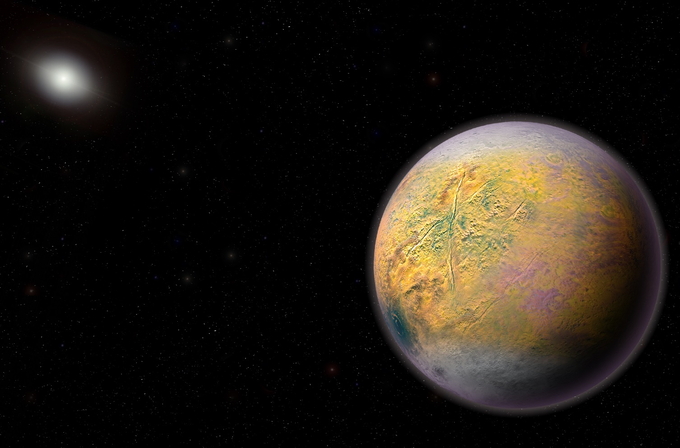
Join us at Caveat for a slightly spooky evening of cosmic mysteries: Is a hidden Planet X warping the orbits of everything past Pluto? How worried should you actually be about asteroids hiding in the Sun's glare? What else is drifting around out there in the dark? Sheppard will tell all, we'll play trivia, people will show off their costumes, and then things will get social.
The program brings together science, comedy, storytelling, and public engagement in a fun, informal atmosphere designed to spark curiosity and build a nerdy community.
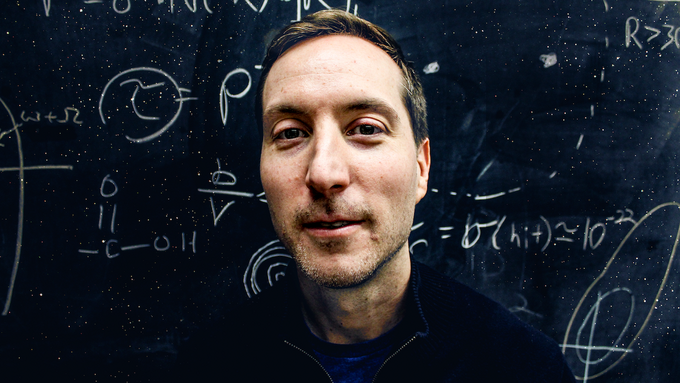
Meet Astronomer Scott Sheppard
Sheppard specializes in studying Solar System objects including moons, dwarf planets, and asteroids. His discoveries help uncover new details about the forces that shaped our Solar System’s architecture. Additionally, his search for so-called “twilight” asteroids helps identify objects at risk of crashing to Earth.
For the past few years, astronomer Scott Sheppard and his colleagues have been performing the largest and deepest survey ever attempted to search for distant Solar System objects. The orbits of these bodies offer clues into our home system's formative years, including the distinct impression that there was once a third ice-giant planet in its outer fringes.
But his eyes aren't just trained on the outermost edges of our Solar System. He also leads the hunt for "planet killer" asteroids hiding in the Sun's glare. He and his collaborators have discovered both the fastest and second-fastest asteroids orbiting our central star.
Sheppard joined Carnegie as a prestigeous NASA Hubble Fellow in 2004 and was appointed to a faculty position in 2007. He earned his Ph.D. in astronomy from the University of Hawaii and a bachelor's in physics from Oberlin College.