Object 22 | LabMóvil Conciencia Astronomía

Carnegie Science’s Las Campanas Observatory is located in one of the best places in the world for astronomy, yet many people who live in the surrounding regions have never visited a professional observatory. Physical distance is one obvious reason. Las Campanas sits in a mountainous area of Chile’s Atacama Region, and its operations are designed primarily around the needs of a working scientific facility. But there is another kind of distance as well: the gap that can separate advanced astronomical research from the everyday lives of the people who live in the same regions where that research takes place.
The “Conciencia Astronomía” Mobile Laboratory, known as LabMóvil, helps narrow that gap by bringing hands-on science experiences directly to schools, communities, and public events.


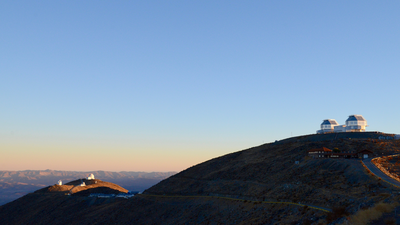
Las Campanas Observatory
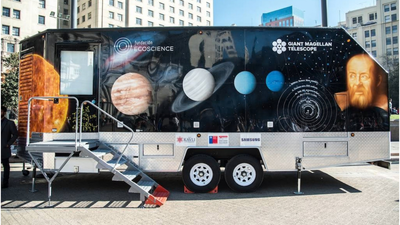
LabMóvil
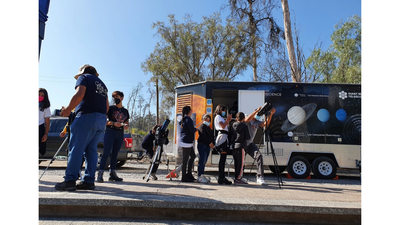
LabMóvil in Action
LabMóvil Conciencia Astronomía was created in 2019 by Fundación EcoScience and the Giant Magellan Telescope Organization, with support from The Kavli Foundation. The goal was to create a traveling laboratory dedicated specifically to astronomy education. After two years of virtual programming during the pandemic, a new phase began in 2022 thanks to a new collaboration between Las Campanas Observatory and the Giant Magellan Telescope. The two partner institutions began operating the laboratory and incorporating it into their educational activities in northern Chile.
That new phase changed the relationship between the mobile laboratory and the communities it serves. Carnegie has had a permanent presence in northern Chile since the late 1960s, when Las Campanas was established, and also maintains its El Pino offices in La Serena. That infrastructure, together with the experience of its staff and longstanding relationships with schools, municipalities, and community organizations, made it possible to use LabMóvil as an ongoing educational resource. Today, it is one of the main education and outreach initiatives associated with Las Campanas in Chile.
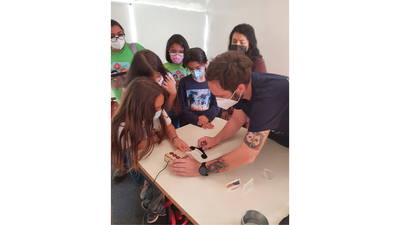
LabMóvil is built around a simple idea: learning astronomy by doing it. Rather than asking students to sit through a lecture, the workshops invite them to experiment with phenomena that are also part of astronomical research. During a visit from LabMóvil, students are able to learn and explore a variety of astronomical subjects, including:
- Constellations
- The physics of light
- The phases of the Moon and eclipses
- How telescopes enable astronomers to study the properties of distant objects
- What spectroscopy is and how it teaches us about the motion, composition, and properties of celestial objects


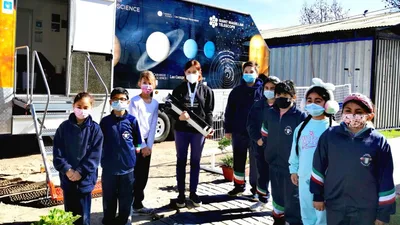
Student Group
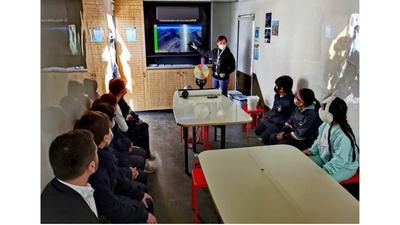
Students in the LabMóvil
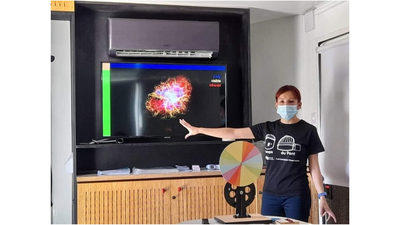
Teaching Astronomy
The workshops are designed for groups of up to 24 students and typically last about 50 minutes. This format gives participants time to work directly with models and experiments. Many of the activities use scientific principles that students can later revisit using relatively simple materials.
The goal is not to recreate a professional observatory inside a classroom. Instead, the program introduces students to the way science works: observing a phenomenon, asking questions, testing explanations, and using models to understand things that cannot be observed directly.
Accessibility has also become part of this work. When LCO joined the project in 2022, the program incorporated “Universo con Todos los Sentidos” (“The Universe with All the Senses”), a set of materials originally developed by the Medellín Planetarium and the International Astronomical Union to teach astronomy to people who are blind or have low vision. These resources were complemented by 3D-printed models of the Magellan Telescopes developed at Las Campanas, along with other tactile materials.
This work became part of a broader outreach effort by Carnegie in Chile that now includes activities designed for people with visual, hearing, and intellectual disabilities.
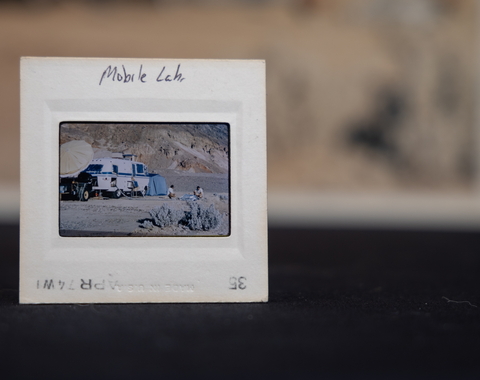
Mobility is another defining feature of the project. The laboratory is more than 30 feet long and travels to schools and public spaces, primarily throughout the Atacama and Coquimbo regions. In many ways, this reverses the traditional model of science outreach. Instead of asking schools to transport dozens of students to a scientific institution, the educational facility travels to them.
That approach is especially valuable for rural and remote communities, where transportation costs, long travel times, and logistical challenges can limit access to in-person science experiences.


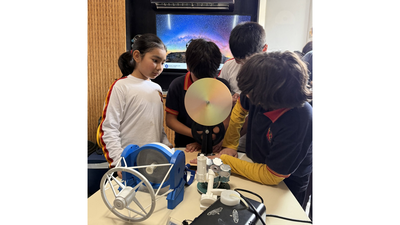
Learn by doing
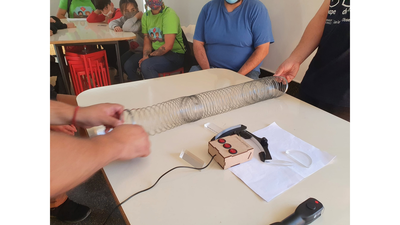
Demonstration
Activity
For Carnegie, this work is part of a presence in Chile that now spans more than five decades. Las Campanas produces scientific knowledge using large telescopes and specialized instruments and hosts researchers from around the world. But the presence of a scientific institution in a region is not limited to the place where its instruments are located. Education, public engagement, and relationships with local communities are also part of how Carnegie’s observatory operates in Chile.
LabMóvil makes that idea tangible. It represents the 22nd object in our #Carnegie125 series. The telescopes at Las Campanas, along with the future Giant Magellan Telescope, must remain in the mountains because they depend on darkness, dry air, atmospheric stability, and technical conditions that are difficult to find elsewhere.
The mobile laboratory is designed to do exactly the opposite: move.
It travels along the roads of northern Chile, visits schools, and sets up wherever students are. The connection between these two spaces is direct. The same institutions that explore the universe from some of the world’s most advanced observatories also use the knowledge and experience of their teams to bring astronomy closer to the communities that share the territory where that exploration takes place.
Spanish-Language Version
El Observatorio Las Campanas de Carnegie Science se encuentra en uno de los mejores lugares del mundo para hacer astronomía, pero muchas de las personas que viven en las regiones cercanas nunca han estado dentro de un observatorio profesional. La distancia física es una razón evidente. Las Campanas está en una zona montañosa de la Región de Atacama y su funcionamiento responde primero a las necesidades de una instalación científica. Existe también otra distancia: la que puede separar la investigación astronómica avanzada de la experiencia cotidiana de quienes viven en los territorios donde esa investigación ocurre. El Laboratorio Móvil “Conciencia Astronomía”, conocido como LabMóvil, busca disminuirla llevando experiencias científicas directamente a escuelas, localidades y actividades comunitarias.
El proyecto no nació originalmente en Carnegie. El LabMóvil Conciencia Astronomía fue creado en 2019 por la Fundación EcoScience y la organización del Telescopio Magallanes Gigante, con apoyo de The Kavli Foundation. La propuesta consistía en disponer de un laboratorio itinerante dedicado especialmente a la educación astronómica. Después de dos años de actividades virtuales durante la pandemia, en 2022 comenzó una nueva etapa mediante una colaboración con el Observatorio Las Campanas, LCO, perteneciente a Carnegie Science, y el Telescopio Magallanes Gigante. Estas instituciones asumieron la operación del laboratorio y comenzaron a incorporarlo de manera sistemática a su trabajo educativo en el norte de Chile.
Ese paso modificó la relación entre el vehículo y el territorio. Carnegie mantiene una presencia permanente en la zona desde fines de la década de 1960, cuando estableció Las Campanas, y cuenta además con sus oficinas de El Pino en La Serena. Esa infraestructura, junto con la experiencia de sus equipos y las relaciones construidas con establecimientos educacionales, municipios y organizaciones locales, permitió utilizar el LabMóvil como una herramienta de trabajo continuado, siendo hoy una de las principales iniciativas de educación y divulgación desarrolladas por Las Campanas en Chile.
El funcionamiento del LabMóvil parte de la idea de aprender astronomía haciendo. En lugar de limitar la experiencia a escuchar una charla, los talleres invitan a experimentar con fenómenos que también forman parte del trabajo astronómico. Los estudiantes pueden observar cómo se comporta la luz, estudiar su descomposición en colores, construir modelos para comprender las fases de la Luna y los eclipses, explorar el funcionamiento de los telescopios o aprender qué representan las constelaciones. Para enseñanza media se incorporan contenidos como espectroscopia, una de las herramientas mediante las cuales los astrónomos obtienen información física sobre objetos situados a enormes distancias.
Los talleres están diseñados para grupos de hasta 24 estudiantes y tienen una duración aproximada de 50 minutos. Ese formato permite trabajar directamente con modelos y experimentos. Muchos utilizan principios que después pueden volver a explorarse con materiales relativamente sencillos. El objetivo no es intentar reproducir un observatorio profesional dentro de una escuela, sino acercarse a la lógica con la que trabaja la ciencia: observar un fenómeno, formular preguntas, probar explicaciones y utilizar modelos para comprender aquello que no puede observarse directamente.
La inclusión también se incorporó a esta forma de trabajo. Cuando LCO se sumó al proyecto en 2022, las actividades se complementaron con “Universo con Todos los Sentidos”, material desarrollado originalmente por el Planetario de Medellín y la Unión Astronómica Internacional para enseñar astronomía a personas ciegas o con baja visión. A ello se añadieron réplicas impresas en 3D de los telescopios Magallanes desarrolladas en Las Campanas y otros recursos táctiles. Este trabajo pasó a formar parte de una línea más amplia de divulgación de Carnegie en Chile, que incluye actualmente experiencias destinadas a personas con discapacidades visuales, auditivas e intelectuales.
La movilidad define otra característica del proyecto. El laboratorio tiene más de nueve metros de largo y viaja hasta establecimientos y espacios públicos, principalmente en las regiones de Atacama y Coquimbo. Esto invierte, en cierta medida, el esquema habitual de las actividades de divulgación. En vez de pedir que una escuela traslade a decenas de estudiantes hasta una institución científica, es la infraestructura educativa la que se desplaza. La diferencia resulta especialmente útil para localidades rurales o alejadas, donde los costos, los tiempos de viaje y las dificultades logísticas pueden reducir las posibilidades de participar en experiencias científicas presenciales.
Para Carnegie, este trabajo se relaciona con una presencia que supera ya las cinco décadas en Chile. Las Campanas produce conocimiento utilizando grandes telescopios e instrumentos especializados y recibe a investigadores provenientes de distintas partes del mundo. Pero la presencia territorial de una institución científica no se limita al lugar donde se encuentran sus instrumentos. Carnegie describe hoy la educación, la divulgación y el trabajo con comunidades como parte de la identidad de su observatorio en Chile.
El LabMóvil expresa esa idea de una forma muy concreta. Los telescopios de Las Campanas, y el futuro Telescopio Gigante de Magallanes, deben permanecer en la montaña porque necesitan oscuridad, aire seco, estabilidad atmosférica y condiciones técnicas difíciles de encontrar en otros lugares. El laboratorio está diseñado para hacer exactamente lo contrario: moverse. Viaja por las carreteras del norte, entra a escuelas y se instala allí donde se encuentran los estudiantes. Entre ambos espacios existe una conexión. Las mismas instituciones que observan el universo utilizan la experiencia de sus equipos para acercar las preguntas de la astronomía a las comunidades de los territorios desde los cuales se realiza esa exploración.