Object 14 | Annual Exhibition Photographs

Picture the scene: Eager visitors spill through large brass doors thrown open to reveal a marble-floored rotunda. In a nearby room, a scientist coaxes a half-million-volt spark from an electrical apparatus. In another, a projection screen flickers with the movement of blood cells under magnification. Down the hall, cages of white lab mice draw a crowd. Visitors lean in to watch a film of a sunset over the curved horizon of the Moon. Next door, researchers in field clothes split open chunks of rock and hand visitors the fossilized leaves preserved inside.
This was Carnegie Science's Annual Exhibition, documented in a collection of historical photographs preserved in the Carnegie Science Archives that comprise Object 14 in our #Carnegie125 series.
Hosted each December during the 1920s and 1930s, the exhibition invited the public to meet Carnegie's scientists and learn about their latest work firsthand. Timed to coincide with the annual meeting of the Board of Trustees, and opened to visitors for several days and evenings afterward, it transformed the institution's downtown D.C. headquarters into a place where anyone curious enough to show up could hear about cutting-edge research directly from the people doing it.


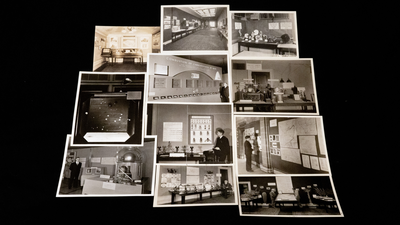
Photographs
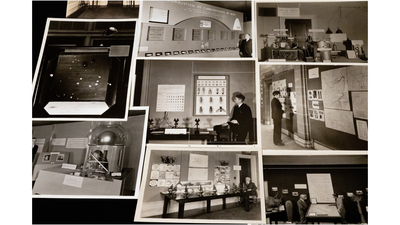
Detail
This tradition of public exhibition stretched back to 1909, when the dedication of the institution’s grand new Administration Building on P Street in Washington, D.C., just down the street from the White House, was marked by a display of the institution's research. Carnegie President John C. Merriam, who arrived in 1921, brought a focus on public engagement and soon appointed a standing Committee on Exhibits, four scientists from across the institution's departments who were tasked with mounting informative and engaging Annual Exhibitions.
Each Annual Exhibition's purpose, as the committee put it in 1925, was: "to tell a story of the current work of the [i]nstitution... in an interesting, impelling way, thereby entertaining and instructing visitors." The committee’s instructions to exhibitors read almost like a manifesto for public science communication. Each exhibit, they wrote, "must appeal to the man in the street with an interest in science, to the man with a general scientific training, and to the specialist in science."
In addition to the Trustees and their guests, the exhibitions drew a broad audience of dignitaries; representatives of federal scientific agencies and government scientists; journalists, including from National Geographic and the Saturday Evening Post; and members of the general public. High school teachers sent their students to take notes and report back to class.


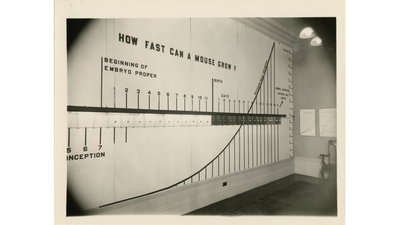
Mouse Exhibit
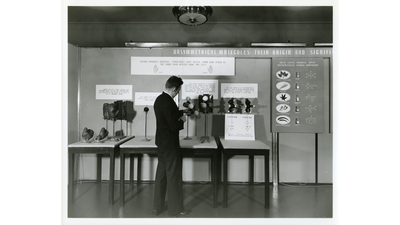
Unsymmetrical Molecules
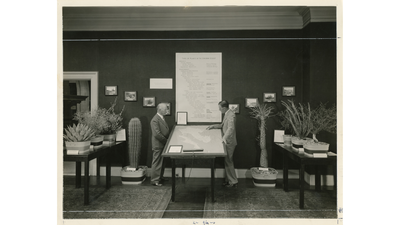
Desert Plants
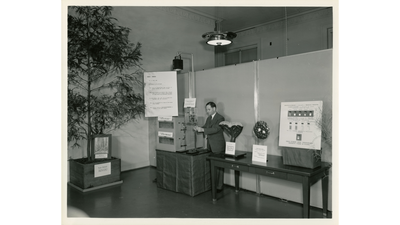
Plant Biology
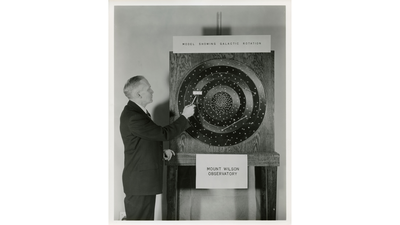
Galactic Rotation
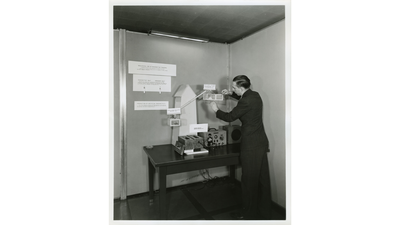
Radioactive Tracers
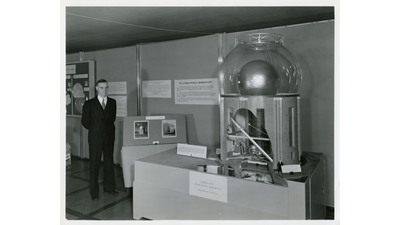
Atomic Physics Observatory

Genetics
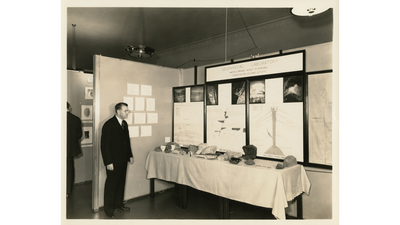
Geophysical Laboratory
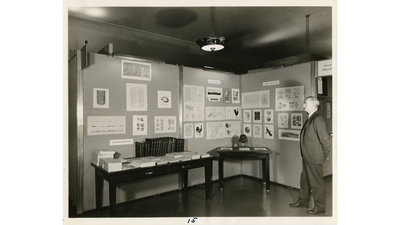
Office of Publications
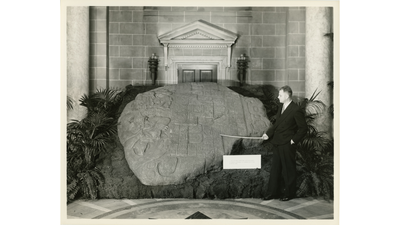
Archaeology
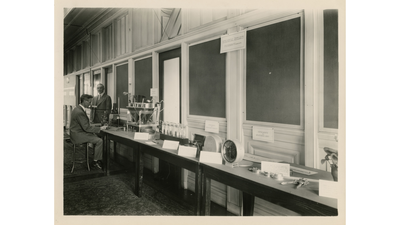
Ecological Research
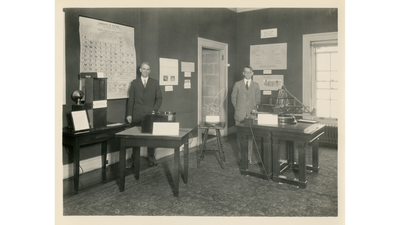
Mount Wilson Observatory
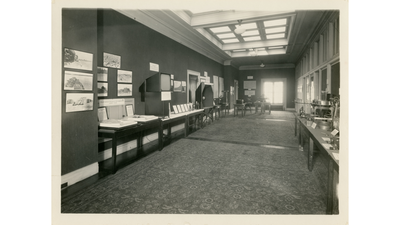
Hallway
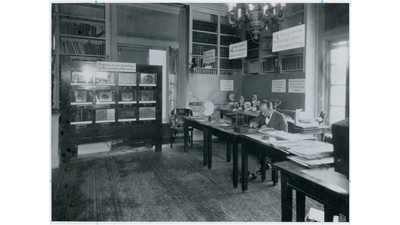
Embryology
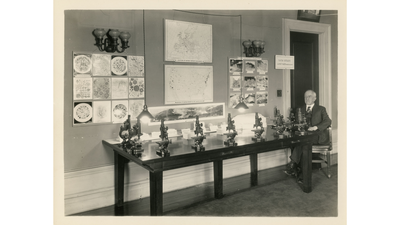
Diatom Research
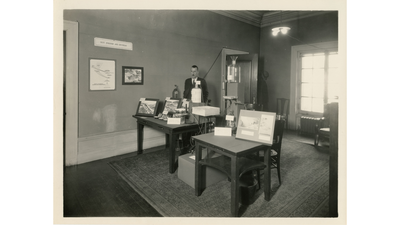
Hot Springs and Geysers
The committee worked each year to improve the exhibition. In an internal guidance for institution scientists designing their exhibits, the committee cautioned against overloading any single display, noting that visitors "have neither the time nor the inclination to study minute details," and advised that it was better to show one good thing well than to crowd a table with a dozen half-explained ones. They recommended “animated” exhibits or “exhibits in operation,” featuring enticing moving images and demonstrations with instruments, over still displays. Still, they found that the single most important ingredient for a successful exhibit was not a clever apparatus but a present, enthusiastic scientist—someone whose own authority and unmistakable excitement about the subject could carry a visitor past the jargon and into genuine curiosity.
The committee’s work paid dividends and by 1936 attendance had climbed to a peak of 5,146 visitors over the course of a few days. It was a remarkable turnout for an event built entirely around the premise that ordinary people deserved to see and learn about the frontier of research.
The exhibitions ran with growing ambition through the 1930s, but the outbreak of World War II brought them to a halt. The institution's 1941–1942 Year Book notes that exhibitions, along with certain meetings and lectures, were "eliminated for the duration of the war," around the same time the headquarters building was given over to the Office of Scientific Research and Development. They never fully returned on that scale.
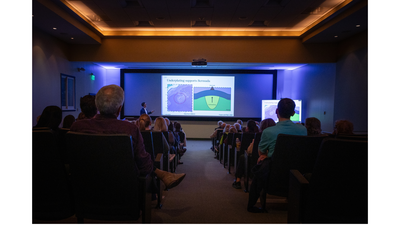
But the spirit behind them endured. Carnegie Science's present-day Open Houses and annual lecture series at the Observatories and the Earth and Planets Laboratory carry forward the same conviction that drew crowds nearly a century ago: that science is best shared by the people doing it, with anyone curious enough to walk in.

Staff Scientist Alycia Weinberger speaks with visitors at the Earth & Planets Laboratory Open House about how light is used to study distant stars and galaxies.

Staff Scientist Tony Piro talks with a visitor at the "Ask an Astronomer" table at the Observatories Open House.

Postdoc William Frazer gives a Neighborhood Lecture about his research into the geological mystery of Bermuda.
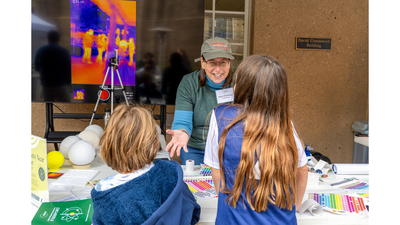
EPL Open House
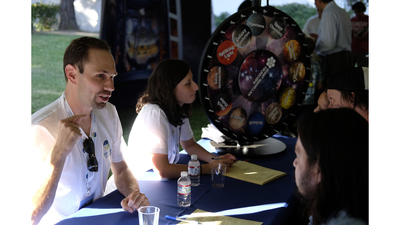
Observatories Open House
Lecture
