Home

Navigation Menu

  • Back
  • About
    • Back
    • About

      Contact Us

      Business Address
      5241 Broad Branch Rd. NW

      Washington , DC 20015
      United States place Map
      Call Us (202) 387-640
    • Who We Are
      • Back
      • Leadership
      • Our Blueprint For Discovery
      • Board of Trustees
      • Financial Stewardship
      • Awards & Accolades
      • History
    • Connect with Us
      • Back
      • Newsletter
      • Yearbook
    • Working at Carnegie
      • Back
      • Applications Open: Postdoctoral Fellowships

    Contact Us

    Business Address
    5241 Broad Branch Rd. NW

    Washington , DC 20015
    United States place Map
    Call Us (202) 387-6400
  • Research
    • Back
    • Research Areas & Topics
    • Research Areas & Topics
      • Back
      • Research Areas
      • From genomes to ecosystems and from planets to the cosmos, Carnegie Science is an incubator for cutting-edge, interdisciplinary research.
      • Astronomy & Astrophysics
        • Back
        • Astronomy & Astrophysics
        • Astrophysical Theory
        • Cosmology
        • Distant Galaxies
        • Milky Way & Stellar Evolution
        • Planet Formation & Evolution
        • Solar System & Exoplanets
        • Telescope Instrumentation
        • Transient & Compact Objects
      • Earth Science
        • Back
        • Earth Science
        • Experimental Petrology
        • Geochemistry
        • Geophysics & Geodynamics
        • Mineralogy & Mineral Physics
      • Ecology
        • Back
        • Ecology
        • Atmospheric Science & Energy
        • Adaptation to Climate Change
        • Water Quality & Scarcity
      • Genetics & Developmental Biology
        • Back
        • Genetics & Developmental Biology
        • Adaptation to Climate Change
        • Developmental Biology & Human Health
        • Genomics
        • Model Organism Development
        • Nested Ecosystems
        • Symbiosis
      • Matter at Extreme States
        • Back
        • Matter at Extreme States
        • Extreme Environments
        • Extreme Materials
        • Mineralogy & Mineral Physics
      • Planetary Science
        • Back
        • Planetary Science
        • Astrobiology
        • Cosmochemistry
        • Mineralogy & Mineral Physics
        • Planet Formation & Evolution
        • Solar System & Exoplanets
      • Plant Science
        • Back
        • Plant Science
        • Adaptation to Climate Change
        • Nested Ecosystems
        • Photosynthesis
        • Symbiosis
    • Divisions
      • Back
      • Divisions
      • Biosphere Sciences & Engineering
        • Back
        • Biosphere Sciences & Engineering
        • About

          Contact Us

          Business Address
          5241 Broad Branch Rd. NW

          Washington , DC 20015
          United States place Map
          Call Us (202) 387-640
        • Research
        • Culture
      • Earth & Planets Laboratory
        • Back
        • Earth & Planets Laboratory
        • About

          Contact Us

          Business Address
          5241 Broad Branch Rd. NW

          Washington , DC 20015
          United States place Map
          Call Us (202) 387-640
        • Research
        • Culture
        • Campus
        • Safety
      • Observatories
        • Back
        • Observatories
        • About

          Contact Us

          Business Address
          5241 Broad Branch Rd. NW

          Washington , DC 20015
          United States place Map
          Call Us (202) 387-640
        • Research
        • Culture
        • Campus
    • Instrumentation
      • Back
      • Instrumentation
      • Our Telescopes
        • Back
        • Our Telescopes
        • Magellan Telescopes
        • Swope Telescope
        • du Pont Telescope
      • Observatories Machine Shop
      • EPL Research Facilities
      • EPL Machine Shop
      • Mass Spectrometry Facility
      • Advanced Imaging Facility
  • People
    • Back
    • People
      Observatory Staff

      Featured Staff Member

      Staff Member

      Staff Member

      Professional Title

      Learn More
      Observatory Staff

      Search For

    • Search All People
      • Back
      • Staff Scientists
      • Leadership
      • Biosphere Science & Engineering People
      • Earth & Planets Laboratory People
      • Observatories People
    Observatory Staff
    Dr. Peter Gao
    Staff Scientist

    Featured Staff Member

    Peter Gao

    Dr. Peter Gao

    Staff Scientist

    Learn More
    Observatory Staff
    Dr. Peter Gao
    Staff Scientist

    Peter Gao focuses on the physics and chemistry of planetary atmospheres within and beyond the Solar System and what they can tell us about planetary origins and habitability. 

    Search For

    Search All Staff
  • Events
    • Back
    • Events
    • Search All Events
      • Back
      • Public Events
      • Biosphere Science & Engineering Events
      • Earth & Planets Laboratory Events
      • Observatories Events

    Upcoming Events

    Events

    Events

    Spooky Social Banner Art
    Public Program

    Planet X, Killer Asteroids & Other Things Lurking in Space

    Scott Sheppard

    October 29

    7:00pm EDT

    EPL Open House Banner Purple
    Public Program

    Earth & Planets Laboratory Open House

    Earth & Planets Laboratory

    October 24

    1:00pm EDT

    Observatories Open House boy looks into solar telescope with blue visual styling elements
    Public Program

    Observatories Open House

    Carnegie Science Observatories

    October 11

    2:00pm PDT

  • News
    • Back
    • News
    • Search All News
      • Back
      • Biosphere Science & Engineering News
      • Earth & Planets Laboratory News
      • Observatories News
      • Carnegie Science News
    News

    Recent News

    News

    Latest

    • - Any -
    • Biosphere Sciences & Engineering
    • Carnegie Science
    • Earth & Planets Laboratory
    • Observatories
    expand_more
    Read all News
    Holiday Card 2026 Banner
    Breaking News
    September 29, 2026

    Help Us Choose Our 2026 Holiday Card!

    Woodward portrait cropped
    Breaking News
    July 21, 2026

    Object 18 | Robert S. Woodward Portrait

    Carnegie Store Banner
    Breaking News
    July 15, 2026

    Carnegie Science Summer Swag Drop

  • Resources
    • Back
    • Resources
      • Back
      • Carnegie Science Store
    • Search All
      • Back
      • Employee Resources
      • Scientific Resources
      • Postdoc Resources
      • Media Resources
      • Archival Resources
    • Quick Links
      • Back
      • Employee Intranet
      • Dayforce
      • Careers
      • Observing at LCO
      • Locations and Addresses
  • #Carnegie125
    • Back
    • #Carnegie125
    • 125 Objects
  • Donate
    • Back
    • Donate
      - ,

    • Make a Donation
      • Back
      • Support Scientific Research
      • The Impact of Your Gift
      • Carnegie Champions
      • Planned Giving
    Jo Ann Eder

    I feel passionately about the power of nonprofits to bolster healthy communities.

    - Jo Ann Eder , Astronomer and Alumna

    Header Text

    Postdoctoral alumna Jo Ann Eder is committed to making the world a better place by supporting organizations, like Carnegie, that create and foster STEM learning opportunities for all. 

    Learn more arrow_forward
  • Home

A map of intergalactic hydrogen courtesy Andrew Newman

Using the Magellan telescopes at Carnegie’s Las Campanas Observatory in Chile, the research team, led by Carnegie’s Andrew Newman, was able to look for shadows cast by intergalactic hydrogen gas within protoclusters on the galaxies behind them. This image shows a map of intergalactic hydrogen where yellow-to-red represents high density regions and blue-to-black indicates areas of low density. Credit: Andrew Newman.

June 15, 2022

Previously Hidden Protoclusters Could Reveal New Details Of Galaxy Evolution

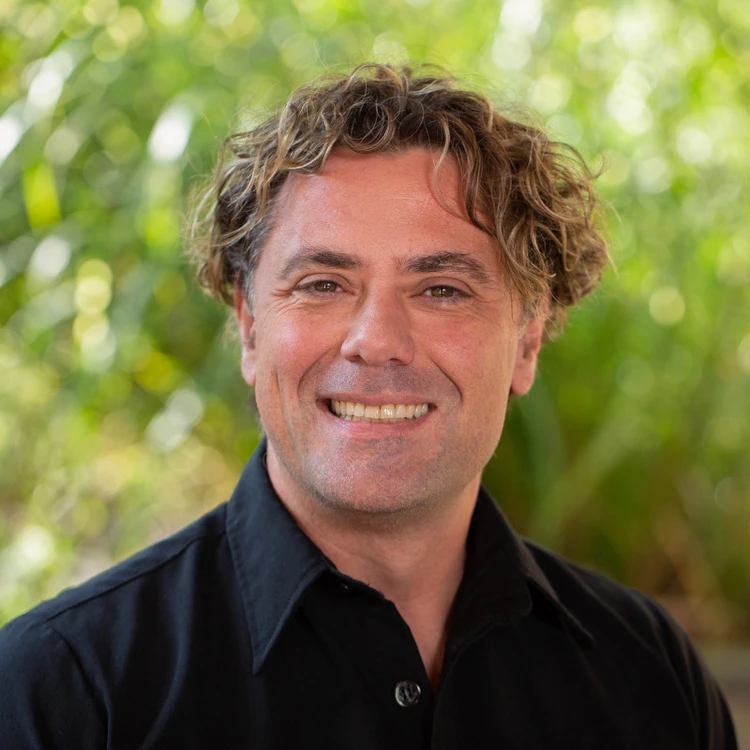
Dionysis Foustoukos Portrait

Dionysis Foustoukos

Research Scientist

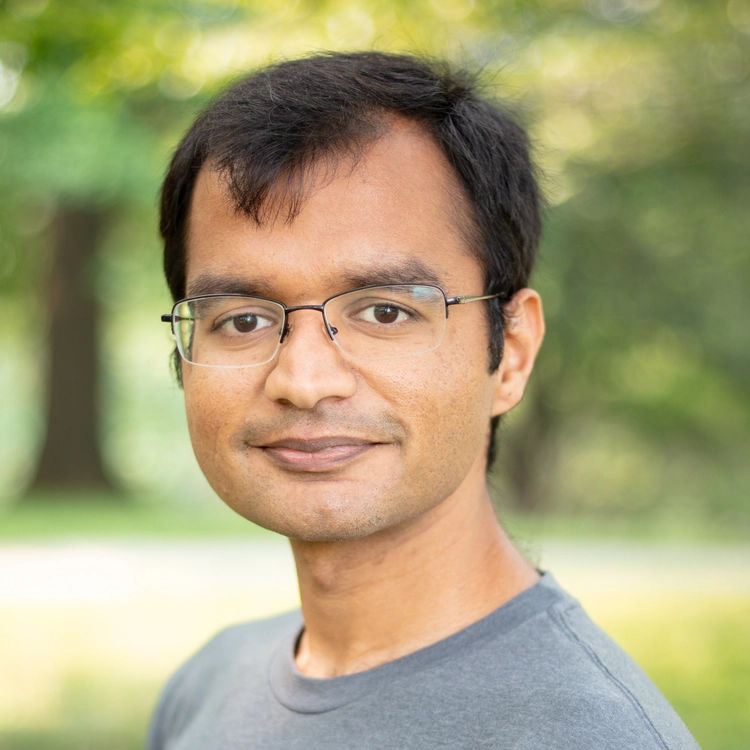
Shubham Kanodia portrait

Shubham Kanodia

Carnegie Postdoctoral Fellow

Abstract
We are conducting a survey using twilight time on the Dark Energy Camera with the Blanco 4 m telescope in Chile to look for objects interior to Earth's and Venus' orbits. To date we have discovered two rare Atira/Apohele asteroids, 2021 LJ4 and 2021 PH27, which have orbits completely interior to Earth's orbit. We also discovered one new Apollo-type Near Earth Object (NEO) that crosses Earth's orbit, 2022 AP7. Two of the discoveries have diameters greater than or similar to 1 km. 2022 AP7 is likely the largest Potentially Hazardous Asteroid (PHA) discovered in about eight years. To date we have covered 624 square degrees of sky near to and interior to the orbit of Venus. The average images go to 21.3 mag in the r band, with the best images near 22nd mag. Our new discovery 2021 PH27 has the smallest semimajor axis known for an asteroid, 0.4617 au, and the largest general relativistic effects (53 arcsec/century) known for any body in the solar system. The survey has detected similar to 15% of all known Atira NEOs. We put strong constraints on any stable population of Venus co-orbital resonance objects existing, as well as the Atira and Vatira asteroid classes. These interior asteroid populations are important to complete the census of asteroids near Earth, including some of the most likely Earth impactors that cannot easily be discovered in other surveys. Comparing the actual population of asteroids found interior to Earth and Venus with those predicted to exist by extrapolating from the known population exterior to Earth is important to better understand the origin, composition, and structure of the NEO population.
View Full Publication open_in_new
Leopoldo Infante

Leopoldo Infante

LCO Director Emeritus

Abstract
An Escherchia coli K12 strain carrying the HhaII methylase and restriction genes on two separate compatible plasmids, pSK5 and pSK7, is used to overproduce the restriction endonuclease. Plasmid pSK5 expresses the methylase gene constitutively from its chloramphenicol resistance gene promoter, and plasmid pSK7 expresses the restriction endonuclease under control of the lacUV5 promoter. Induction of the two-plasmid clone with 1 mM isopropyl-1-thio-.beta.-D-galactopyranoside results in a 15-fold increase in HhaII endonuclease activity. The enzyme has been purified to apparent homogeneity. It migrates as a 23-kilodalton polypeptide on denaturing sodium dodecyl sulfate-polyacrylamide electrophoretic gels and as an 52-kilodalton native protein dimer on a high pressure liquid chromatography sizing column.
View Full Publication open_in_new
Abstract
We describe a semi-analytic model to predict the triaxial shapes of dark matter haloes utilizing the sequences of random merging events captured in merger trees to follow the evolution of each halo's energy tensor. When coupled with a simple model for relaxation toward a spherical shape, we find that this model predicts distributions of halo axis length ratios that approximately agree with those measured from cosmological N-body simulations once constrained to match the median axial ratio at a single halo mass. We demonstrate the predictive and explanatory power of this model by considering conditioned distributions of axis length ratios, and the mass dependence of halo shapes, finding these to be in good agreement with N-body results. This model provides both insight into the physics driving the evolution of halo triaxial shapes, and rapid quantitative predictions for the statistics of triaxiality connected directly to the formation history of the halo.
View Full Publication open_in_new
Fieldwork at sea on the Atlantis research vessel. In January 2014 Carnegie's Dionysis Foustoukos, along with microbiologist and Carnegie postdoctoral fellow Ileana Peréz-Rodríguez and under-graduate student Matt Rawls of George Mason University, collected microorganisms from the volcanoes of the Pacific Ocean and cultured them onboard the oceanographic research vessel Atlantis.

Fieldwork at sea on the Atlantis research vessel. In January 2014 Carnegie's Dionysis Foustoukos, along with microbiologist and Carnegie postdoctoral fellow Ileana Peréz-Rodríguez and under-graduate student Matt Rawls of George Mason University, collected microorganisms from the volcanoes of the Pacific Ocean and cultured them onboard the oceanographic research vessel Atlantis. 

January 02, 2014
Spotlight

The Geophysical Laboratory at the High Seas

Pagination

  • Previous page chevron_left
  • …
  • Page 348
  • Page 349
  • Page 350
  • Page 351
  • Current page 352
  • Page 353
  • Page 354
  • Page 355
  • Page 356
  • …
  • Next page chevron_right
Subscribe to

Get the latest

Subscribe to our newsletters.

Privacy Policy
Home
  • Instagram instagram
  • Twitter twitter
  • Youtube youtube
  • Facebook facebook

Science

  • Biosphere Sciences & Engineering
  • Earth & Planets Laboratory
  • Observatories
  • Our Research Areas
  • Our Blueprint For Discovery

Legal

  • Financial Statements
  • Conflict of Interest Policy
  • Privacy Policy
  • Equal Opportunity Employment

Careers

  • Working at Carnegie
  • Scientific and Technical Jobs
  • Administrative & Support Jobs
  • Postdoctoral Program
  • Carnegie Connect (For Employees)

Contact Us

  • Contact Administration
  • Media Contacts

Business Address

5241 Broad Branch Rd. NW

Washington, DC 20015

place Map

© Copyright Carnegie Science 2026