Home

Navigation Menu

  • Back
  • About
    • Back
    • About

      Contact Us

      Business Address
      5241 Broad Branch Rd. NW

      Washington , DC 20015
      United States place Map
      Call Us (202) 387-640
    • Who We Are
      • Back
      • Leadership
      • Our Blueprint For Discovery
      • Board of Trustees
      • Financial Stewardship
      • Awards & Accolades
      • History
    • Connect with Us
      • Back
      • Newsletter
      • Yearbook
    • Working at Carnegie
      • Back
      • Applications Open: Postdoctoral Fellowships

    Contact Us

    Business Address
    5241 Broad Branch Rd. NW

    Washington , DC 20015
    United States place Map
    Call Us (202) 387-6400
  • Research
    • Back
    • Research Areas & Topics
    • Research Areas & Topics
      • Back
      • Research Areas
      • From genomes to ecosystems and from planets to the cosmos, Carnegie Science is an incubator for cutting-edge, interdisciplinary research.
      • Astronomy & Astrophysics
        • Back
        • Astronomy & Astrophysics
        • Astrophysical Theory
        • Cosmology
        • Distant Galaxies
        • Milky Way & Stellar Evolution
        • Planet Formation & Evolution
        • Solar System & Exoplanets
        • Telescope Instrumentation
        • Transient & Compact Objects
      • Earth Science
        • Back
        • Earth Science
        • Experimental Petrology
        • Geochemistry
        • Geophysics & Geodynamics
        • Mineralogy & Mineral Physics
      • Ecology
        • Back
        • Ecology
        • Atmospheric Science & Energy
        • Adaptation to Climate Change
        • Water Quality & Scarcity
      • Genetics & Developmental Biology
        • Back
        • Genetics & Developmental Biology
        • Adaptation to Climate Change
        • Developmental Biology & Human Health
        • Genomics
        • Model Organism Development
        • Nested Ecosystems
        • Symbiosis
      • Matter at Extreme States
        • Back
        • Matter at Extreme States
        • Extreme Environments
        • Extreme Materials
        • Mineralogy & Mineral Physics
      • Planetary Science
        • Back
        • Planetary Science
        • Astrobiology
        • Cosmochemistry
        • Mineralogy & Mineral Physics
        • Planet Formation & Evolution
        • Solar System & Exoplanets
      • Plant Science
        • Back
        • Plant Science
        • Adaptation to Climate Change
        • Nested Ecosystems
        • Photosynthesis
        • Symbiosis
    • Divisions
      • Back
      • Divisions
      • Biosphere Sciences & Engineering
        • Back
        • Biosphere Sciences & Engineering
        • About

          Contact Us

          Business Address
          5241 Broad Branch Rd. NW

          Washington , DC 20015
          United States place Map
          Call Us (202) 387-640
        • Research
        • Culture
      • Earth & Planets Laboratory
        • Back
        • Earth & Planets Laboratory
        • About

          Contact Us

          Business Address
          5241 Broad Branch Rd. NW

          Washington , DC 20015
          United States place Map
          Call Us (202) 387-640
        • Research
        • Culture
        • Campus
        • Safety
      • Observatories
        • Back
        • Observatories
        • About

          Contact Us

          Business Address
          5241 Broad Branch Rd. NW

          Washington , DC 20015
          United States place Map
          Call Us (202) 387-640
        • Research
        • Culture
        • Campus
    • Instrumentation
      • Back
      • Instrumentation
      • Our Telescopes
        • Back
        • Our Telescopes
        • Magellan Telescopes
        • Swope Telescope
        • du Pont Telescope
      • Observatories Machine Shop
      • EPL Research Facilities
      • EPL Machine Shop
      • Mass Spectrometry Facility
      • Advanced Imaging Facility
  • People
    • Back
    • People
      Observatory Staff

      Featured Staff Member

      Staff Member

      Staff Member

      Professional Title

      Learn More
      Observatory Staff

      Search For

    • Search All People
      • Back
      • Staff Scientists
      • Leadership
      • Biosphere Science & Engineering People
      • Earth & Planets Laboratory People
      • Observatories People
    Observatory Staff
    Dr. Peter Gao
    Staff Scientist

    Featured Staff Member

    Peter Gao

    Dr. Peter Gao

    Staff Scientist

    Learn More
    Observatory Staff
    Dr. Peter Gao
    Staff Scientist

    Peter Gao focuses on the physics and chemistry of planetary atmospheres within and beyond the Solar System and what they can tell us about planetary origins and habitability. 

    Search For

    Search All Staff
  • Events
    • Back
    • Events
    • Search All Events
      • Back
      • Public Events
      • Biosphere Science & Engineering Events
      • Earth & Planets Laboratory Events
      • Observatories Events

    Upcoming Events

    Events

    Events

    Spooky Social Banner Art
    Public Program

    Planet X, Killer Asteroids & Other Things Lurking in Space

    Scott Sheppard

    October 29

    7:00pm EDT

    EPL Open House Banner Purple
    Public Program

    Earth & Planets Laboratory Open House

    Earth & Planets Laboratory

    October 24

    1:00pm EDT

    Observatories Open House boy looks into solar telescope with blue visual styling elements
    Public Program

    Observatories Open House

    Carnegie Science Observatories

    October 11

    2:00pm PDT

  • News
    • Back
    • News
    • Search All News
      • Back
      • Biosphere Science & Engineering News
      • Earth & Planets Laboratory News
      • Observatories News
      • Carnegie Science News
    News

    Recent News

    News

    Latest

    • - Any -
    • Biosphere Sciences & Engineering
    • Carnegie Science
    • Earth & Planets Laboratory
    • Observatories
    expand_more
    Read all News
    Holiday Card 2026 Banner
    Breaking News
    September 29, 2026

    Help Us Choose Our 2026 Holiday Card!

    Woodward portrait cropped
    Breaking News
    July 21, 2026

    Object 18 | Robert S. Woodward Portrait

    Carnegie Store Banner
    Breaking News
    July 15, 2026

    Carnegie Science Summer Swag Drop

  • Resources
    • Back
    • Resources
      • Back
      • Carnegie Science Store
    • Search All
      • Back
      • Employee Resources
      • Scientific Resources
      • Postdoc Resources
      • Media Resources
      • Archival Resources
    • Quick Links
      • Back
      • Employee Intranet
      • Dayforce
      • Careers
      • Observing at LCO
      • Locations and Addresses
  • #Carnegie125
    • Back
    • #Carnegie125
    • 125 Objects
  • Donate
    • Back
    • Donate
      - ,

    • Make a Donation
      • Back
      • Support Scientific Research
      • The Impact of Your Gift
      • Carnegie Champions
      • Planned Giving
    Jo Ann Eder

    I feel passionately about the power of nonprofits to bolster healthy communities.

    - Jo Ann Eder , Astronomer and Alumna

    Header Text

    Postdoctoral alumna Jo Ann Eder is committed to making the world a better place by supporting organizations, like Carnegie, that create and foster STEM learning opportunities for all. 

    Learn more arrow_forward
  • Home

Abstract
We present measurements of galaxy-galaxy weak lensing from 225 deg(2) of early commissioning imaging data from the Sloan Digital Sky Survey (SDSS). We measure a mean tangential shear around a stacked sample of foreground galaxies in three bandpasses (g', r', and i') out to angular radii of 600", detecting the shear signal at very high statistical significance. The shear profile is well described by a power law gamma(T) = gamma(TO)(1/theta)", with best-fit slope of eta = 0.7-1.1 (95% confidence). In the range theta = 10"-600", the mean tangential shear is approximately 6 +/- 1 x 10(-4) in all three bands. A variety of rigorous tests demonstrate the reality of the gravitational lensing signal and confirm the uncertainty estimates. In particular, we obtain shear measurements consistent with zero when we rotate the background galaxies by 45 degrees, replace foreground galaxies with random points, or replace foreground galaxies with bright stars. We interpret our results by assuming that all matter correlated with galaxies belongs to the galaxies. We model the mass distributions of the foreground glaxies, which have a mean luminosity [L(theta < 5")] = 8.7 +/- 0.7 x 10(9) h(-2) L-g'circle dot,1.4 +/- 0.12 x 10(10) h(-2) L-r'circle dot, 1.8 +/- 0.14 x 10(10) h(-2) L-i'circle dot, as approximately isothermal spheres characterized by a velocity dispersion a, and a truncation radius s. The velocity dispersion is constrained to be sigma(v) = 150-190 km s(-1) at 95% confidence (145-195 km s(-1) including systematic uncertainties), consistent with previous determinations but with smaller error bars. Our detection of shear at large angular radii sets a 95% confidence lower limit s > 140", corresponding to a physical radius of 260 h(-1) kpc, implying that the dark halos of typical luminous galaxies extend to very large radii. However, it is likely that this is being systematically biased to large value by diffuse matter in the halos of groups and clusters of galaxies. We also present a preliminary determination of the galaxy-mass correlation function, finding a correlation length similar to the galaxy autocorrelation function and consistency with a low matter density universe with modest bias.

View Full Publication open_in_new
Abstract
The Magellan guider camera uses a low-noise frame transfer CCD with a digital signal processor based controller. The electronics feature a compact, simple design, optimized for fast settling times and rapid readout rate. The camera operates (nominally) at 20 degreesC with thermoelectric cooling. Multiple operating modes are supported, with software selectable binning, exposure times, and subrastering.
View Full Publication open_in_new
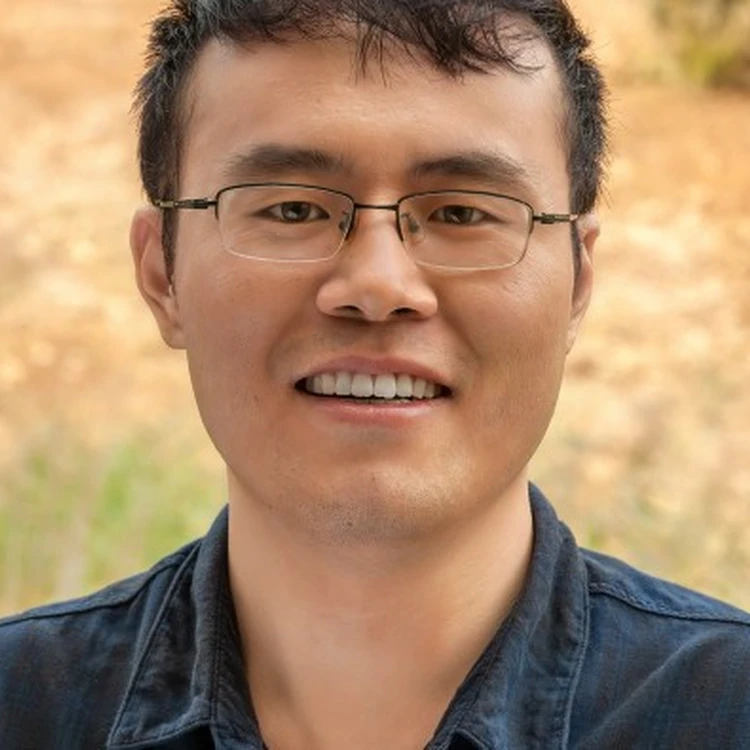
Liang Xu

Liang Xu

Postdoctoral Fellow

Hongliang Zhang

Hongliang Zhang

Postdoctoral Fellow

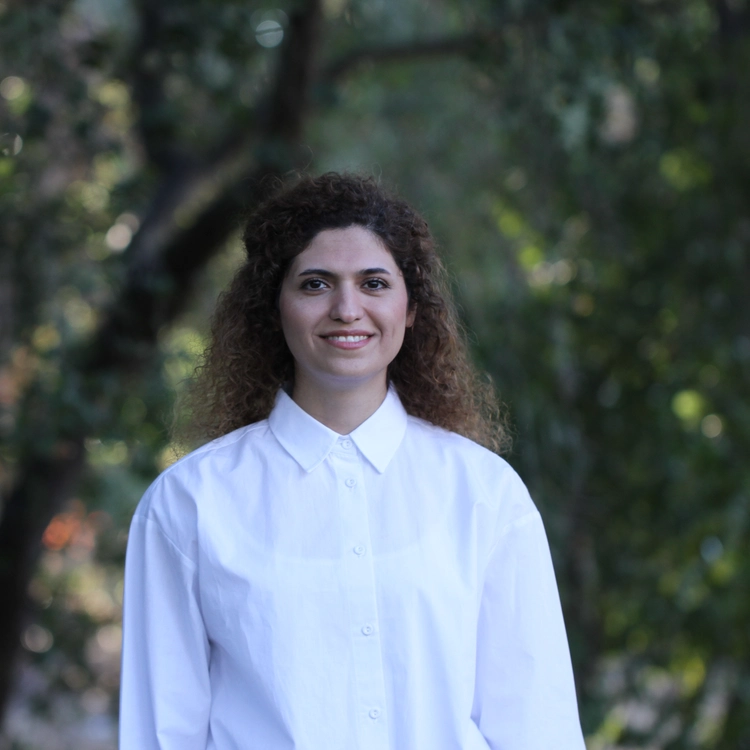
Neda Fakhimi

Neda Fakhimi

Research Scientist

Ajeet Chaudhary

Ajeet Chaudhary

Postdoctoral Fellow

October 06, 2015

Carnegie’s Jonikas and Zhang Receive Prestigious NIH Awards

Eddines_LaChelle

La Chelle Eddines

Business Office Administrator

Abstract
Phase transitions and equations of state of the alkaline earth fluorides CaF2, SrF2, and BaF2 were examined by static compression to pressures as high as 146 GPa. Angle-dispersive x-ray diffraction experiments were performed on polycrystalline samples in the laser-heated diamond-anvil cell. We confirmed that at pressures less than 10 GPa all three materials undergo a phase transition from the cubic (Fm (3) over barm) fluorite structure to the orthorhombic (Pnam) cotunnite-type structure. This work has characterized an additional phase transition in CaF2 and SrF2: these materials were observed to transform to a hexagonal (P6(3)/mmc) Ni2In-type structure between 63-79 GPa and 28-29 GPa, respectively, upon laser heating. For SrF2, the Ni2In-type phase was confirmed by Rietveld refinement. Volumes were determined as a function of pressure for all high-pressure phases and fit to the third-order Birch-Murnaghan equation of state. For CaF2 and SrF2, the fluorite-cotunnite transition results in a volume decrease of 8-10 %, while the bulk modulus of the cotunnite-type phase is the same or less than that of the fluorite phase within uncertainty. For all three fluorides, the volume reduction associated with the further transition to the Ni2In-type phase is similar to 5%. The percentage increase in the bulk modulus (Delta K) across the transition is greater when the cation is smaller. While for BaF2, Delta K is 10-30 %, Delta K values for SrF2 and CaF2 are 45-65 % and 20-40 %. Although shock data for CaF2 have been interpreted to show a transition to a highly incompressible phase above 100 GPa, this is not consistent with our static equation of state data.
View Full Publication open_in_new
Abstract
We present a search for "hypercompact" star clusters in the Milky Way using a combination of Gaia and the Dark Energy Camera Legacy Survey (DECaLS). Such putative clusters, with sizes of similar to 1 pc and containing 500-5000 stars, are expected to remain bound to intermediate-mass black holes (M (BH) approximate to 10(3)-10(5) M (circle dot)) that may be accreted into the Milky Way halo within dwarf satellites. Using the semianalytic model SatGen, we find an expected similar to 100 wandering intermediate-mass black holes if every infalling satellite hosts a black hole. We do not find any such clusters in our search. Our upper limits rule out 100% occupancy but do not put stringent constraints on the occupation fraction. Of course, we need stronger constraints on the properties of the putative star clusters, including their assumed sizes and the fraction of stars that would be compact remnants.
View Full Publication open_in_new

Pagination

  • Previous page chevron_left
  • …
  • Page 346
  • Page 347
  • Page 348
  • Page 349
  • Current page 350
  • Page 351
  • Page 352
  • Page 353
  • Page 354
  • …
  • Next page chevron_right
Subscribe to

Get the latest

Subscribe to our newsletters.

Privacy Policy
Home
  • Instagram instagram
  • Twitter twitter
  • Youtube youtube
  • Facebook facebook

Science

  • Biosphere Sciences & Engineering
  • Earth & Planets Laboratory
  • Observatories
  • Our Research Areas
  • Our Blueprint For Discovery

Legal

  • Financial Statements
  • Conflict of Interest Policy
  • Privacy Policy
  • Equal Opportunity Employment

Careers

  • Working at Carnegie
  • Scientific and Technical Jobs
  • Administrative & Support Jobs
  • Postdoctoral Program
  • Carnegie Connect (For Employees)

Contact Us

  • Contact Administration
  • Media Contacts

Business Address

5241 Broad Branch Rd. NW

Washington, DC 20015

place Map

© Copyright Carnegie Science 2026