Home

Navigation Menu

  • Back
  • About
    • Back
    • About

      Contact Us

      Business Address
      5241 Broad Branch Rd. NW

      Washington , DC 20015
      United States place Map
      Call Us (202) 387-640
    • Who We Are
      • Back
      • Leadership
      • Our Blueprint For Discovery
      • Board of Trustees
      • Financial Stewardship
      • Awards & Accolades
      • History
    • Connect with Us
      • Back
      • Newsletter
      • Yearbook
    • Working at Carnegie
      • Back
      • Applications Open: Postdoctoral Fellowships

    Contact Us

    Business Address
    5241 Broad Branch Rd. NW

    Washington , DC 20015
    United States place Map
    Call Us (202) 387-6400
  • Research
    • Back
    • Research Areas & Topics
    • Research Areas & Topics
      • Back
      • Research Areas
      • From genomes to ecosystems and from planets to the cosmos, Carnegie Science is an incubator for cutting-edge, interdisciplinary research.
      • Astronomy & Astrophysics
        • Back
        • Astronomy & Astrophysics
        • Astrophysical Theory
        • Cosmology
        • Distant Galaxies
        • Milky Way & Stellar Evolution
        • Planet Formation & Evolution
        • Solar System & Exoplanets
        • Telescope Instrumentation
        • Transient & Compact Objects
      • Earth Science
        • Back
        • Earth Science
        • Experimental Petrology
        • Geochemistry
        • Geophysics & Geodynamics
        • Mineralogy & Mineral Physics
      • Ecology
        • Back
        • Ecology
        • Atmospheric Science & Energy
        • Adaptation to Climate Change
        • Water Quality & Scarcity
      • Genetics & Developmental Biology
        • Back
        • Genetics & Developmental Biology
        • Adaptation to Climate Change
        • Developmental Biology & Human Health
        • Genomics
        • Model Organism Development
        • Nested Ecosystems
        • Symbiosis
      • Matter at Extreme States
        • Back
        • Matter at Extreme States
        • Extreme Environments
        • Extreme Materials
        • Mineralogy & Mineral Physics
      • Planetary Science
        • Back
        • Planetary Science
        • Astrobiology
        • Cosmochemistry
        • Mineralogy & Mineral Physics
        • Planet Formation & Evolution
        • Solar System & Exoplanets
      • Plant Science
        • Back
        • Plant Science
        • Adaptation to Climate Change
        • Nested Ecosystems
        • Photosynthesis
        • Symbiosis
    • Divisions
      • Back
      • Divisions
      • Biosphere Sciences & Engineering
        • Back
        • Biosphere Sciences & Engineering
        • About

          Contact Us

          Business Address
          5241 Broad Branch Rd. NW

          Washington , DC 20015
          United States place Map
          Call Us (202) 387-640
        • Research
        • Culture
      • Earth & Planets Laboratory
        • Back
        • Earth & Planets Laboratory
        • About

          Contact Us

          Business Address
          5241 Broad Branch Rd. NW

          Washington , DC 20015
          United States place Map
          Call Us (202) 387-640
        • Research
        • Culture
        • Campus
        • Safety
      • Observatories
        • Back
        • Observatories
        • About

          Contact Us

          Business Address
          5241 Broad Branch Rd. NW

          Washington , DC 20015
          United States place Map
          Call Us (202) 387-640
        • Research
        • Culture
        • Campus
    • Instrumentation
      • Back
      • Instrumentation
      • Our Telescopes
        • Back
        • Our Telescopes
        • Magellan Telescopes
        • Swope Telescope
        • du Pont Telescope
      • Observatories Machine Shop
      • EPL Research Facilities
      • EPL Machine Shop
      • Mass Spectrometry Facility
      • Advanced Imaging Facility
  • People
    • Back
    • People
      Observatory Staff

      Featured Staff Member

      Staff Member

      Staff Member

      Professional Title

      Learn More
      Observatory Staff

      Search For

    • Search All People
      • Back
      • Staff Scientists
      • Leadership
      • Biosphere Science & Engineering People
      • Earth & Planets Laboratory People
      • Observatories People
    Observatory Staff
    Dr. Peter Gao
    Staff Scientist

    Featured Staff Member

    Peter Gao

    Dr. Peter Gao

    Staff Scientist

    Learn More
    Observatory Staff
    Dr. Peter Gao
    Staff Scientist

    Peter Gao focuses on the physics and chemistry of planetary atmospheres within and beyond the Solar System and what they can tell us about planetary origins and habitability. 

    Search For

    Search All Staff
  • Events
    • Back
    • Events
    • Search All Events
      • Back
      • Public Events
      • Biosphere Science & Engineering Events
      • Earth & Planets Laboratory Events
      • Observatories Events

    Upcoming Events

    Events

    Events

    Spooky Social Banner Art
    Public Program

    Planet X, Killer Asteroids & Other Things Lurking in Space

    Scott Sheppard

    October 29

    7:00pm EDT

    EPL Open House Banner Purple
    Public Program

    Earth & Planets Laboratory Open House

    Earth & Planets Laboratory

    October 24

    1:00pm EDT

    Observatories Open House boy looks into solar telescope with blue visual styling elements
    Public Program

    Observatories Open House

    Carnegie Science Observatories

    October 11

    2:00pm PDT

  • News
    • Back
    • News
    • Search All News
      • Back
      • Biosphere Science & Engineering News
      • Earth & Planets Laboratory News
      • Observatories News
      • Carnegie Science News
    News

    Recent News

    News

    Latest

    • - Any -
    • Biosphere Sciences & Engineering
    • Carnegie Science
    • Earth & Planets Laboratory
    • Observatories
    expand_more
    Read all News
    Holiday Card 2026 Banner
    Breaking News
    September 29, 2026

    Help Us Choose Our 2026 Holiday Card!

    Woodward portrait cropped
    Breaking News
    July 21, 2026

    Object 18 | Robert S. Woodward Portrait

    Carnegie Store Banner
    Breaking News
    July 15, 2026

    Carnegie Science Summer Swag Drop

  • Resources
    • Back
    • Resources
      • Back
      • Carnegie Science Store
    • Search All
      • Back
      • Employee Resources
      • Scientific Resources
      • Postdoc Resources
      • Media Resources
      • Archival Resources
    • Quick Links
      • Back
      • Employee Intranet
      • Dayforce
      • Careers
      • Observing at LCO
      • Locations and Addresses
  • #Carnegie125
    • Back
    • #Carnegie125
    • 125 Objects
  • Donate
    • Back
    • Donate
      - ,

    • Make a Donation
      • Back
      • Support Scientific Research
      • The Impact of Your Gift
      • Carnegie Champions
      • Planned Giving
    Jo Ann Eder

    I feel passionately about the power of nonprofits to bolster healthy communities.

    - Jo Ann Eder , Astronomer and Alumna

    Header Text

    Postdoctoral alumna Jo Ann Eder is committed to making the world a better place by supporting organizations, like Carnegie, that create and foster STEM learning opportunities for all. 

    Learn more arrow_forward
  • Home

Abstract
We report the discovery of Pegasus IV, an ultra-faint dwarf galaxy found in archival data from the Dark Energy Camera processed by the DECam Local Volume Exploration Survey. Pegasus IV is a compact, ultra-faint stellar system ( = -r(1/2) 41(-6)(+8) pc; M-V = -4.25 +/- 0.2 mag) located at a heliocentric distance of 90(-6)(+4) kpc. Based on spectra of seven nonvariable member stars observed with Magellan/IMACS, we confidently resolve Pegasus IV's velocity dispersion, measuring s = sigma(v) 3.3(-1.1)(+1.7) km s(-1) (after excluding three velocity outliers); this implies a mass-to-light ratio of M1/2LV ,(1/2)=167(-99)(+224) M-?/L-? for the system. From the five stars with the highest signal-to-noise spectra, we also measure a systemic metallicity of [Fe/H] = -2.63(-0.30)(+0.26) dex, making Pegasus IV one of the most metal-poor ultra-faint dwarfs. We tentatively resolve a nonzero metallicity dispersion for the system. These measurements provide strong evidence that Pegasus IV is a dark-matter-dominated dwarf galaxy, rather than a star cluster. We measure Pegasus IV's proper motion using data from Gaia Early Data Release 3, finding (mu(alpha*, mu delta)) = (0.33 +/- 0.07, -0.21 +/- 0.08) mas yr(-1). When combined with our measured systemic velocity, this proper motion suggests that Pegasus IV is on an elliptical, retrograde orbit, and is currently near its orbital apocenter. Lastly, we identify three potential RR Lyrae variable stars within Pegasus IV, including one candidate member located more than 10 half-light radii away from the system's centroid. The discovery of yet another ultra-faint dwarf galaxy strongly suggests that the census of Milky Way satellites is still incomplete, even within 100 kpc.
View Full Publication open_in_new
Abstract
Fe2P-type dioxides are significant both for geoscience and condensed-matter physics. For example, Fe2P-type SiO2 has been proposed to be one of the dominant components in the mantles of super-Earths and Fe2P-type TiO2 has been shown to have a large visible absorbance. Here we report the discovery of an Fe2P-type phase in a typical transition-metal dichalcogenide (TMD), TiTe2, using crystal structure prediction and first-principles calculations. Ambient layered TiTe2 will first transform to a monoclinic C2/m phase and then finally to the hexagonal Fe2P-type phase above 33 GPa. Fe2P-type TiTe2 is predicted to be metallic, contrasting with the semiconductivity of Fe2P-type TiO2. The same high-pressure phase (Fe2P type) appears both in transition-metal dioxides and TMDs, indicating that the stacking patterns of anions and cations play an increasingly important role in determining the high-pressure phase.
View Full Publication open_in_new
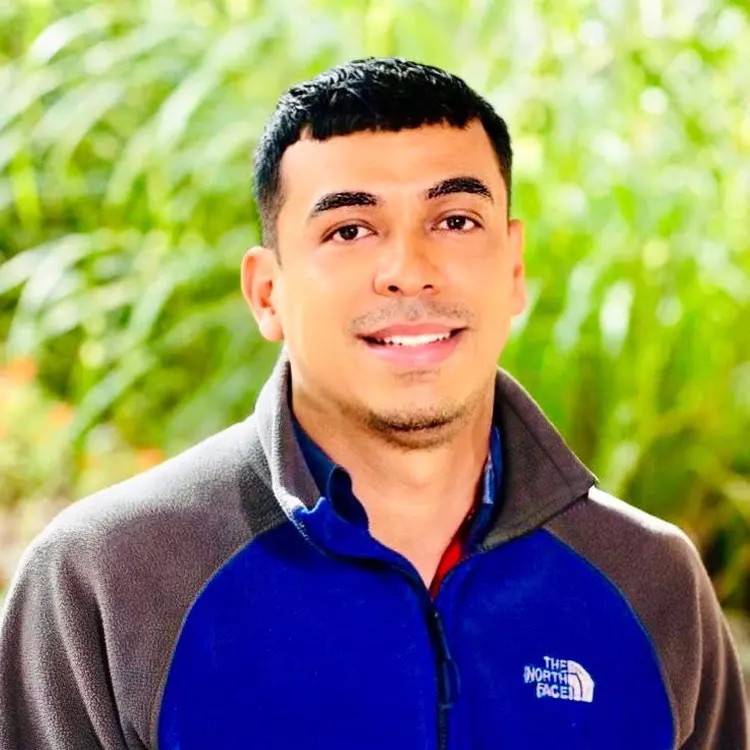
Kelis Portrait

Kelis Fuentes-Mendoza

Custodial Technician 

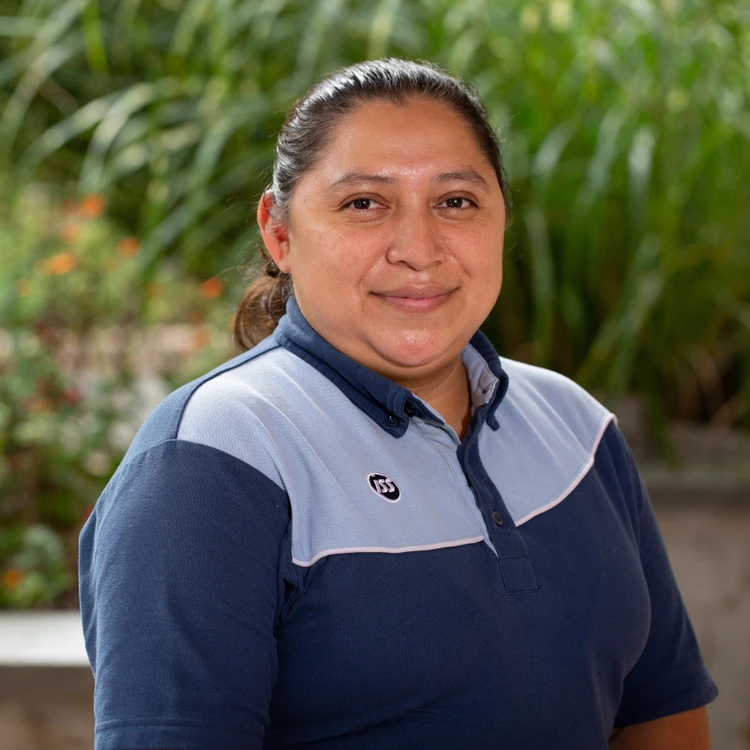
Fatima Isabel Escorcia Flores Portrait

Fatima Escorcia Flores

Custodial Technician 

Khristian Profile Pic

Khristian Stalyn

Custodial Technician 

David George in the lab in 1991
February 07, 2023
Campus News

In Memoriam: Former Carnegie research tech dies at 75

Abstract
The intestines of animals are colonized by commensal microbes, which impact host development, health, and behavior. Precise quantification of colonization is essential for studying the complex interactions between host and microbe both to validate the microbial composition and study its effects. Drosophila melanogaster,which has a low native microbial diversity and is economical to rear with defined microbial composition, has emerged as a model organism for studying the gut microbiome. Analyzing the microbiome of an individual organism requires identification of which microbial species are present and quantification of their absolute abundance. This article presents a method for the analysis of a large number of individual fly microbiomes. The flies are prepared in 96-well plates, enabling the handling of a large number of samples at once. Microbial abundance is quantified by plating up to 96 whole fly homogenates on a single agar plate in an array of spots and then counting the colony forming units (CFUs) that grow in each spot. This plating system is paired with an automated CFU quantification platform, which incorporates photography of the plates, differentiation of fluorescent colonies, and automated counting of the colonies using an ImageJ plugin. Advantages are that (i) this method is sensitive enough to detect differences between treatments, (ii) the spot plating method is as accurate as traditional plating methods, and (iii) the automated counting process is accurate and faster than manual counting. The workflow presented here enables high-throughput quantification of CFUs in a large number of replicates and can be applied to other microbiology study systems including in vitro and other small animal models.
View Full Publication open_in_new
Abstract
Windthrows (trees uprooted and broken by winds) are common across the Amazon. They range in size from single trees to large gaps that lead to changes in forest dynamics, composition, structure, and carbon balance. Yet, the current understanding of the spatial variability of windthrows is limited. By integrating remote sensing data and geospatial analysis, we present the first study to examine the occurrence, area, and direction of windthrows and the control that environmental variables exert on them across the whole Amazon. Windthrows are more frequent and larger in the northwestern Amazon (Peru and Colombia), with the central Amazon (Brazil) being another hot spot of windthrows. The predominant direction of windthrows is westward. Rainfall, surface elevation, and soil characteristics explain the variability (20%-50%) of windthrows but their effects vary regionally. A better understanding of the spatial dynamics of windthrows will improve understanding of the functioning of Amazon forests.
View Full Publication open_in_new
Abstract
Crystal structures of minerals are defined by a specific atomic arrangement within the unit-cell, which follows the laws of symmetry specific to each crystal system. The causes for a mineral to crystallize in a given crystal system have been the subject of many studies showing their dependency on different formation conditions, such as the presence of aqueous fluids, biotic activity and many others. Different attempts have been made to quantify and interpret the information that we can gather from studying crystal symmetry and its distribution in the mineral kingdom. However, these methods are mostly outdated or at least not compatible for use on large datasets available today. Therefore, a revision of symmetry index calculation has been made in accordance with the growing understanding of mineral species and their characteristics. In the gathered data, we observe a gradual but significant decrease in crystal symmetry through the stages of mineral evolution, from the formation of the solar system to modern day. However, this decrease is neither uniform nor linear, which provides further implications for mineral evolution from the viewpoint of crystal symmetry. The temporal distribution of minerals based on the number of essential elements in their chemical formulae and their symmetry index has been calculated and compared to explore their behaviour. Minerals with four to eight essential elements have the lowest average symmetry index, while being the most abundant throughout all stages of mineral evolution. There are many open questions, including those pertaining to whether or not biological activity on Earth has influenced the observed decrease in mineral symmetry through time and whether or not the trajectory of planetary evolution of a geologically active body is one of decreasing mineral symmetry/increasing complexity.
View Full Publication open_in_new

Pagination

  • Previous page chevron_left
  • …
  • Page 250
  • Page 251
  • Page 252
  • Page 253
  • Current page 254
  • Page 255
  • Page 256
  • Page 257
  • Page 258
  • …
  • Next page chevron_right
Subscribe to

Get the latest

Subscribe to our newsletters.

Privacy Policy
Home
  • Instagram instagram
  • Twitter twitter
  • Youtube youtube
  • Facebook facebook

Science

  • Biosphere Sciences & Engineering
  • Earth & Planets Laboratory
  • Observatories
  • Our Research Areas
  • Our Blueprint For Discovery

Legal

  • Financial Statements
  • Conflict of Interest Policy
  • Privacy Policy
  • Equal Opportunity Employment

Careers

  • Working at Carnegie
  • Scientific and Technical Jobs
  • Administrative & Support Jobs
  • Postdoctoral Program
  • Carnegie Connect (For Employees)

Contact Us

  • Contact Administration
  • Media Contacts

Business Address

5241 Broad Branch Rd. NW

Washington, DC 20015

place Map

© Copyright Carnegie Science 2026