Home

Navigation Menu

  • Back
  • About
    • Back
    • About

      Contact Us

      Business Address
      5241 Broad Branch Rd. NW

      Washington , DC 20015
      United States place Map
      Call Us (202) 387-640
    • Who We Are
      • Back
      • Leadership
      • Our Blueprint For Discovery
      • Board of Trustees
      • Financial Stewardship
      • Awards & Accolades
      • History
    • Connect with Us
      • Back
      • Newsletter
      • Yearbook
    • Working at Carnegie
      • Back
      • Applications Open: Postdoctoral Fellowships

    Contact Us

    Business Address
    5241 Broad Branch Rd. NW

    Washington , DC 20015
    United States place Map
    Call Us (202) 387-6400
  • Research
    • Back
    • Research Areas & Topics
    • Research Areas & Topics
      • Back
      • Research Areas
      • From genomes to ecosystems and from planets to the cosmos, Carnegie Science is an incubator for cutting-edge, interdisciplinary research.
      • Astronomy & Astrophysics
        • Back
        • Astronomy & Astrophysics
        • Astrophysical Theory
        • Cosmology
        • Distant Galaxies
        • Milky Way & Stellar Evolution
        • Planet Formation & Evolution
        • Solar System & Exoplanets
        • Telescope Instrumentation
        • Transient & Compact Objects
      • Earth Science
        • Back
        • Earth Science
        • Experimental Petrology
        • Geochemistry
        • Geophysics & Geodynamics
        • Mineralogy & Mineral Physics
      • Ecology
        • Back
        • Ecology
        • Atmospheric Science & Energy
        • Adaptation to Climate Change
        • Water Quality & Scarcity
      • Genetics & Developmental Biology
        • Back
        • Genetics & Developmental Biology
        • Adaptation to Climate Change
        • Developmental Biology & Human Health
        • Genomics
        • Model Organism Development
        • Nested Ecosystems
        • Symbiosis
      • Matter at Extreme States
        • Back
        • Matter at Extreme States
        • Extreme Environments
        • Extreme Materials
        • Mineralogy & Mineral Physics
      • Planetary Science
        • Back
        • Planetary Science
        • Astrobiology
        • Cosmochemistry
        • Mineralogy & Mineral Physics
        • Planet Formation & Evolution
        • Solar System & Exoplanets
      • Plant Science
        • Back
        • Plant Science
        • Adaptation to Climate Change
        • Nested Ecosystems
        • Photosynthesis
        • Symbiosis
    • Divisions
      • Back
      • Divisions
      • Biosphere Sciences & Engineering
        • Back
        • Biosphere Sciences & Engineering
        • About

          Contact Us

          Business Address
          5241 Broad Branch Rd. NW

          Washington , DC 20015
          United States place Map
          Call Us (202) 387-640
        • Research
        • Culture
      • Earth & Planets Laboratory
        • Back
        • Earth & Planets Laboratory
        • About

          Contact Us

          Business Address
          5241 Broad Branch Rd. NW

          Washington , DC 20015
          United States place Map
          Call Us (202) 387-640
        • Research
        • Culture
        • Campus
        • Safety
      • Observatories
        • Back
        • Observatories
        • About

          Contact Us

          Business Address
          5241 Broad Branch Rd. NW

          Washington , DC 20015
          United States place Map
          Call Us (202) 387-640
        • Research
        • Culture
        • Campus
    • Instrumentation
      • Back
      • Instrumentation
      • Our Telescopes
        • Back
        • Our Telescopes
        • Magellan Telescopes
        • Swope Telescope
        • du Pont Telescope
      • Observatories Machine Shop
      • EPL Research Facilities
      • EPL Machine Shop
      • Mass Spectrometry Facility
      • Advanced Imaging Facility
  • People
    • Back
    • People
      Observatory Staff

      Featured Staff Member

      Staff Member

      Staff Member

      Professional Title

      Learn More
      Observatory Staff

      Search For

    • Search All People
      • Back
      • Staff Scientists
      • Leadership
      • Biosphere Science & Engineering People
      • Earth & Planets Laboratory People
      • Observatories People
    Observatory Staff
    Dr. Peter Gao
    Staff Scientist

    Featured Staff Member

    Peter Gao

    Dr. Peter Gao

    Staff Scientist

    Learn More
    Observatory Staff
    Dr. Peter Gao
    Staff Scientist

    Peter Gao focuses on the physics and chemistry of planetary atmospheres within and beyond the Solar System and what they can tell us about planetary origins and habitability. 

    Search For

    Search All Staff
  • Events
    • Back
    • Events
    • Search All Events
      • Back
      • Public Events
      • Biosphere Science & Engineering Events
      • Earth & Planets Laboratory Events
      • Observatories Events

    Upcoming Events

    Events

    Events

    The Carbon Connection Purple Bars
    Public Program

    The Carbon Connection: From Stars to Life

    NPR Short Wave

    November 9

    6:30pm EST

    Public Program

    The Moon’s Water Cycle

    Alexander Kling, APL

    November 7

    7:00pm EST

    Spooky Social Banner Art
    Public Program

    Planet X, Killer Asteroids & Other Things Lurking in Space

    Scott Sheppard

    October 29

    7:00pm EDT

  • News
    • Back
    • News
    • Search All News
      • Back
      • Biosphere Science & Engineering News
      • Earth & Planets Laboratory News
      • Observatories News
      • Carnegie Science News
    News

    Recent News

    News

    Latest

    • - Any -
    • Biosphere Sciences & Engineering
    • Carnegie Science
    • Earth & Planets Laboratory
    • Observatories
    expand_more
    Read all News
    Holiday Card 2026 Banner
    Breaking News
    September 29, 2026

    Help Us Choose Our 2026 Holiday Card!

    Woodward portrait cropped
    Breaking News
    July 21, 2026

    Object 18 | Robert S. Woodward Portrait

    Carnegie Store Banner
    Breaking News
    July 15, 2026

    Carnegie Science Summer Swag Drop

  • Resources
    • Back
    • Resources
      • Back
      • Carnegie Science Store
    • Search All
      • Back
      • Employee Resources
      • Scientific Resources
      • Postdoc Resources
      • Media Resources
      • Archival Resources
    • Quick Links
      • Back
      • Employee Intranet
      • Dayforce
      • Careers
      • Observing at LCO
      • Locations and Addresses
  • #Carnegie125
    • Back
    • #Carnegie125
    • 125 Objects
  • Donate
    • Back
    • Donate
      - ,

    • Make a Donation
      • Back
      • Support Scientific Research
      • The Impact of Your Gift
      • Carnegie Champions
      • Planned Giving
    Jo Ann Eder

    I feel passionately about the power of nonprofits to bolster healthy communities.

    - Jo Ann Eder , Astronomer and Alumna

    Header Text

    Postdoctoral alumna Jo Ann Eder is committed to making the world a better place by supporting organizations, like Carnegie, that create and foster STEM learning opportunities for all. 

    Learn more arrow_forward
  • Home
  • Events
  • Lunch Talk: Don Dixon (Vanderbilt University)
Hybrid

Lunch Talk: Don Dixon (Vanderbilt University)

Rotationally Driven UV Excess of Evolved Stars. A Closer Look Including Metallicity and Binarity

Evolved stars typically rotate very slowly due to magnetic braking during their main-sequence lifetime and/or envelope expansion as they begin to ascend the Red Giant Branch. Despite these spin-down mechanisms some giants are observed to be rapidly rotating (vsini > 10 km/s) and that rotation has been found to strongly correlate with excess emission in the ultraviolet, which can serve as a proxy for magnetic activity. In a previous publication we characterized excess emission in the GALEX NUV bandpass as a function of APOGEE vsini and found similarities to rotationally driven activity in M dwarf stars. Using APOGEE DR17 we expand from the 133 systems in the aforementioned work to 6715 systems to investigate the effects of metallicity and binarity. In this pursuit we derive a second order empirical relation for expected NUV excess given metallicity and vsini. Additionally, we use the maximum difference of sampled RV measurements (RVDmax) to identify systems with close binary companions and find fast rotating giants are more significantly more common in binaries and that the binaries tend to have a larger NUV excess at similar levels of rotation. We also showcase parameter distributions of systems in special categories including sub-subgiants, anomalously cool stars, near breakup stars and near roche-limit stars. Lastly, we discuss potential future applications using TESS light curve data in regards to further characterizing these systems from spot modulation, ellipsoidal variations and eclipsing binaries.
May 05, 2023
Add to Calendar
11:00am - 12:00pm PDT
Location:
Hybrid

813 Santa Barbara Street
Pasadena, CA 91101
United States

Hosted by:
Observatories
Zoom
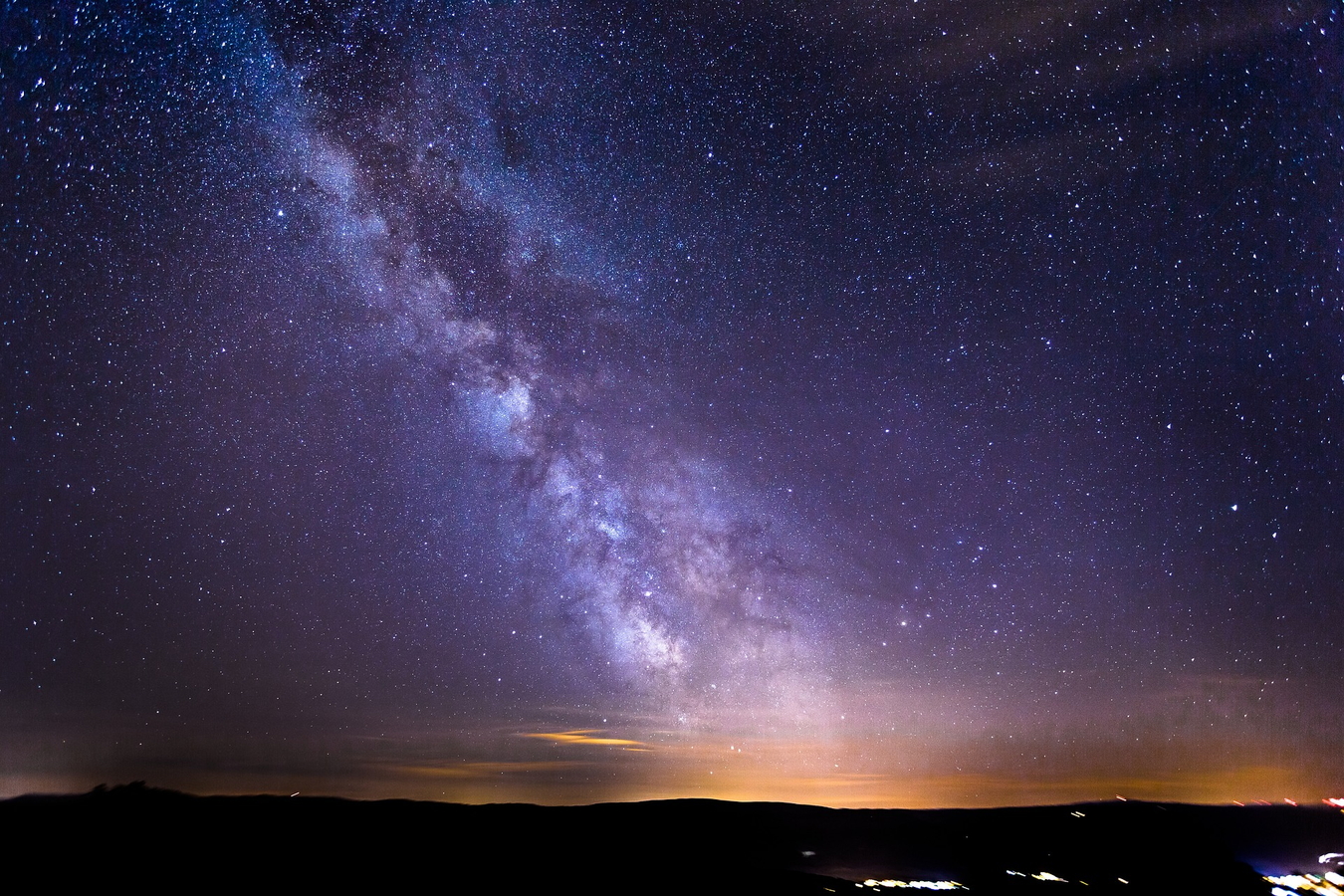
Milky Way over some mountains

Get the latest

Subscribe to our newsletters.

Privacy Policy
Home
  • Instagram instagram
  • Twitter twitter
  • Youtube youtube
  • Facebook facebook

Science

  • Biosphere Sciences & Engineering
  • Earth & Planets Laboratory
  • Observatories
  • Our Research Areas
  • Our Blueprint For Discovery

Legal

  • Financial Statements
  • Conflict of Interest Policy
  • Privacy Policy
  • Equal Opportunity Employment

Careers

  • Working at Carnegie
  • Scientific and Technical Jobs
  • Administrative & Support Jobs
  • Postdoctoral Program
  • Carnegie Connect (For Employees)

Contact Us

  • Contact Administration
  • Media Contacts

Business Address

5241 Broad Branch Rd. NW

Washington, DC 20015

place Map

© Copyright Carnegie Science 2026