Diatom breakthrough: Revealing how these “jewels of the sea” thrive in fluctuating light conditions

Palo Alto, CA—How do algae, which depend on sunlight for food, thrive in marine environments despite drastically fluctuating light intensity?
New research on a type of micro-algae called diatoms from a team led by Carnegie Science’s Adrien Burlacot and Stanford University’s Ellen Yeh used CRISPR to identify the genes that keep these highly successful organisms photosynthetically efficient regardless of how radiant or dim the Sun’s rays may be in a given location. Their findings are published today in Proceedings of the National Academy of Sciences.
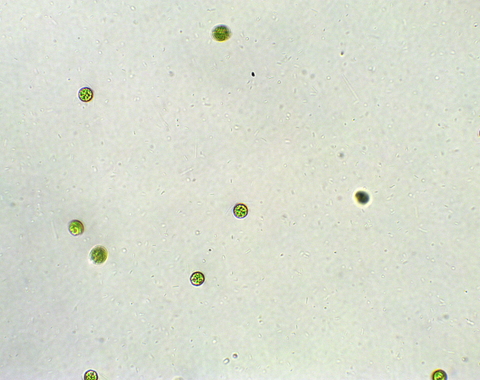
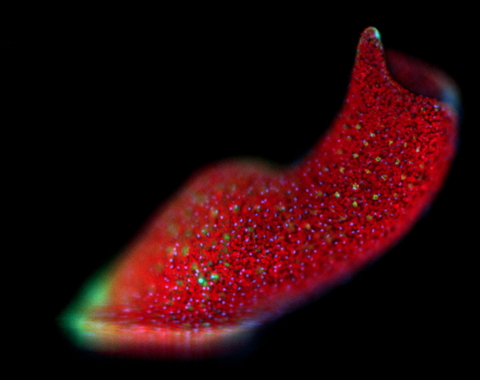
Diatoms are a diverse group of single-celled algae that can resemble microscopic greenhouses, thanks to the transparent silica cell walls that surround most species. Sometimes called the “jewels of the sea,” they are responsible for a large portion of the photosynthetic activity that occurs in the world’s oceans. This makes them ecologically important, and enhancing our knowledge of their biology has implications for improving our models of the Earth System.
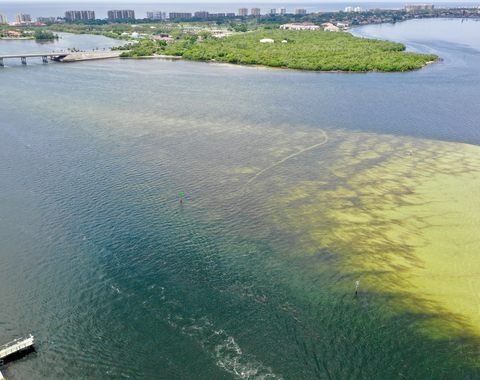
Diatoms are particularly abundant in well-mixed, nutrient-rich marine environments, including coastal regions, ocean upwellings, and polar waters. The conditions in the aquatic ecosystems where diatoms thrive are very dynamic and the light intensity that they feed on can fluctuate rapidly between very bright and very dark.
For photosynthetic organisms, rapid light change can create an imbalance between photosynthetic energy production and consumption inside the cell, risking damage or inefficient energy usage.
“Diatoms are able to flourish in environments where they must be able to turn on a dime as the light fluctuates,” Burlacot explained. “This suggests that they have evolved unique molecular mechanisms to adapt to these rapid shifts.”
However, they are evolutionarily divergent from green algae, which are the ancestors of land plants. This has limited the number of biotechnological tools available to researchers who want to probe their unique molecular qualities.
To address this challenge, the researchers used CRISPR/Cas9 genome editing tools to develop a genome-wide screen in the marine diatom Phaeodactylum tricornutum. They then deployed it to look for genes that would promote survival in different light conditions.
“Using a mechanistic approach, we identified a broad set of candidate genes and homed in on one that is exclusive to the red algae evolutionary lineage of which diatoms are a part,” Burlacot said. “Called STROBE1, it may contribute to diatom’s success in rapidly fluctuating light availability.”
On a molecular level, photosynthesis occurs in two stages. In the first stage, which is light-dependent, sunlight powers the splitting water molecules to produce energy storage molecules. In the second stage, which does not require light, atmospheric carbon dioxide is used to synthesize sugars.
It is crucial that photosynthetic cells can balance the two sides of this process, so that energy molecule output matches sugar synthesis needs. To accomplish this, photosynthetic organisms have evolved methods for dissipating excessive photons and redirecting excess electrons to other parts of the cell’s energy production apparatus where they can be used to regulate the rate of energy production.
“Our findings indicate that STROBE1 is involved in maintaining energy production balance via one of these regulatory pathways,” Burlacot said.
STROBE1 has been found genetically in most parts of the world’s oceans, and the researchers believe that it could be a critical component for the ability of these ecologically important organisms to thrive in such a wide variety of marine ecosystems.
Furthermore, the Phaeodactylum tricornutum screen that the research team developed is an important tool that can help elucidate the function of other genes in the red algal line. Additional screening could help explain the contributions of diatoms and other members of this group to the world’s total photosynthetic output and further elucidate the important roles that they play in the planet’s dynamic systems and cycles.